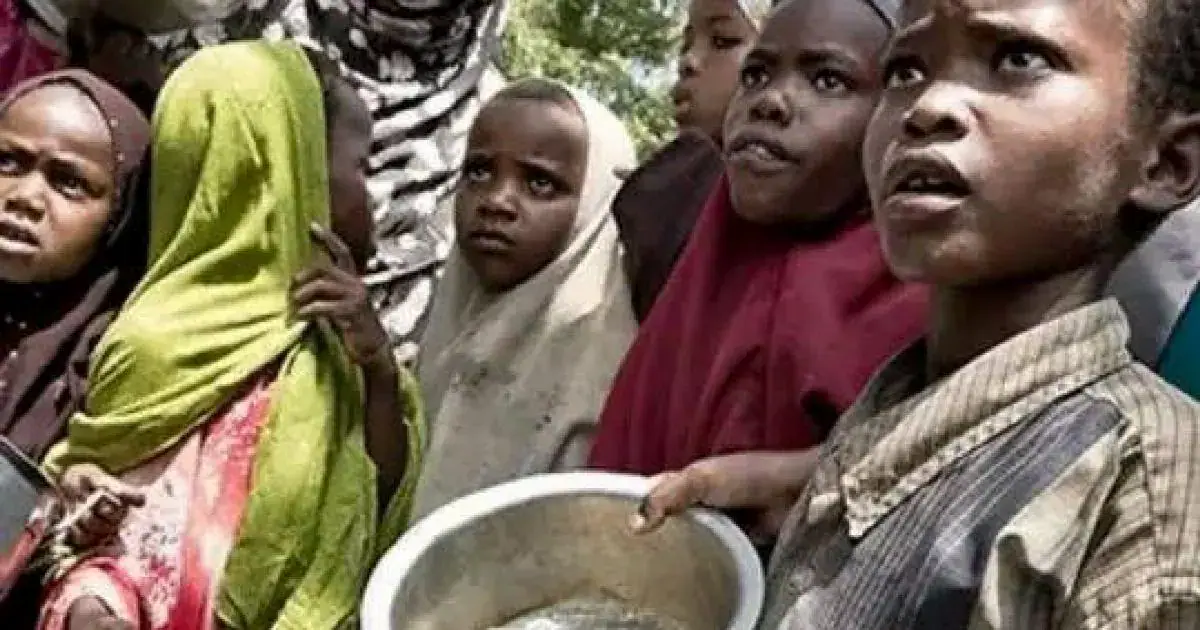
A recent United Nations-backed Cadre Harmonise report has raised concerns about the escalating food security crisis in Nigeria. The report indicates that 33.5 million Nigerians across 26 states and the Federal Capital Territory could face acute hunger by June 2027, up from 26.8 million currently. This warning was disclosed at a meeting organised by the Federal Ministry of Agriculture and Food Security in collaboration with the UN Food and Agriculture Organisation (FAO) and other partners in Abuja.
The worsening food security crisis is attributed to persistent conflict, rising food prices, climate shocks, and mass displacement, particularly in the North-East and North-West regions of Nigeria. The Permanent Secretary of the Federal Ministry of Agriculture and Food Security, Nuhu Kilishi, noted that the government is aware of the severity of the situation and called for coordinated action to prevent further deterioration. The government is working to address the issue, but the situation remains critical.
The FAO Country Representative, Jimmy Owani, stressed the need for increased investment, improved security for farmers, and urgent humanitarian response to mitigate the crisis. He highlighted that Nigeria has huge agricultural potential but faces a perfect storm of insecurity and economic pressure. The FAO and other partners are working with the federal government to develop strategies to address the food security crisis.
The worst-hit states include Borno, Yobe, Zamfara, Sokoto, Kaduna, Katsina, and Adamawa, where conflict and banditry have prevented farmers from accessing their farms. This has resulted in a significant decline in food production, exacerbating the food security crisis. The situation is dire, and immediate action is required to prevent further escalation.
To prevent the projected increase from 26.8 million to 33.5 million within seven months, the UN and federal government partners said urgent scale-up of food assistance, security for farming communities, and investment in dry-season farming and irrigation are required. The government and partners are exploring ways to support farmers and improve food production.
The latest projection comes amid growing public outcry over food inflation and hunger, despite federal interventions including N1.25 billion NG-CARES for smallholder farmers and N155 billion for assorted foods distribution announced in 2024. The government has been working to address the issue, but the situation remains challenging. The public is increasingly concerned about the rising cost of food items.
The UN and federal government partners are working together to address the food security crisis. The government has acknowledged the severity of the situation and is working to develop strategies to mitigate the crisis. The situation requires urgent attention, and coordinated action is necessary to prevent further deterioration.
Key points
- 33.5 million Nigerians may face acute hunger by June 2027.
- The crisis is attributed to conflict, rising food prices, and climate shocks.
- Urgent action is required to prevent further escalation.