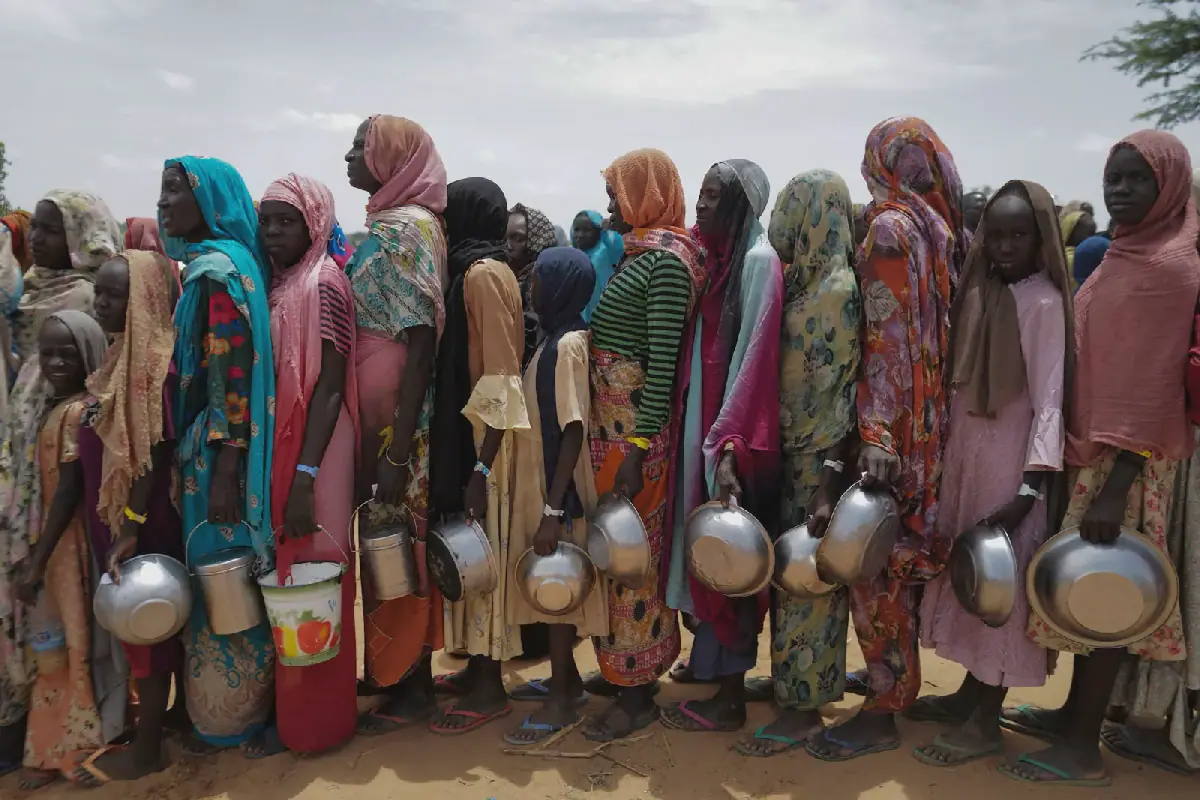
Thirty-one governments and the European Commission have issued a joint warning about a deepening food security crisis in Sudan. They caution that famine could occur in the coming months without urgent humanitarian intervention. This warning was contained in a joint statement issued on October 23 and circulated by the United States Department of State. The statement highlights the devastating impact of the ongoing conflict between Sudan's army and the paramilitary Rapid Support Forces (RSF).
The conflict, which began in April 2023, has had a severe impact on Sudan's population. Approximately 19.5 million people, representing 41 per cent of Sudan's population, are facing high levels of acute food insecurity. About five million people are experiencing emergency levels of hunger. The situation is further complicated by restrictions on humanitarian access and drought linked to El Niño, which has reduced rainfall across more than half of Sudan.
The joint statement also warns of a significant increase in the number of children suffering from severe acute malnutrition. If immediate action is not taken, this number could exceed the projected 825,000. Furthermore, the number of areas classified as food insecure, initially estimated at 14, could double. The ongoing war has killed tens of thousands of people, displaced more than 13 million, and triggered one of the world's largest humanitarian emergencies.
The governments have called on the warring parties to remove obstacles to humanitarian assistance. They urge the parties to guarantee full, safe, and unhindered access through cross-border and crossline routes, including air access into Darfur. Additionally, they stress the need for the protection of humanitarian workers and civilian infrastructure. The international community is being urged to urgently increase funding to address the growing crisis.
The signatories to the joint statement emphasize that the parties to the conflict bear primary responsibility for alleviating the suffering of the Sudanese people. They warn that urgent and coordinated action is needed to prevent further deterioration in food security and avert the risk of famine. The situation in Sudan remains critical, with rising food prices and disrupted farming activities further threatening food supplies.
The crisis in Sudan has been exacerbated by the impact of the El Niño phenomenon, which has led to reduced rainfall across the country. This has had a devastating effect on farming activities, leading to food shortages and rising prices. The international community is being called upon to provide urgent support to address the crisis.
The joint warning from the 31 governments and the European Commission highlights the need for immediate action to address the deepening hunger crisis in Sudan. The situation remains critical, and urgent humanitarian intervention is required to prevent further deterioration in food security and avert the risk of famine.
Key points
- 19.5 million people in Sudan face high levels of acute food insecurity.
- The number of children suffering from severe acute malnutrition could exceed 825,000 if immediate action is not taken.
- The parties to the conflict in Sudan bear primary responsibility for alleviating the suffering of the Sudanese people.