The community of Mbikwakhe, located under the Kwaluseni inkhundla in Eswatini, has been facing a water crisis since June. A borehole pump failure led to over 300 residents in zones A and B and part of zone C relying on a muddy stream, Lutsantsama, as their primary source of drinking water. The borehole water was declared unsafe, prompting residents to seek alternative sources.
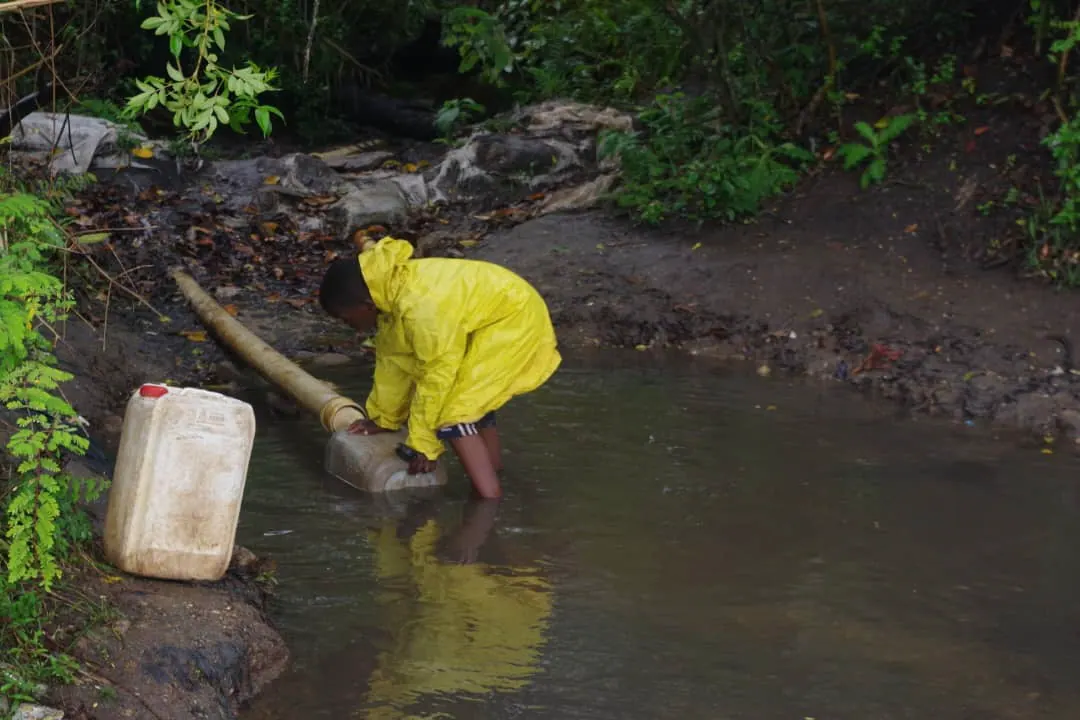
Residents collect water from the stream by wading into a shallow, muddy pool and holding their containers beneath two pipes that discharge into it. The water is brown and littered with leaves and plastic debris. Footprints around the water collection point indicate frequent use. A 14-year-old boy was seen filling a 25-litre water container in the pool.
The stream water is exposed to litter, mud, and surface runoff, posing health risks to residents. When asked, the 14-year-old boy confirmed that most residents stand in the water while collecting it and rarely boil or chlorinate the water before drinking it. The community has been appealing for help, with some residents expressing concern about the safety of the water.
Mbikwakhe is home to over 5,000 people, mostly outsiders, including workers employed at nearby Matsapha textile factories and other companies. The community water project, which initially used communal taps, was established decades ago. Each household in the four zones paid E25 a month, but the taps were later dismantled, and the charge changed.
Member of Parliament Sifiso Shongwe acknowledged the seriousness of the issue and attributed the pump failure to mechanical problems. He claimed to have paid almost half of the E34,000 repair costs from his own pocket, but the pump failed again due to electrical faults. Shongwe is working with the community water committee to repair the pump and contain the situation.
Shongwe has approached several organizations and struck deals with businesses to supply safer water by bowser at least twice a week. He aims to provide safe drinking water while using stream water for laundry. Shongwe also worked with World Vision and Eswatini Water Services Corporation (EWSC) to find a long-term solution, with World Vision promising to roll out a water project by the end of October at a cost of E8 million.
The water crisis in Mbikwakhe has been exacerbated by the risk of faecal contamination from nearby pit latrines, which seep into underground water sources. Shongwe has written to the National Disaster Risk Management Authority (NDRMA) seeking assistance and arguing that the ministry should provide a temporary alternative.
Key points
- Over 300 residents in Mbikwakhe have been drinking water from a muddy stream due to a failed borehole pump and unsafe borehole water.
- The community water project had been declared unsafe due to waste from nearby pit latrines seeping into underground water sources.
- A long-term water project worth E8 million is expected to be rolled out by World Vision by the end of October.