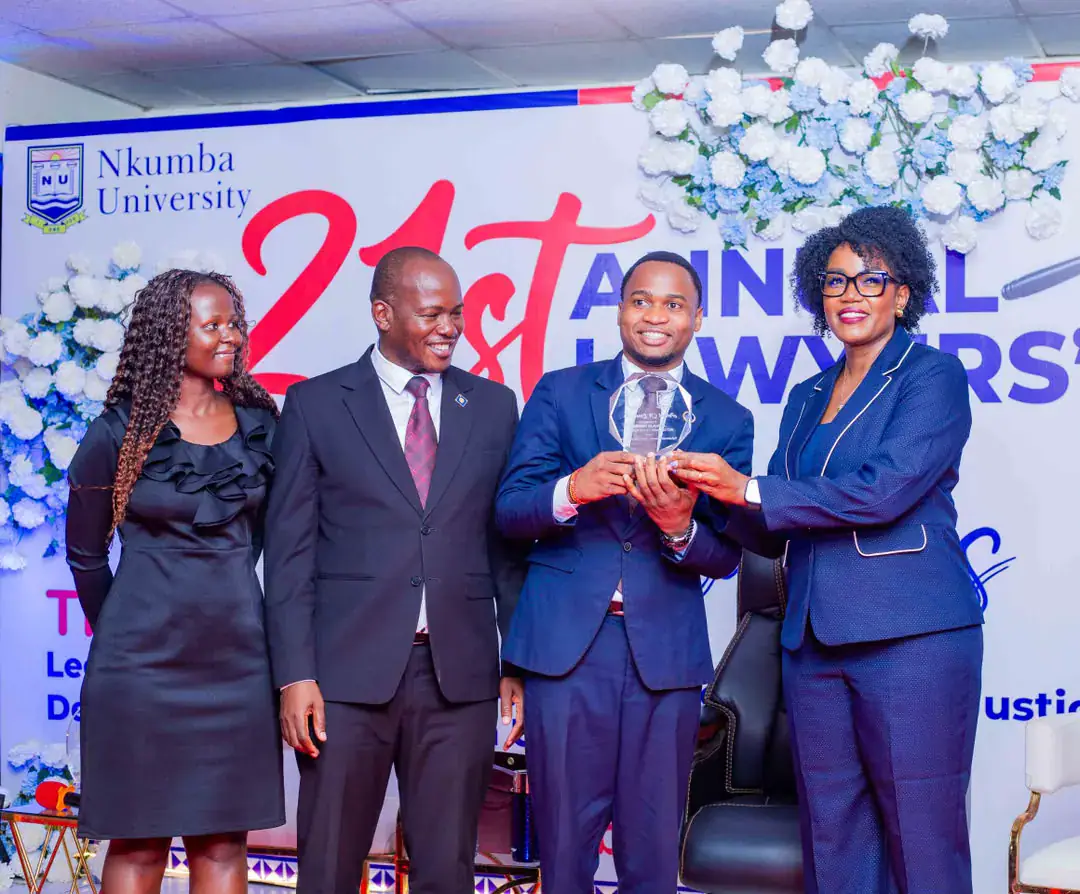
Mwanje Gideon, a young Ugandan lawyer and former president of the law student association in Uganda, has authored a textbook titled "Refugee Law in East Africa." The book, launched on November 1, aims to bridge a gap in legal frameworks for dealing with refugee issues in the region. Mwanje's motivation for writing the book stemmed from the lack of a reference book for his university course unit. He conducted field research for a year and a half, touring refugee camps across Uganda, consulting scholars, and collaborating with classmates.
The response to Mwanje's book has been overwhelming, with Ugandan university libraries purchasing bulk copies and non-governmental organizations buying in volume. Refugees in Libya even purchased copies to donate to universities across Uganda and Rwanda. The book's author, however, has faced surprise and praise for his young age, with many expecting a more experienced, older academic to have written the definitive textbook. Mwanje sees his achievement as proof that young people can make a significant impact, saying, "It shows that young people can still write things that change the world."
Mwanje's work critically examines the region's outdated legal architecture, particularly the 1969 OAU Convention on Refugee Problems, which he believes is no longer suitable for current situations. He advocates for a fresh regional treaty that takes into account the changing nature of crises and the need for laws that reflect the people they govern. The young lawyer also suggests harmonizing divergent approaches to refugee policies among East African countries, citing Uganda's open-door policy as a model for integration into society rather than treating refugees as national security risks.
Mwanje's advocacy has propelled him onto international stages, including the African Union headquarters in Addis Ababa, where he delivered a message to African leaders regarding "externalization" policies. He firmly advised against these policies, which involve European powers offering financial deals to African governments to retain asylum seekers far from European borders. Mwanje emphasized that such deals violate the non-refoulement principle, a fundamental concept in international law that prohibits the forced return of refugees to conditions of fear and persecution.
Feedback from readers and scholars is already influencing Mwanje's plans for future editions of his book. Suggestions include expanding the scope to a Pan-African text, integrating East African Community (EAC) law, and deepening practical litigation guides. With speaking invitations at the AU and an upcoming conference at a UK university in July, Mwanje's journey is just beginning. He reflects on the importance of his work, noting that most refugees are unaware of their rights and that the field has been neglected.
Mwanje's book has sparked interest and discussion among scholars and policymakers, highlighting the need for updated and effective refugee laws in East Africa. His work serves as a call to action for greater attention to the rights and needs of refugees in the region. As Mwanje looks to the future, he is committed to continuing his advocacy and scholarship on refugee law, with the goal of making a lasting impact on the lives of those affected by displacement.
The launch of "Refugee Law in East Africa" marks a significant milestone in Mwanje's career, and his contributions to the field of refugee law are expected to have a lasting impact. With his book, Mwanje aims to inspire young scholars and advocate for the rights of refugees, ultimately contributing to a more just and equitable society for all.
Key points
- Mwanje Gideon, a 24-year-old Ugandan lawyer, has authored a textbook on East African refugee law, addressing a gap in legal frameworks and sparking international attention.
- The book, "Refugee Law in East Africa," critiques the region's outdated legal architecture and advocates for a fresh regional treaty and harmonized refugee policies.
- Mwanje's work has propelled him onto international stages, including the African Union headquarters, where he has advocated for refugee rights and against "externalization" policies.