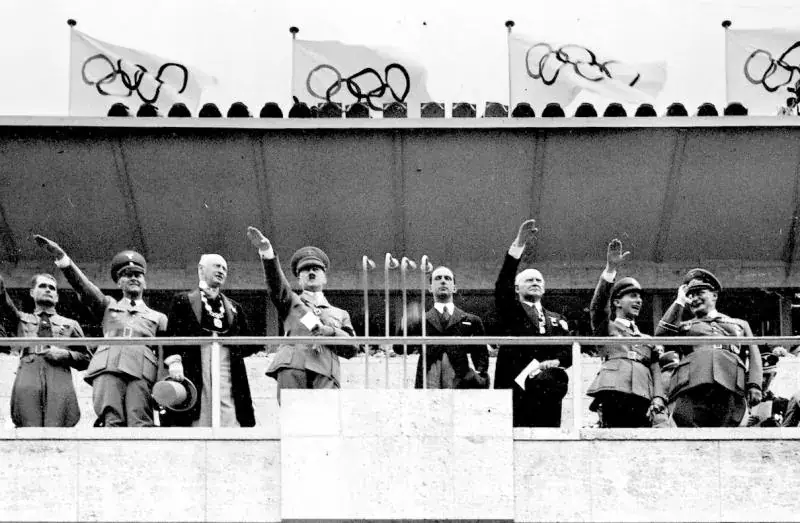
The 1936 Summer Olympics, officially known as the Games of the XI Olympiad, were held in Berlin, Germany, from August 1 to August 16, 1936. The event was a significant platform for the Nazi regime to promote their ideology and showcase their supposed racial superiority. The games were awarded to Berlin in 1931, and despite the change in government in 1933, the International Olympic Committee did not reconsider their decision.
The 1936 Olympics took place in a tumultuous international environment, marked by rising nationalism and the spread of social and racial Darwinism. The fascist regimes, including Nazi Germany and Mussolini's Italy, leveraged sports as a tool for propaganda. The Italian government, for instance, hosted the second FIFA World Cup in 1934. Hitler utilized the Olympics to promote his ideology and emphasize the superiority of the Aryan race.
The Nazi regime spared no expense in creating a grandiose spectacle, investing heavily in infrastructure and propaganda. The games featured 3,963 athletes from 49 nations, with the German team winning 89 medals, including 33 gold medals. The United States and Italy followed closely, with 56 and 22 medals, respectively. Jesse Owens, an African American athlete, made history by winning four gold medals in the 100m, 200m, 4x100m relay, and long jump events.
Jesse Owens, born James Cleveland Owens on September 12, 1913, in Alabama, rose to prominence after breaking six world records on May 25, 1935. His achievements at the 1936 Olympics made him a national hero, but as an African American, he faced significant racial prejudice and limited civil rights in the United States. Owens' victories were a significant embarrassment to the Nazi regime, undermining their claims of Aryan supremacy.
The opening ceremony, held at the Olympic Stadium in Berlin, was attended by nearly 100,000 spectators. The event featured a grand parade of athletes, accompanied by Hitler Youth brigades. The ceremony was widely praised for its grandeur and spectacle. However, some observers noted that the event was tainted by the overt display of Nazi propaganda and ideology.
The 1936 Olympics were extensively covered by the media, with many journalists praising the grandeur of the event. However, some reporters, including Roger Malher of Le Petit Parisien, were critical of the Nazi regime's use of the Olympics for propaganda purposes. Malher described the ceremony as having a "pagan and religious" atmosphere, which he believed was at odds with the Olympic spirit.
The 1936 Berlin Olympics had a lasting impact on the world of sports and politics. The event marked a turning point in the history of the Olympics, highlighting the tension between athletic competition and nationalist ideology. The games also underscored the complexities of international relations during the interwar period, as nations used sports as a tool for propaganda and diplomacy.
Key points
- The 1936 Berlin Olympics were a propaganda tool for the Nazi regime, showcasing their ideology and Aryan supremacy.
- Jesse Owens' victories at the 1936 Olympics undermined the Nazi regime's claims of Aryan supremacy.
- The 1936 Olympics highlighted the tension between athletic competition and nationalist ideology.