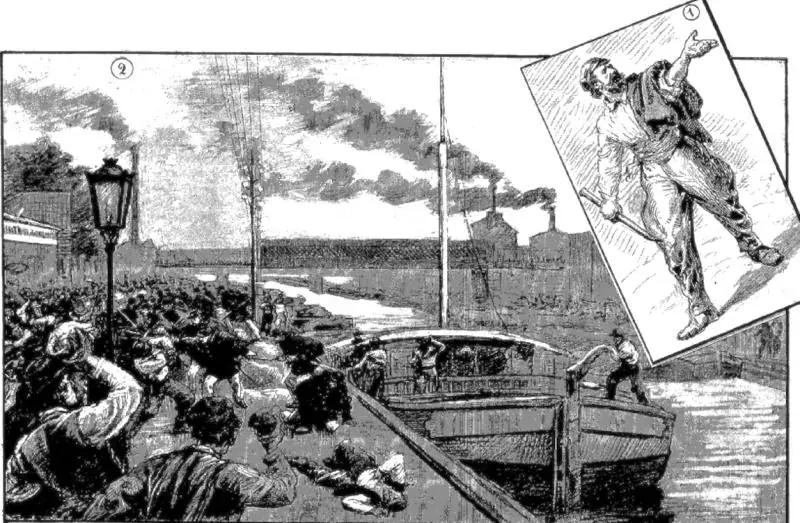
In the heart of summer 1888, a wave of strikes swept through Paris and Corrèze, as terrassiers, or excavators, demanded better working conditions and higher wages. On July 25, 1888, approximately 3,000 Parisian terrassiers, engaged in large-scale public works projects, went on strike. They sought a 20-centime-per-hour wage increase, from 45 to 60 centimes, and a nine-hour workday, citing the 1882 standard rates applied to city projects.
The strike quickly gained momentum, with workers in various Parisian suburbs, including Pantin, Saint-Denis, and Batignolles, joining the movement. As the strike spread, concerns grew that it might generalize to the entire Seine department. On the second day of the strike, workers continued to persuade others to join, with 500 workers leaving their jobs in Billancourt. The gendarmerie was deployed to disperse the crowds, but the strike continued to grow.
The French press was divided in its coverage of the strike. Conservative and liberal newspapers, such as La République française, condemned the strike as a violent and dangerous form of action, while republican and socialist publications, like Le Radical, supported the workers' demands. Le Radical's editorial highlighted the plight of terrassiers, who performed physically demanding and often hazardous work, yet earned meager wages.
The government, led by Charles Floquet, responded to the strike with severe repression. On July 31, clashes between workers and police resulted in injuries and bloodshed, prompting widespread condemnation. Socialist newspaper Le Cri du peuple, directed by Séverine, vigorously supported the strike, denouncing the government's actions and advocating for workers' rights.
As the strike continued, it spread to the Corrèze department, affecting a massive railway construction project between Limoges and Brive-la-Gaillarde. Thousands of workers were involved in this project, and their strike was also marked by solidarity and demands for better wages. Le Cri du peuple continued to support the movement, framing it as a struggle between "exploited and exploiters."
The strike ultimately subsided, but its impact on France's labor movement was significant. The actions of the terrassiers and their supporters drew attention to the harsh conditions faced by workers in the construction industry and highlighted the need for improved wages and working conditions. The strike also underscored the deep divisions within French society and politics.
The legacy of the 1888 terrassiers' strike can be seen in the continued struggles of French workers for better wages and working conditions. The strike marked an important moment in the development of France's labor movement, as workers began to organize and demand greater protections and benefits.
Key points
- The 1888 strike marked a significant moment in France's labor movement, as workers demanded better wages and working conditions.
- The strike was marked by divisions within the French press, with conservative and liberal newspapers condemning the strike, while republican and socialist publications supported the workers' demands.
- The government's response to the strike was severely repressive, resulting in injuries and bloodshed.