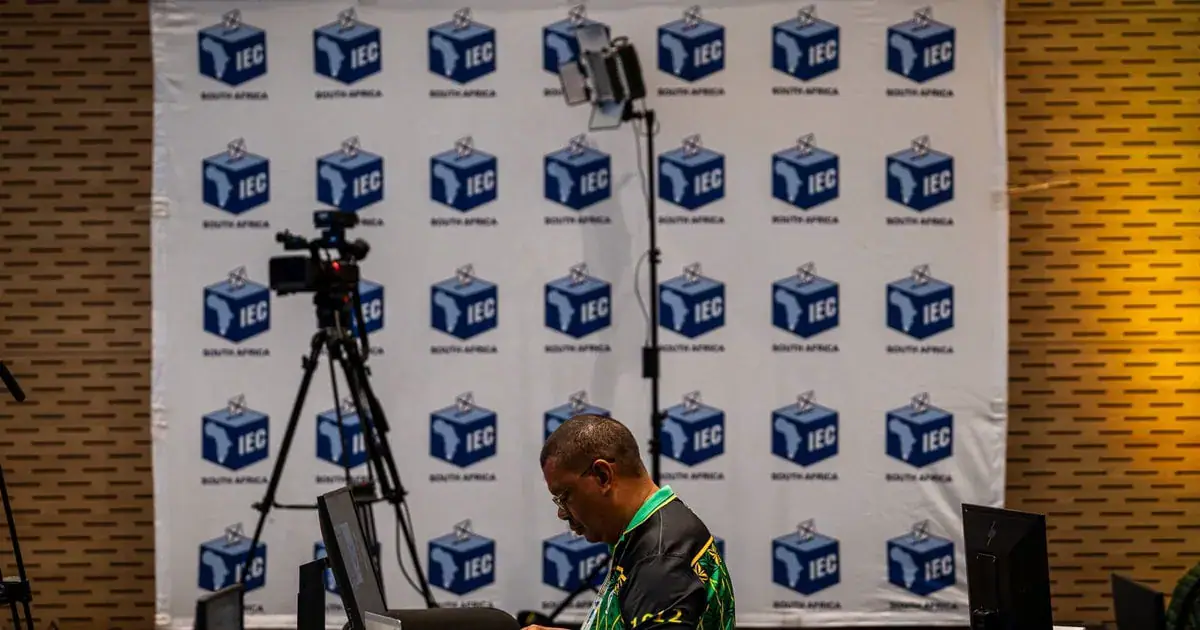
South Africa's local government elections have resulted in a fragmented political landscape, particularly in the country's metropolitan areas. According to political analyst Richard Calland, this fragmentation is likely to lead to power-sharing arrangements among various parties. The analyst made these comments on November 5, 2026, as vote-counting continued at the Electoral Commission of South Africa's (IEC) national Results Operations Centre in Midrand.
The Democratic Alliance (DA) has secured victories in several key metros, including the City of Cape Town, City of Tshwane, City of Ekurhuleni, Nelson Mandela Bay, and City of Johannesburg. However, the African National Congress (ANC) appears to be a favourite in the Buffalo City metro in the Eastern Cape. The ANC's influence has waned in former strongholds such as the eThekwini Metro, where the uMkhonto weSizwe (MK) Party has taken an early lead.
Calland noted that the ANC's decline has created space for other parties to gain traction. He emphasized that the next two weeks of negotiations will be crucial in determining the outcome of the elections. The analyst urged party leaders to engage in constructive discussions, prioritizing the interests of businesses and residents in the metros.
The IEC has received approximately 800 objections from political parties, with a deadline of 5 pm on November 6, 2026, to lodge any complaints that could impact the outcome of the municipal elections. The commission is expected to announce the final results on November 9, 2026.
ActionSA has made significant inroads in the City of Ekurhuleni, securing at least 54 wards. The party's mayoral candidate, Xolani Khumalo, has expressed his commitment to providing effective services to the city's residents. The DA's dominance in some metros is evident, with the party securing 61.2% of the vote in the City of Cape Town.
The fragmentation of power among various parties is expected to lead to coalition talks and power-sharing arrangements. This could result in a more representative and inclusive governance structure in the country's metros. However, it may also lead to challenges in decision-making and the delivery of services.
The IEC has reported good progress in the counting of votes, with results expected to be finalized soon. The outcome of the elections will have significant implications for the country's socio-economic landscape and the delivery of services to residents.
Key points
- The ANC's decline has created space for other parties to gain traction in South Africa's metros.
- The DA has secured victories in several key metros, including the City of Cape Town and City of Johannesburg.
- The IEC has received approximately 800 objections from political parties regarding the election results.