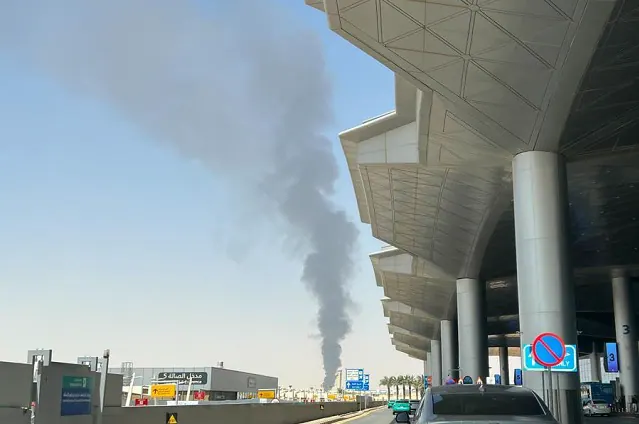
A devastating attack on King Khalid International Airport in Riyadh, Saudi Arabia, has resulted in 12 fatalities and 309 injuries, according to the Saudi General Authority of Civil Aviation. The attack, which occurred on Saturday afternoon, caused significant damage and disruption to airport operations. The authority temporarily suspended operations at the airport pending damage assessments and safety checks.
The victims of the attack included four Saudi citizens and eight foreign residents, representing various nationalities. The injured are receiving treatment at several hospitals, with some in serious condition. The attack has been condemned by the international community, with many calling for an immediate de-escalation of tensions in the region. The Saudi aviation authority is working closely with relevant authorities to investigate the incident.
The Houthi group, which claimed responsibility for the attack, has stated that it is ready for reciprocal measures with Saudi Arabia to keep airports, seaports, and other humanitarian facilities outside the escalating military confrontation. The group has been engaged in a longstanding conflict with Saudi Arabia, which has been supporting the internationally recognized Yemeni government. The conflict has resulted in significant humanitarian suffering and displacement.
In response to the attack, Saudi Arabia launched a new wave of air and missile strikes across Houthi-held areas in Yemen. The strikes targeted Sanaa International Airport, areas near the strategic Bab al-Mandab Strait, and several northern provinces. The Houthi-run al-Masirah TV reported that the strikes caused significant damage and disruption to civilian infrastructure.
The Yemeni government has reported that over 1,150 Houthi fighters have been "neutralized" and over 180 military and logistical vehicles destroyed or damaged in over 1,900 strikes across multiple fronts in Yemen in the past 24 hours. However, these figures could not be independently verified. The government has also reported fierce clashes south of the city of Taiz, where Houthi advances have put increasing pressure on government forces.
The conflict in Yemen has been ongoing since late 2014, when the Houthis seized the capital Sanaa and much of the country's north. A Saudi-led coalition intervened in 2015 in support of the internationally recognized Yemeni government, now based in the southern port city of Aden. The renewed fighting marks a major escalation after a UN-brokered truce in 2022 largely halted major hostilities.
The situation in Yemen remains dire, with significant humanitarian needs and a high risk of further escalation. The international community is urging all parties to the conflict to engage in meaningful dialogue to achieve a lasting peace. The Yemeni government and the Houthi group must work together to find a peaceful solution to the conflict, which has caused immense suffering and displacement for the Yemeni people.
Key points
- The attack on Riyadh airport has killed 12 people and injured 309 others.
- The Houthi group has claimed responsibility for the attack and stated that it is ready for reciprocal measures with Saudi Arabia.
- The conflict in Yemen has resulted in significant humanitarian suffering and displacement, with a high risk of further escalation.