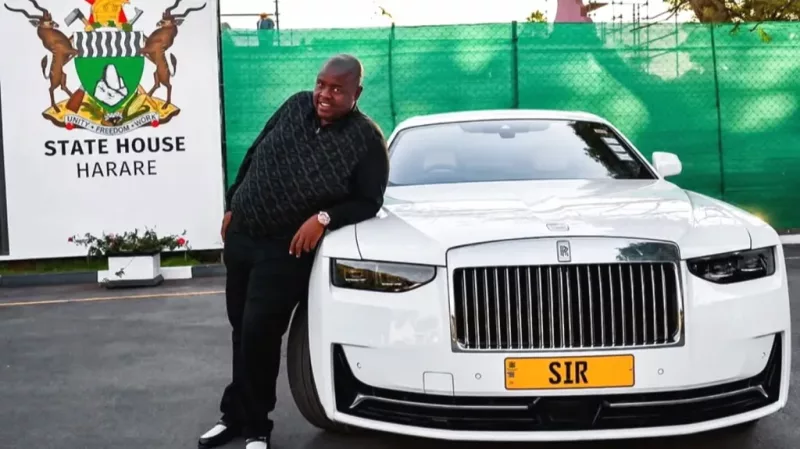
Wicknell Chivayo, a Zimbabwean tycoon known as "Sir Wicknell," died in a helicopter crash along with his wife Lucy Muteke. Chivayo, 45, was a polarizing figure who built his public persona on social media by showcasing his wealth and generosity. He often posed with piles of cash and announced the cars and money he gave to people he considered deserving. His lifestyle and philanthropy have sparked both admiration and criticism.
Chivayo's admirers saw a fabulously wealthy man sharing his good fortune, while his detractors questioned the origins of his money and his political connections. Pedzisai Ruhanya, director of the Zimbabwe Democracy Institute think-tank, said Chivayo's donations were mainly to influential people and dismissed his generosity as grandstanding for the ruling Zanu-PF party. Despite criticism, Chivayo remained unapologetic about flaunting his wealth in a country where nearly half the population lives below the international poverty line.
Chivayo's early life was marked by hardship, dropping out of high school at 15 after his family could no longer afford the fees. His first job was as a wages clerk for a bus company, and he later moved into selling mobile phones and dealing in foreign currency on the black market. In 2005, he was sentenced to five years in prison for money laundering involving 837,000 South African rand. He served three years at Chikurubi Maximum Prison.
After his release, Chivayo went into the energy business, becoming a "tenderpreneur" by getting government contracts. He headed Intratrek Zimbabwe, which partnered with Chinese electrical giant CHiNT Electric. In 2014, Intratrek was selected to build a 100MW solar power station in Gwanda, but the project remains unbuilt to this day. A parliamentary inquiry later described Intratrek as a "briefcase company" being used as a front to attract investment.
Chivayo's relationship with President Emmerson Mnangagwa transformed from one of skepticism to a close bond. Mnangagwa initially cited Gwanda as a lesson in the dangers of doing business with "fly-by-night briefcase businessmen." However, Chivayo won over the president and became a conspicuous presence around him, speaking glowingly of Mnangagwa and making no secret of his support for Zanu-PF.
Chivayo faced allegations over the procurement of materials for the 2023 elections, but he denied wrongdoing. He also offered Zimbabwe's 360 legislators $10,000 each, prompting accusations that he wanted to influence an impending vote on a controversial constitutional amendment. The offer was withdrawn following a backlash, and Chivayo denied it was intended to influence the vote.
An outpouring of grief has followed Chivayo's death, especially from recipients of his largesse, and tributes from politicians, religious leaders, and business figures. Cleopas Mukungunugwa, a young and prominent Zanu-PF social media influencer and recipient of two luxury cars from Chivayo, described him as a patron who often dictated what he should write in his posts.
Key points
- Chivayo's philanthropy and wealth sparked both admiration and criticism in Zimbabwe.
- His business dealings, including a stalled solar power project, were marred by controversy.
- Chivayo's relationship with President Emmerson Mnangagwa transformed from skepticism to a close bond.