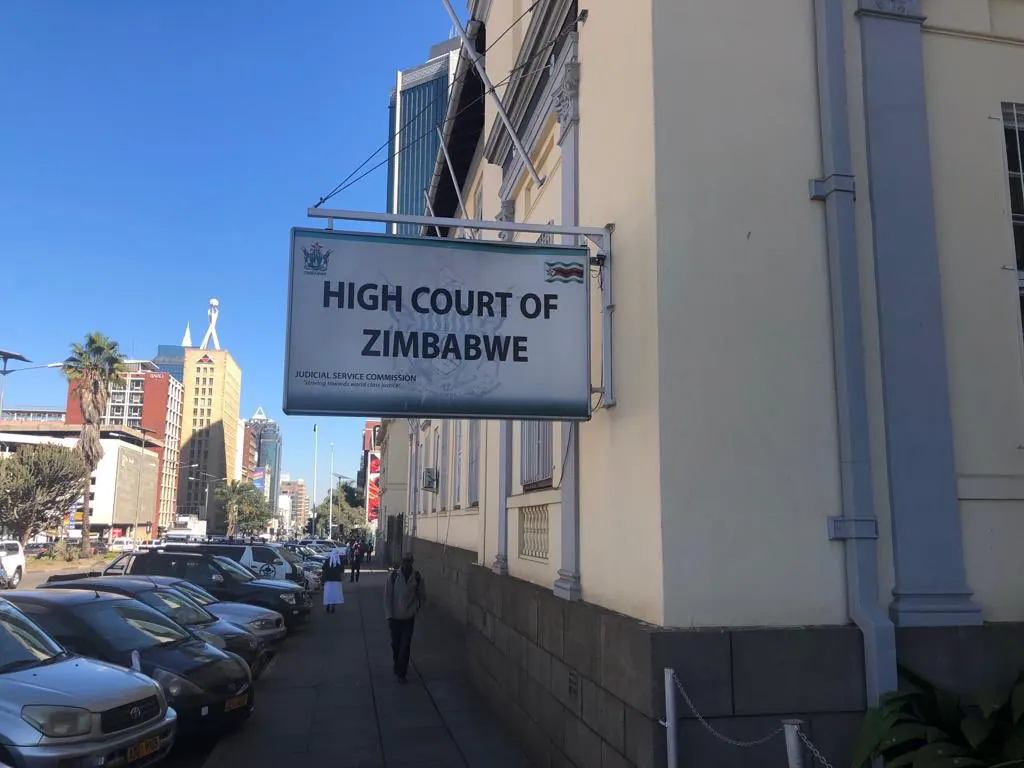
The High Court of Zimbabwe has reversed a default judgment that allowed for the eviction of two mining operators, Tongesai Mathew Madondo and Patrick Dafi, from Gilnokie Farm in Goromonzi. The judgment, entered on March 3, 2026, was set aside by Justice Joel Mambara, who ruled that questions over the service of court papers must be examined before the underlying dispute is determined. The court's decision was made after Madondo and Dafi applied for rescission, arguing they had not been properly served with summons.
According to the court record, the summons were purportedly served on Herbert Dzapasi, described as a security officer at the mine. However, Madondo and Dafi disputed knowing Dzapasi and maintained that serving papers on him did not amount to valid service on either of them. Justice Mambara noted that the first respondent's declaration described Madondo and Dafi as people known to it and located at Gilnokie Farm, adding that the complaint went to service itself.
The dispute involves Makonas Mining Syndicate, the Provincial Mining Director for Mashonaland East, and the Minister of Mines and Mining Development, among other parties. The respondent opposing the application initially challenged the applicants' legal standing and argued that the matter was moot and that they had approached the court with "dirty hands". However, these preliminary objections were subsequently abandoned during the proceedings.
In determining whether to grant rescission, the court considered whether Madondo and Dafi had provided a reasonable explanation for their failure to defend the original case, whether their application was made in good faith, and whether they had disclosed a genuine defence carrying some prospect of success. Justice Mambara found that their explanation could not be dismissed without further examination because it centred on the disputed service of court papers.
The court also accepted that the application had been brought in good faith, noting the applicants' claim that they acted after discovering the judgment during the eviction process. Justice Mambara ruled that there were plainly triable issues, including whether service on Dzapasi was legally valid, whether the Sheriff received appropriate directions when the applicants were allegedly known and locatable, and what bearing the relevant mining documentation and a report by the Provincial Mining Director may have on the competing claims.
The High Court consequently rescinded and set aside the March 3 default judgment. Madondo and Dafi were granted five days from the date of the order to enter appearances to defend the original proceedings. Costs were ordered to remain in the cause, meaning responsibility for them will be determined as part of the underlying case. The court's decision reopens the original proceedings but does not determine the competing claims over the mining operation.
The mining dispute will return to court for further examination. The court's ruling brings new developments in the case, which has been ongoing since the default judgment was entered in March. The case will continue with the determination of the competing claims over the mining operation at Gilnokie Farm.
Key points
- The High Court of Zimbabwe has rescinded a default judgment that authorised the eviction of two mining operators from Gilnokie Farm in Goromonzi.
- The court's decision was made after the mining operators, Tongesai Mathew Madondo and Patrick Dafi, applied for rescission, arguing they had not been properly served with summons.
- The case will continue with the determination of the competing claims over the mining operation at Gilnokie Farm.