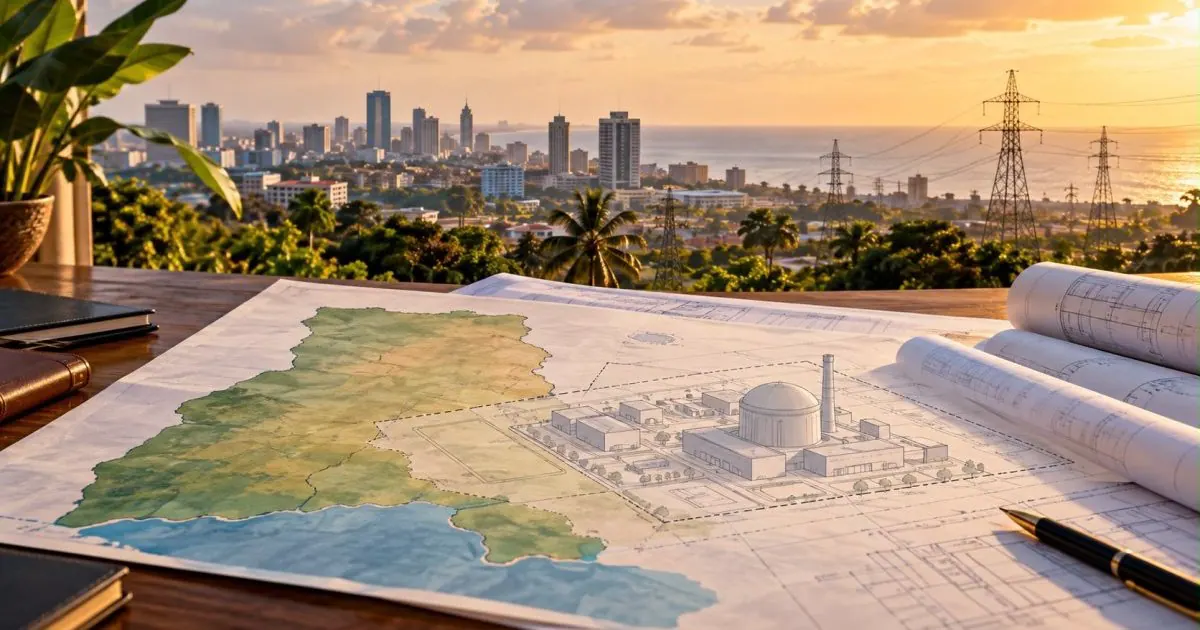
The Russian government's promise to develop nuclear energy in Ghana has yet to materialize, 11 years after the two countries signed a cooperation agreement. On June 2, 2015, Russia and Ghana agreed to collaborate on the peaceful use of atomic energy, paving the way for potential nuclear projects. Despite this, no Russian nuclear power plants have been built in Ghana. The Ghanaian nuclear program has made progress institutionally, moving to the second phase of nuclear preparation in August 2022.
This phase involves selecting a technology and establishing necessary capacities before construction can begin. Ghana's nuclear ambitions have attracted interest from multiple parties, including Russia's Rosatom and the American company Regnum Technology Group. In 2024, Nuclear Power Ghana signed a commercial agreement with Regnum Technology Group for a small reactor project based on NuScale technology. This development suggests that Russia's Rosatom has not secured a contract for a nuclear project in Ghana.
The lack of progress on Russia's nuclear plans in Ghana raises questions about the viability of the project. With the Russia-Africa summit scheduled for October 28-29, 2026, in Moscow, Ghana may seek clarification on Russia's proposals. Specifically, Ghana may ask about the technology Rosatom is offering, the financing model, the project timeline, and the involvement of Ghanaian companies. An update on the project's status is expected, but a new statement of intent may not be sufficient to demonstrate progress.
The Russia-Ghana nuclear agreement was seen as a strategic partnership to develop Ghana's nuclear energy sector. However, the absence of a concrete project 11 years after the agreement has raised concerns about Russia's commitment to the partnership. Ghana's pursuit of nuclear energy is part of a broader effort to diversify its energy mix and address growing electricity demands.
Ghana's nuclear program has made significant institutional progress, but the lack of a concrete project has raised concerns about the country's ability to implement its nuclear ambitions. The involvement of multiple international partners, including Rosatom and Regnum Technology Group, has created a competitive landscape for nuclear projects in Ghana.
The Ghanaian government has emphasized the importance of nuclear energy in its energy mix, but the project's timeline and feasibility remain uncertain. The country's nuclear aspirations are part of a broader effort to increase electricity generation and meet growing demand. Ghana's energy sector is a critical component of its economic development, and the government is exploring various options to ensure a stable and sustainable energy supply.
As the Russia-Africa summit approaches, Ghana's nuclear ambitions and Russia's proposals are likely to be high on the agenda. The outcome of the summit may provide clarity on the status of Russia's nuclear plans in Ghana and the prospects for future cooperation. Key points:
Key points
- Russia's nuclear plans in Ghana remain unfulfilled 11 years after the agreement.
- Ghana has made institutional progress in its nuclear program, but a concrete project is yet to materialize.
- The involvement of multiple international partners has created a competitive landscape for nuclear projects in Ghana.