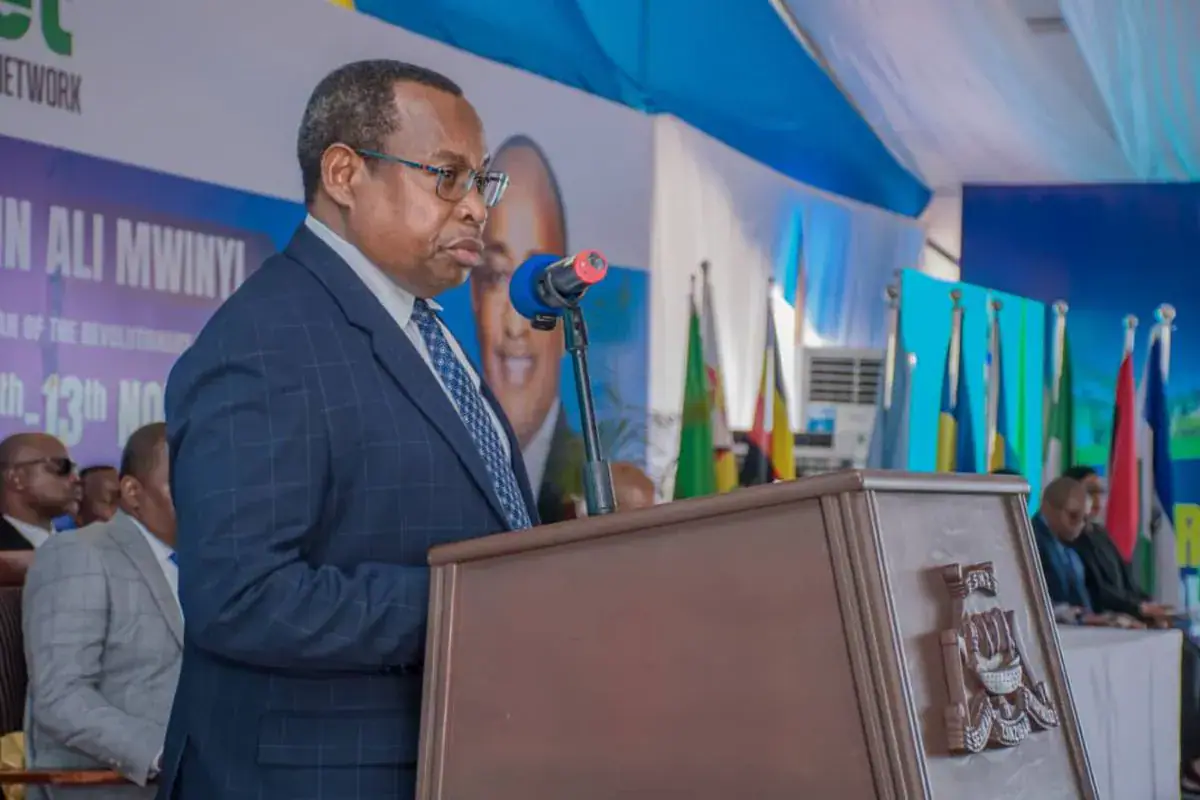
Zanzibar President Hussein Ali Mwinyi has urged African governments to harness artificial intelligence (AI) to improve public administration while maintaining human judgement, wisdom, and accountability. He made these remarks on November 9, 2026, during the opening of the 11th Annual General Meeting of the Africa Public Service Human Resource Managers Network (APS-HRMNET) in Unguja. The conference brought together 1,140 participants from 21 African countries to discuss the theme: “Enabling Strategic Human Resource Transformation in Public Service Using Artificial Intelligence.”
Dr. Mwinyi emphasized that AI should serve as a tool to help public servants work more efficiently, not replace their thought, wisdom, professionalism, and accountability in decision-making. He stressed that the integration of AI into public administration must comply with existing legal frameworks, protect citizens' rights, and uphold cybersecurity and transparency standards. This approach will ensure that AI remains an operational tool rather than a substitute for human judgement.
The Zanzibar leader highlighted Africa's demographic advantage, with a large pool of technology-savvy young people whose innovative potential should be harnessed to advance the development targets of Agenda 2063. He urged human resource managers to move beyond routine administrative duties and become strategic partners in institutional planning and skills forecasting. This shift will enable governments to operate more efficiently and deliver quality services promptly.
Minister of State in the President's Office (Public Service Management and Good Governance) in the Union government, Mr. Ridhiwani Kikwete, echoed Dr. Mwinyi's position, stating that AI could simplify service delivery but should not override statutory regulations or human oversight. He emphasized that final decisions and accountability remain with human beings, not machines.
African Association for Public Administration and Management (AAPAM) President John Nakabago also supported Dr. Mwinyi's views, noting that technology cannot replicate human empathy and institutional ethics. He urged human resource executives to maintain a people-centred approach that prioritizes data protection and public accountability. AI may change institutional performance, but it cannot replace human beings due to its lack of emotions.
The four-day conference provided a platform for participants to discuss the role of AI in public service and its potential impact on human resource management. Dr. Mwinyi's speech, read on his behalf by First Vice-President Othman Masoud Othman, set the tone for the conference, emphasizing the need for a balanced approach to AI adoption in public administration.
The conference aimed to develop practical and measurable regional resolutions, with Dr. Mwinyi urging delegates to prioritize the development of efficient governments that operate more efficiently and deliver quality services promptly. The integration of AI into public service must be done in a way that complements human capabilities, rather than replacing them.
Key points
- Dr. Mwinyi emphasized that AI should serve as a tool to help public servants work more efficiently, not replace their thought, wisdom, professionalism, and accountability in decision-making.
- The conference brought together 1,140 participants from 21 African countries to discuss the theme: “Enabling Strategic Human Resource Transformation in Public Service Using Artificial Intelligence.”
- Dr. Mwinyi highlighted Africa's demographic advantage, with a large pool of technology-savvy young people whose innovative potential should be harnessed to advance the development targets of Agenda 2063.