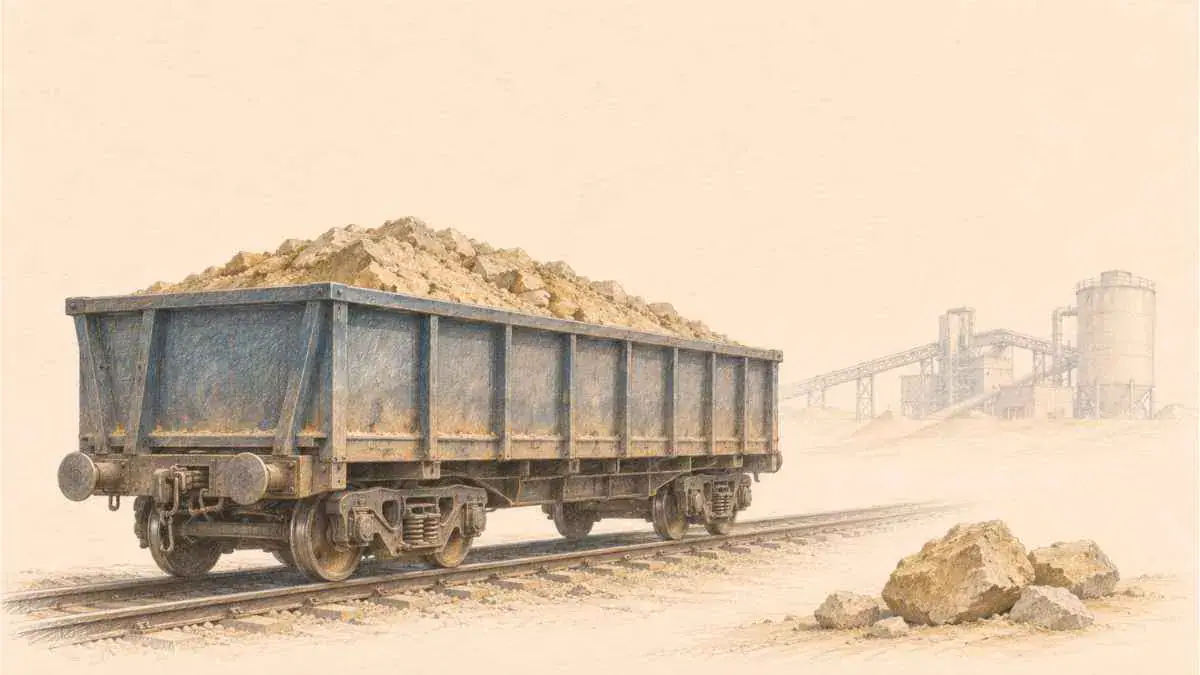
The Tunisian government has allocated 240 million dinars for investments in phosphate transformation in 2027. However, the production of phosphate is closely tied to the transportation of the mineral via rail and the operation of chemical plants. According to data from the SNCFT, the rail transport of phosphate and its derivatives decreased by 22.95% in the first half of 2026. This highlights the need for coordination between phosphate extraction, rail transport, and chemical plants to achieve the desired industrial capacity.
The state's budget for 2027 has been analyzed by economist Safouane Ben Aïssa, who notes that the budget figures should be distinguished from the state's overall financing needs. New loans are being used to repay previous debts, resulting in different amounts being reported depending on the indicators used. Ben Aïssa also emphasizes the significant weight of current expenditures and the risk of competition between the state and private enterprises for banking resources. The effectiveness of expenditures and the volume of financing mobilized are crucial concerns.
Trade between Tunisia and Libya has seen a significant increase, with a 26.54% rise in bilateral exchanges as of September 2026. The total value of trade reached nearly 2.56 billion dinars, with Tunisian exports accounting for 1.801 billion dinars. Industrial and food products dominate these exports. For Tunisian businesses, the challenge lies in consolidating their market share in Libya and transforming this dynamic into sustainable commercial relationships.
The "Nouvelle Chance" initiative has supported over 800 young people since 2024, with an reported insertion rate of 80%. This rate encompasses vocational training, employment, and project creation, but lacks a detailed breakdown to accurately measure access to employment. The program, operating in Sousse and Kairouan, targets young people who have dropped out of school. It is essential to document the nature and duration of the paths taken by these young people to assess the long-term professional outcomes.
At Ecomondo 2026, Francesco Mascolo, director general of Milan's water service, advocated for diversified financing for water reuse. In Milan, 51 million cubic meters of treated water were used for irrigation in 2025, representing 21% of the annual treated volume. This experience relies on existing agricultural channels. For Tunisia, the evaluation of such initiatives should consider the volumes delivered, transportation costs, and the regularity of the supply.
The phosphate sector in Tunisia aims to produce 4.2 million tons in 2027, but this goal remains a challenge. The industry's revival depends not only on increasing production but also on revamping factories and rail infrastructure. Coordination between phosphate extraction, transportation, and processing is crucial to achieving long-term industrial objectives.
The economic challenges facing Tunisia are multifaceted, involving phosphate production, employment, and trade. The phosphate sector's revival is contingent upon the rehabilitation of industrial facilities and rail transport. In employment, initiatives like "Nouvelle Chance" show promise but require thorough evaluation. Trade with Libya presents opportunities, but Tunisian businesses must ensure sustainable commercial relationships.
Key points
- The Tunisian government has allocated 240 million dinars for investments in phosphate transformation in 2027.
- Trade between Tunisia and Libya increased by 26.54% as of September 2026.
- The "Nouvelle Chance" initiative has supported over 800 young people since 2024.