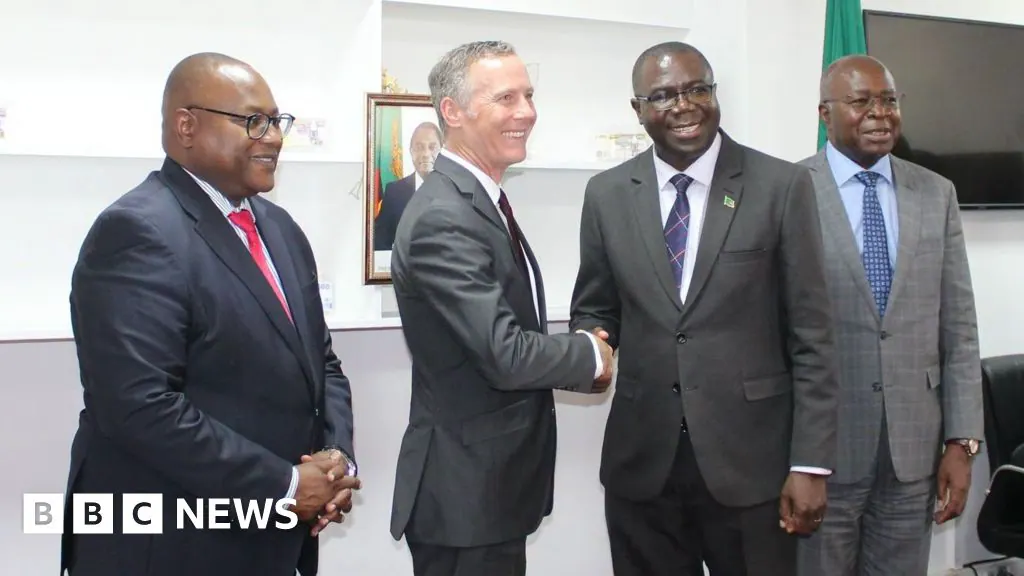
Zambia has signed a five-year health financing agreement with the US, providing about $1.5bn, with Zambia also contributing. The deal, signed in Lusaka, ends months of public dispute over data-sharing and mineral rights. Civil society groups had criticised a leaked draft, citing concerns over data sharing and preferential access for US companies to minerals. The agreement aims to support HIV/Aids, tuberculosis, malaria, maternal and child health, disease surveillance, and wider health system work.
The US Agency for International Development (USAID) was previously involved in Zambia, but was cut by US President Donald Trump, who accused the agency of wasteful spending. The US has since pursued similar deals with several African countries, including Kenya, Tanzania, and Uganda. Ghana and Zimbabwe have rejected agreements over conditions about sharing data and specimens. The revised text of Zambia's new deal addresses concerns about privacy, intellectual property, and benefit-sharing.
Health Minister Roma Chilengi stated that clauses requiring Zambia to send biological specimens to the US had been removed. The agreement will not allow the sharing of individual patient records, with data exchange limited to information needed to monitor and evaluate programmes funded under the deal. This development follows concerns raised by civil society groups, including the Chapter One Foundation, which warned that Zambia risked "signing away" citizens' health data.
A leaked draft had prompted concerns that Zambia was accepting wider data-sharing terms than other African countries, including long-term access to pathogen information and specimens. HIV advocates, including the Treatment Advocacy and Literacy Campaign, demanded the text be published, citing concerns over one-way information flow. Opposition figures and activists also seized on reports that health money was being linked to preferential access for US companies to Zambia's large reserves of copper and other critical minerals.
The row over the deal was sharpened by a US suspension of drug funding after the embassy alleged theft of donated medicines, which the government disputed. The new deal replaces support that for years flowed largely through US programmes. The combined package covering 2026 to 2030 is put at roughly $3.6bn, though figures for the Zambian share have varied. The US has described the arrangement as a shift from a donor-recipient model towards shared responsibility.
US President Donald Trump ordered the closure of USAID in January 2025, decimating health programmes in some African countries that relied on American funding. Critics say the move has impacted the speed of detecting the current ongoing Ebola outbreak in the Democratic Republic of Congo and the scale of the response. The US denies its cuts have harmed efforts, arguing that they are more "aligned and effective" under the new arrangement.
The US has donated $270m to tackle the Ebola epidemic, and Zambia's new deal is part of a broader effort to support health systems in African countries. The deal is expected to support the recruitment of community health workers and strengthen disease surveillance. With the agreement in place, Zambia and the US will work together to implement the programmes and monitor progress over the next five years.
Key points
- The US will provide about $1.5bn to Zambia over five years to support health programmes.
- The deal addresses concerns over data-sharing, with data exchange limited to programme monitoring and evaluation.
- The agreement marks a shift from a donor-recipient model towards shared responsibility, with US funding expected to decline over time.