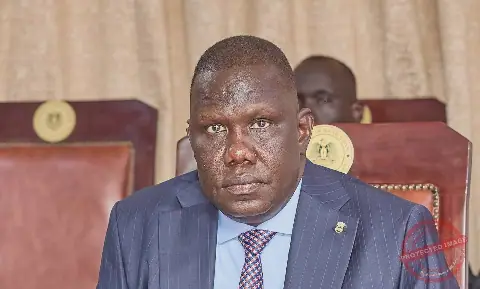
A Lusaka magistrate has committed Brian Mundubile, the runner-up in Zambia's presidential election, and more than a dozen associates to the High Court to stand trial for treason. The charge sheet alleges that between April and August 2026, they plotted to overthrow the government. Mundubile's running mate, Makebi Zulu, is among the accused. The allegations include providing money for five people to receive military training in Russia, with the aim of toppling the government.
The election was held on August 13, 2026, with Mundubile taking about 38 percent of the vote to President Hakainde Hichilema's roughly 60 percent in the official results. Mundubile claimed the count was rigged and promised to take the result to the Constitutional Court. However, the count was halted for hours, and observers said this damaged confidence. Soldiers were posted at polling stations, and opposition legislators were arrested.
The sequence of events has raised concerns about the government's motives. On August 24, 2026, with the seven-day window for a presidential petition about to close, Zambia shut its entire judiciary for "security reasons". The authorities later said no valid petition had been filed, and Hichilema was sworn in on September 1, 2026. By then, Mundubile and Zulu had been arrested, questioned, and charged with treason.
Observer reports found indications that votes were added to Hichilema's tally, but they also concluded that he would have won regardless. This finding undercuts any claim that the presidency was stolen outright and makes the treason case harder to explain on political grounds. A government sure of its mandate does not usually need to close its courts.
The prosecution must show an actual plot to overthrow a lawful government, not heated rhetoric or campaign-trail defiance. The Russia allegation will be the center of gravity, and the prosecution will have to link specific people, specific money, and specific intent to an overthrow of the government. The defense will argue that the prosecution cannot meet this burden.
The case has raised concerns about the integrity of the trial and the potential for political bias. Mundubile has said he is innocent and that the case is politically motivated. His defense lawyer, Sakwiba Sikota, calls the prosecution a fishing expedition and expects the trial to begin early next year. The outcome will have significant implications for Zambian democracy and the rule of law.
The case also raises questions about President Hichilema's commitment to democratic principles. In 2017, he was arrested and charged with treason under then-President Edgar Lungu, after a motorcade confrontation, and was held for about four months before the State dropped the case. He campaigned on restoring the rule of law and ending the use of the State against opponents.
Key points
- The trial of Brian Mundubile and his associates will have significant implications for Zambian democracy and the rule of law.
- The opposition is being decapitated by criminal process, with its presidential candidate and running mate facing a non-bailable charge.
- The sequence of events has raised concerns about the government's motives and the potential for political bias in the trial.
Reporting sources
- The runner-up in the dock: Zambia’s democracy on trial · The African Mirror