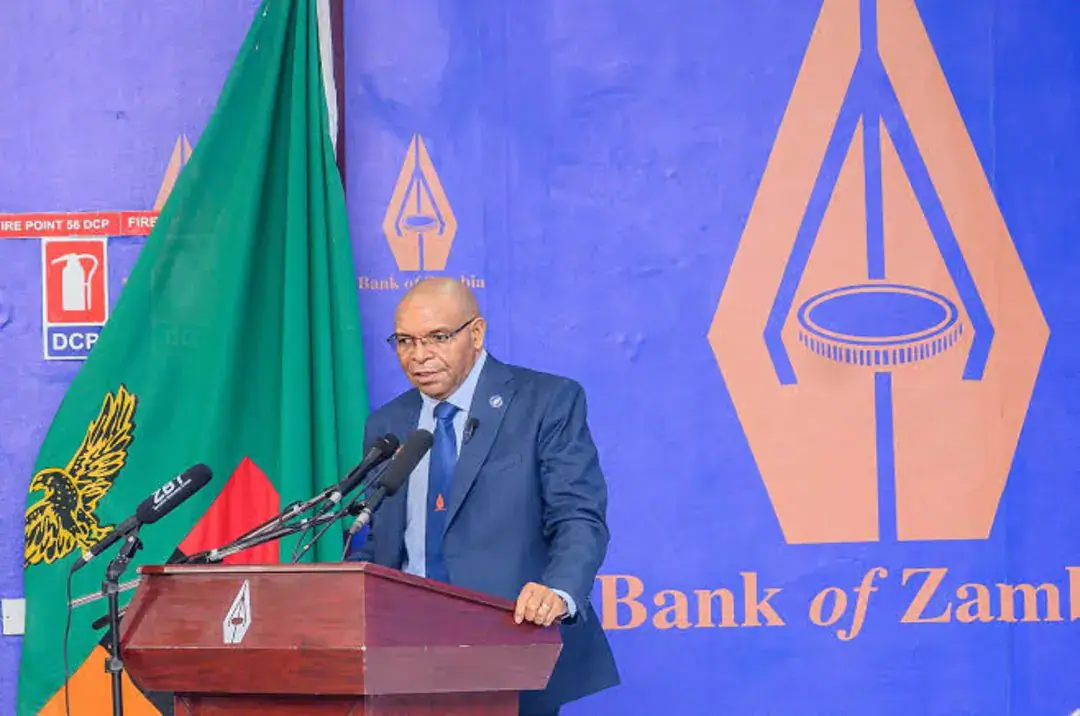
Zambia's central bank has maintained its benchmark interest rate at 10.75 percent, marking a pause in its monetary easing cycle for the first time in 15 months. The decision was made by the Bank of Zambia's Monetary Policy Committee during its November 25-26 meeting. Governor Denny Kalyalya stated that the current policy stance remained appropriate. This move aligns with market expectations, as most economists surveyed by Reuters had predicted that the central bank would keep the rate unchanged.
The Bank of Zambia's decision comes as inflation in the country has shown signs of rising. Annual inflation edged up to 6.4 percent in November from 6.3 percent in October. Although this rate remains within the central bank's target range of 6 to 8 percent, the bank has raised its average inflation forecast for 2026 to 6.9 percent from 6.7 percent previously. The inflation forecast for 2027 stands at 6.7 percent. These projections reflect growing price pressures that the central bank is closely monitoring.
One of the major factors contributing to the inflation concerns is the El Niño weather pattern, identified by Governor Kalyalya as a significant upside risk to the inflation outlook. Adverse weather conditions could lead to reduced agricultural output and constrained hydroelectric power generation. Such disruptions have the potential to drive up food and energy prices, thereby adding pressure to household spending and complicating the central bank's efforts to maintain price stability.
In addition to weather-related risks, inflationary pressures in Zambia have been reinforced by higher domestic fuel prices and the recent depreciation of the Zambian kwacha against major currencies. These factors have contributed to the cautious approach taken by policymakers. By holding interest rates, the central bank aims to assess whether inflation can remain within the target range amid domestic and external uncertainties.
The decision to hold rates marks a pause in the easing cycle that began in November 2025. Prior to this, the central bank had delivered a 250-basis-point cut in September 2026, bringing the benchmark rate to 10.75 percent. This cautious approach comes as Zambia secures staff-level backing from the International Monetary Fund for a new $1.5 billion support programme. This programme provides additional external financing support to the copper-producing economy as it continues its recovery.
The Zambian economy, heavily reliant on copper production, faces various challenges, including inflationary pressures and external uncertainties. The central bank's decision reflects its commitment to maintaining price stability while supporting economic recovery. The support programme from the International Monetary Fund is expected to play a crucial role in bolstering the country's economic resilience.
Moving forward, the Bank of Zambia is likely to continue monitoring inflation trends and adjust its monetary policy stance as necessary. The central bank's cautious approach aims to balance the need to control inflation with the goal of supporting sustainable economic growth. As the country navigates through domestic and external challenges, the effectiveness of its monetary policy will be closely watched by economists and stakeholders.
Key points
- The Bank of Zambia maintains its benchmark interest rate at 10.75 percent amid rising inflation pressures and weather-related risks.