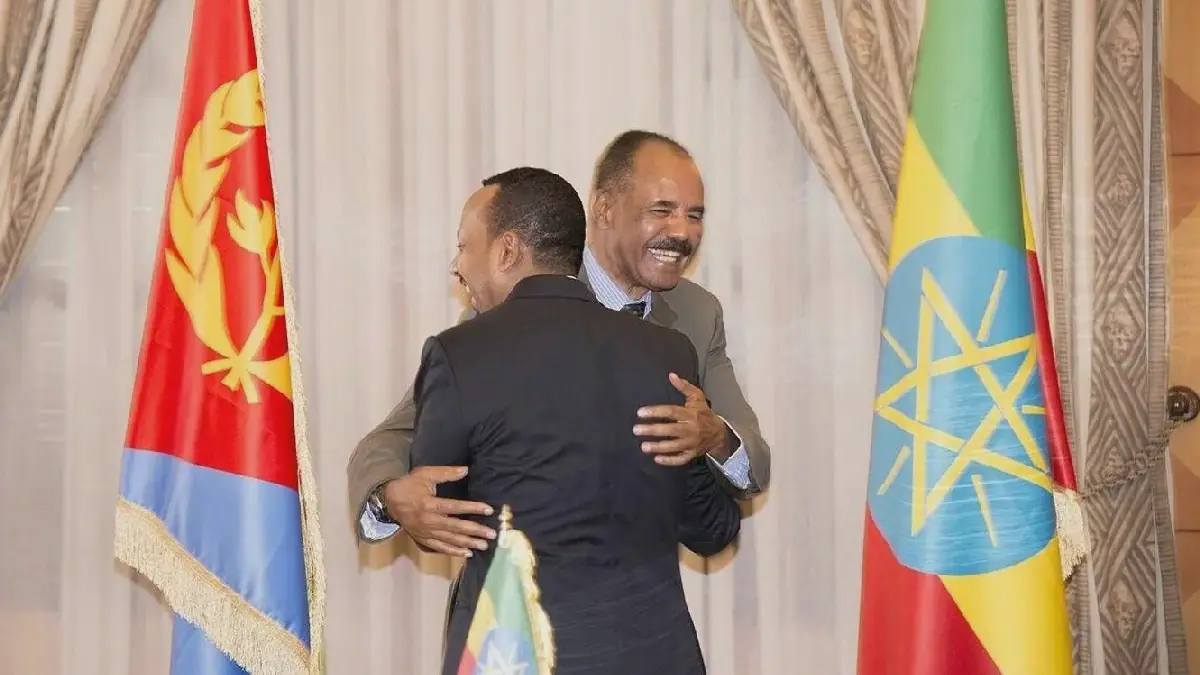
Eritrea has accused Ethiopia of using regional maritime security initiatives to advance its territorial ambitions in the Horn of Africa. The accusations came after Ethiopian Prime Minister Abiy Ahmed warned that "destruction will fall upon Eritrea" unless Asmara stops allegedly providing military support to groups opposed to his government. This exchange of statements comes weeks after Eritrea severed diplomatic ties with Ethiopia on October 1, following renewed large-scale fighting in Ethiopia's northern Tigray region in September.
In a policy paper published on November 26, Eritrea's Ministry of Foreign Affairs accused Ethiopia's ruling Prosperity Party of using maritime trade conferences, naval security discussions, and strategic dialogues to build international support for its demand for access to the Red Sea. The Eritrean ministry described these initiatives as an attempt to create international legitimacy for what it called Ethiopia's illegal demand for sovereign sea access. Eritrea alleged that Ethiopia's maritime ambitions formed part of a broader three-year campaign of aggression.
Ethiopian Prime Minister Abiy Ahmed addressed parliament, urging Eritrea to stop allegedly arming groups opposed to his government and supplying weapons to Ethiopia's adversaries. He proposed cooperation through joint development projects, offering Ethiopian expertise, financing, and labour. Abiy warned that if Eritrea's ruling party continued what he described as an "incorrigible mistake", the consequences would be severe for the country. Eritrea has denied allegations that it is supporting armed groups in Ethiopia's Tigray region.
A central issue in Eritrea's accusations concerns a four-day, European Union-backed maritime search-and-rescue workshop hosted by the Ethiopian navy in Addis Ababa in late October. Eritrea criticised the participation of Somali regional representatives without the involvement of Somalia's Federal Government, arguing that the arrangement undermined the country's internationally recognised sovereignty. The ministry also questioned Ethiopia's leadership of maritime security discussions despite being landlocked.
Ethiopia's demand for access to the sea has become a major source of tension in the Horn of Africa. The country's landlocked status dates back to Eritrea's independence in 1993, after which Ethiopia lost direct access to the Red Sea. Today, most of its maritime trade passes through neighbouring Djibouti. Ethiopian officials have repeatedly described access to the sea as a strategic economic and national priority.
Eritrea, Somalia, Egypt, and Sudan have reaffirmed the importance of freedom of navigation while emphasising the role of Red Sea coastal states in managing security and governance of the strategic waterway. The El Alamein Joint Declaration, issued on October 4, highlighted the need for coastal states to play a key role in managing security in the Red Sea. Eritrea has argued that allowing non-coastal countries to participate in maritime security and environmental institutions could introduce competing geopolitical interests and threaten the safety of international shipping.
Despite its strong opposition to Ethiopia's territorial demands, Eritrea says it remains open to allowing Ethiopia to use its ports for commercial purposes under mutually agreed arrangements that respect Eritrean sovereignty. Somalia has also offered commercial port access to Ethiopia. Under the December 2024 Ankara Declaration, Somalia and Ethiopia agreed to negotiate arrangements for Ethiopia's commercial access to the sea under Somalia's sovereign authority. Somali President Hassan Sheikh Mohamud said in October that Mogadishu was prepared to offer Ethiopia access to two or three Somali ports for trade, provided that negotiations were conducted directly with the Federal Government.
Key points
- Eritrea accuses Ethiopia of exploiting regional maritime security initiatives to advance territorial ambitions in the Horn of Africa.
- Ethiopia's demand for access to the Red Sea has become a major source of tension in the Horn of Africa.
- Eritrea, Somalia, Egypt, and Sudan have reaffirmed the importance of freedom of navigation and the role of Red Sea coastal states in managing security and governance of the strategic waterway.