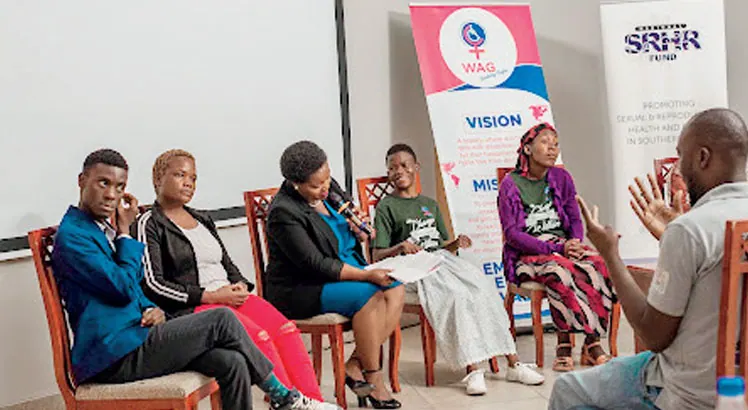
Young people with disabilities in Malawi have expressed satisfaction with the advocacy skills they acquired through Hivos-funded initiatives aimed at empowering them to lobby for their rights. The initiatives, which focused on reproductive health interventions, equipped the youths with the skills to access and demand services. During a meeting with non-governmental organisations (NGOs) in Lilongwe, the youths commended the programmes for enhancing their capacity to advocate for their rights.
Mphatso Phiri, a beneficiary from Kaliyeka I in Lilongwe, praised Hivos for empowering her as a peer educator. She stated that she would continue to encourage fellow youths with disabilities to access reproductive health services and speak out against rights violations. Phiri's sentiments reflect the impact of the initiatives, which aimed to promote the sexual and reproductive health and rights (SRHR) of people with disabilities.
Hivos, an international development organisation, has urged its partners in Malawi to sustain SRHR services beyond donor funding. The organisation's regional fund programme manager for Southern Africa, Limpo Chinika, stated that Hivos would withdraw from the country in December. Chinika emphasised that the goal was to build a cadre of young people who could advocate for their SRHR without donor support.
Chinika described Hivos' SRHR journey in Malawi as bittersweet. The organisation not only provided grants but also capacity building to youth-led organisations, which often lack proper governance systems or functioning boards. Hivos bridged the gap for these organisations in Malawi, Zambia, Zimbabwe, Kenya, and Uganda.
Stella Nkhonya, executive director of Human Rights of Women and Girls with Disabilities, commended Hivos for its timely intervention. She noted that young people with disabilities faced discrimination in accessing SRHR services, and Hivos' initiatives helped address this challenge. Nkhonya's remarks highlight the significance of Hivos' programmes in promoting the rights of people with disabilities.
The meeting in Lilongwe brought together NGOs running reproductive health interventions with Hivos funding. The organisations discussed the need to continue fighting for the rights of people with disabilities. The youths with disabilities emphasised that they would continue to advocate for their rights, with or without donor support.
The advocacy initiatives have contributed to a growing cadre of young people with disabilities who can speak out on issues affecting their SRHR. As Hivos prepares to exit Malawi, the organisation's partners are expected to sustain the SRHR services. The impact of Hivos' programmes will be evaluated in the coming months.
Key points
- Hivos will withdraw from Malawi in December, after empowering young people with disabilities to advocate for their SRHR.
- The organisation provided capacity building to youth-led organisations, which often lack proper governance systems or functioning boards.
- Young people with disabilities in Malawi have acquired advocacy skills to promote their rights and access reproductive health services.