Young people across Europe are facing a future that feels increasingly uncertain, with a complex set of expectations and pressures that are different from and more pervasive than those experienced by previous generations. According to a study by the World Health Organization, school-related pressure has increased among 15-year-old girls, with almost two-thirds reporting feeling pressured by schoolwork in 2022, compared with less than half of boys. This pressure is compounded by declining perceived family and peer support.
The pressures faced by young people are not limited to academic concerns. Economic uncertainty, including rising living costs, high tertiary education expenses, and uncertainty about future employment, rank among young people’s greatest worries. In the EU, 40% of young people are highly concerned about rising prices and the cost of living. In Ireland, around 70% of adolescents consider emigration for better life conditions, while over 20% of Dutch secondary school students are concerned about affording a home.
The climate crisis is another significant concern for young people, who are growing up amid increasingly visible warnings about the short- and long-term consequences of climate change. This has contributed to feelings of anxiety, worry, sadness, anger, and helplessness about environmental degradation and the future. The perception that decisions affecting their future are often made without their meaningful involvement or consideration of their needs has added to their frustration.
The mental health of young people is also a significant concern, with evidence suggesting that Gen Z is experiencing poorer mental health than previous generations. While public discussions often focus on individual explanations, such as excessive screen time and reduced resilience, the current rise in mental health difficulties should be understood as a response to broader societal pressures. Mental health is shaped by the interaction between individual experiences and wider social, economic, and cultural environments.
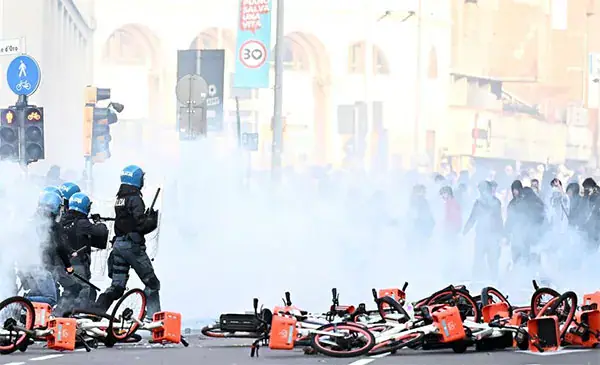
Despite these challenges, young people are not passive recipients of social pressures. They are organizing, questioning existing arrangements, and seeking alternatives. Protests concerning housing, education, climate policy, and economic inequality demonstrate frustration but also agency and a desire to influence decisions about the future. A 2025 survey of 6,703 young people across Europe found that 80% of young respondents in Germany considered EU membership a good thing.
The difficulties facing Gen Z are not entirely new, but what makes their experience distinctive is the combination of pressures and the uncertainty surrounding the transition to adulthood. Rather than asking whether today’s young people have it harder than previous generations, it is more productive to ask what kind of society they are being asked to navigate and what can be done to make it healthier, fairer, and more hopeful.
Alina Cosma, an Assistant Professor of Psychology at Trinity College Dublin, argues that understanding the frustrations of young people, including those expressed through protests across Europe, requires looking beyond individual experiences to the social conditions shaping their lives. She emphasizes that adolescence is a critical developmental period with profound implications for future health and wellbeing, and that it extends well beyond the teenage years and into the twenties.
Key points
- Young people face a complex set of expectations and pressures, including climate change, mental health concerns, and economic insecurity.
- The mental health of young people is shaped by the interaction between individual experiences and wider social, economic, and cultural environments.
- Despite challenges, young people are organizing and seeking alternatives to address their concerns.