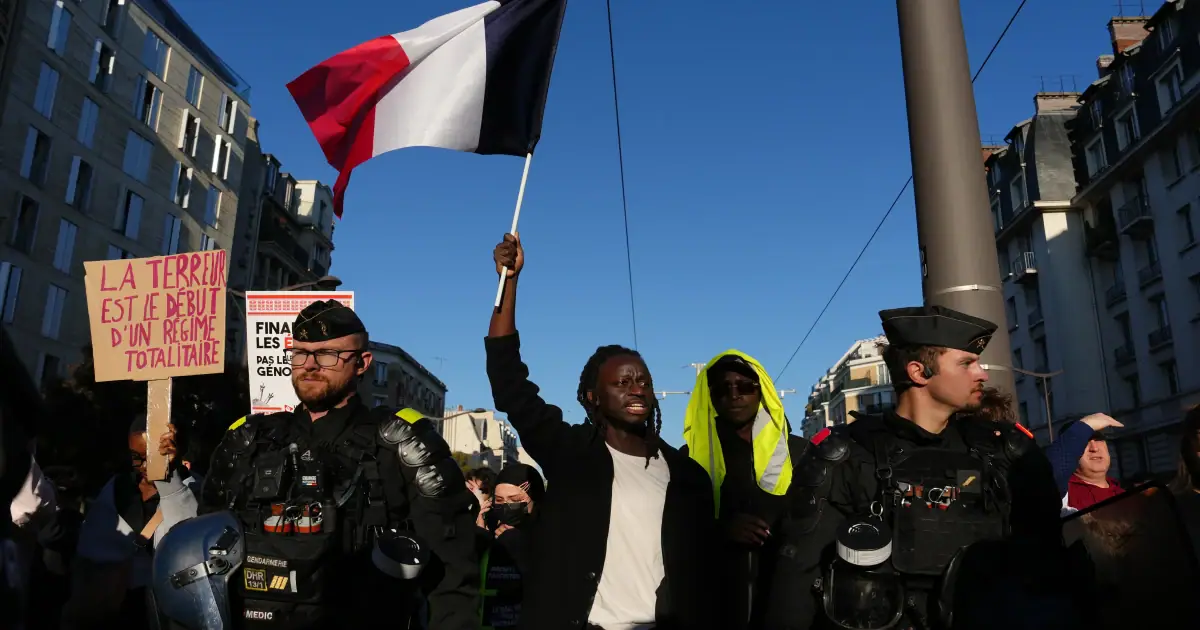
Hundreds of thousands of protesters, mostly young people, took to the streets across France on Saturday, marking the third consecutive weekend of demonstrations over living costs and education. The French government estimated that 320,000 people protested nationwide, with 70,000 police and gendarmes deployed across the country. The protests were part of a larger movement that has spread to other European countries, including Germany and Italy.
The protests in France were marked by clashes between protesters and police, with volleys of stun grenades and tear gas used to disperse crowds. At Porte de Charenton, where the march ended, protesters hurled glass bottles and fireworks at police, leading to a chaotic scene. Many peaceful marchers turned back, coughing, their eyes streaming with tears, and left the march. The French Interior Minister, Laurent Nuñez, warned of a "very high risk" of disorder, especially after dark on Halloween.
The protests began as a movement of high school students protesting neglected buildings, teacher shortages, and a university admissions system seen as unfair to disadvantaged students. Labor unions and others angry at President Emmanuel Macron joined in with a variety of demands. While the vast majority of protesters have been peaceful, groups of troublemakers have routinely targeted police with fireworks and projectiles, leading to severe injuries.
In Germany, a youth initiative called "Gen Z regelt" rallied in more than 30 cities "for education, health, climate protection and an affordable life," and against any return of military conscription. Organizers said that tens of thousands participated in the protests across the country. In Berlin, young protesters gathered at Brandenburg Gate on Saturday afternoon, demanding more investments in education and housing.
The protests also spread to other European countries, including Portugal and the Netherlands. In Lisbon, thousands of protesters, including families with small children, converged in downtown Lisbon to peacefully protest Portugal's housing crisis. In The Hague, Netherlands, there was a strong police presence in and around the downtown shopping area on Saturday afternoon after online appeals for protests and fears of rioting and looting.
The French government has taken measures to prevent further unrest, including imposing a curfew and barring people from entering certain areas. A Paris court on Wednesday suspended an earlier curfew on minors as a serious and illegal infringement of freedom of movement. The government has also estimated that 500,000 people protested on October 17, and 410,000 on October 24.
The protests have resulted in hundreds of arrests, with about 300 arrests reported nationwide so far. The French government has attributed the decrease in arrests to the deployment of 70,000 police and gendarmes across the country. The protests are expected to continue, with many protesters vowing to fight for their demands.
Key points
- 320,000 people protested across France on Saturday
- Protests spread to Germany, Italy, Portugal, and the Netherlands
- French government deploys 70,000 police and gendarmes to prevent unrest