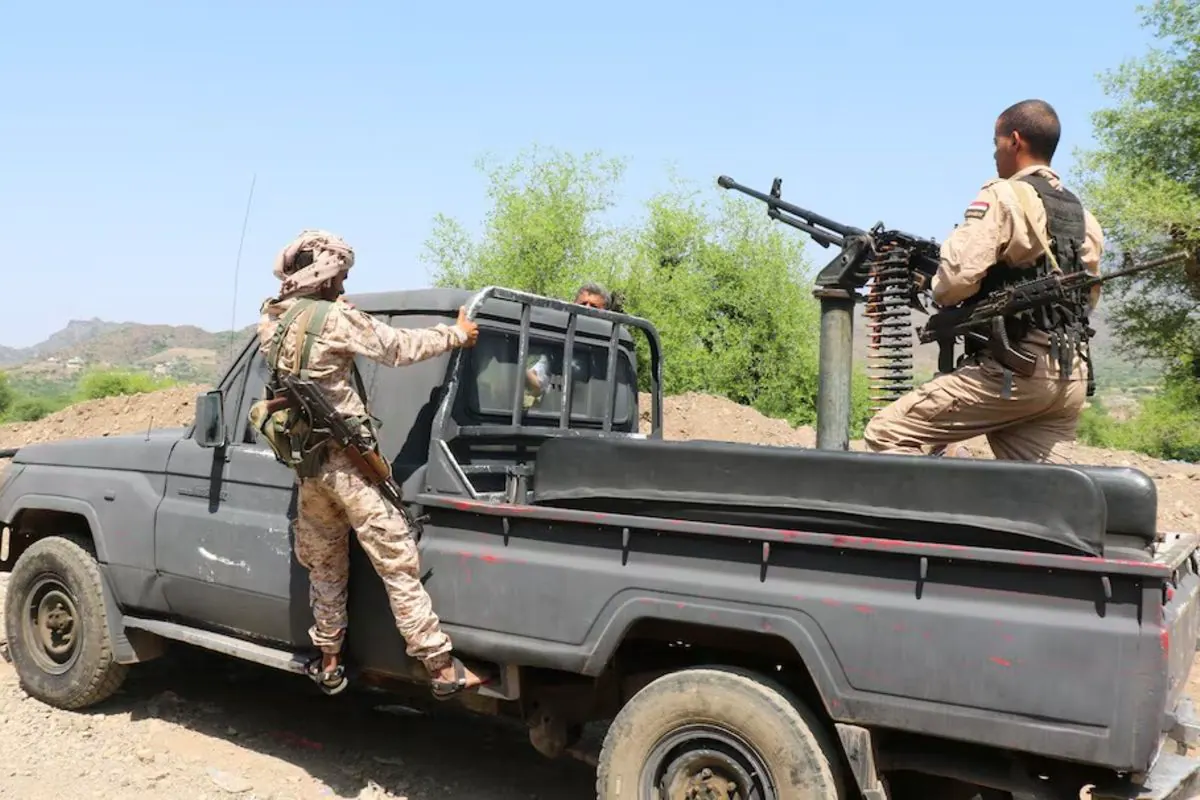
Yemen's internationally recognised government has announced a major military campaign to recapture all areas controlled by the Iran-backed Houthis. President Rashad al-Alimi said in a televised address that the government's armed forces would press the offensive until the country is liberated from the Houthis, whom he described as a "terrorist militia". The announcement came as the Houthis, formally known as Ansar Allah, have held Yemen's capital Sanaa and vast parts of the northwest since 2014.
The Houthis have withstood a series of attacks by Saudi Arabia, the UAE, and their Western allies over the years, and have updated their weaponry with the help of Iran. Recently, they launched a surprise offensive that captured the strategic Bab el-Mandeb strait and some 150 km of coast on the Red Sea in a matter of weeks, giving them new leverage over the international shipping route. This advance has also opened a new front in the wider US-Israeli war launched in February against Iran.
In response to the Yemeni government's announcement, the Houthis said they had launched ballistic missiles and drones at Saudi Aramco sites in Riyadh and the Khurais area of Saudi Arabia. They claimed the attacks caused major fires and were in response to what they said were 50 Saudi-led air and missile strikes in Yemen in the past 12 hours. There was no immediate confirmation from Saudi Arabia. President al-Alimi said the decision to launch the counteroffensive came after all chances of de-escalating the conflict had been exhausted.
The Yemeni government's announcement was backed by Saudi Arabia, which has been leading an Arab coalition in support of the Presidential Leadership Council (PLC) since 2015. Regional and Western officials had told Reuters earlier this week that Saudi Arabia and its Yemeni allies were planning to launch an assault on the Houthis, with the Saudis leading aerial combat and Yemeni forces fighting on the ground. The US is already providing intelligence to support Riyadh's operations in Yemen.
The conflict in Yemen has been ongoing for years, with an array of local armed groups and factions backed by competing regional and international actors. After a popular uprising in 2011, the Houthis captured Sanaa. The Saudi-backed PLC, which is also recognised by the United Nations, has since controlled the south and east of the country, based in the former South Yemen capital of Aden. A truce agreed between the warring parties in 2022 largely held until this year.
The Houthis have maintained the initiative on the ground since seizing control of the Bab el-Mandeb Strait in their lightning offensive last month. They have also made gains against government and local forces on strategic hilltops near Yemen's Taiz, advancing on the last road between the city and Aden on the southern coast. Houthi control over the Taiz-Aden road would lead to an effective siege of the city, which is inhabited by hundreds of thousands of civilians and where thousands of government forces are stationed.
The humanitarian situation in Yemen is dire, with three in four families in parts of the country going hungry due to the impact of the surge in fighting. The conflict has displaced tens of thousands of people and disrupted supplies to millions. The World Food Programme said last week that the situation is critical, and the international community is calling for an end to the violence.
Key points
- The Yemeni government has launched a major military campaign to recapture areas controlled by the Iran-backed Houthis.
- The conflict in Yemen has been ongoing for years, with an array of local armed groups and factions backed by competing regional and international actors.
- The humanitarian situation in Yemen is dire, with three in four families in parts of the country going hungry due to the impact of the surge in fighting.