International chemicals and crop nutrition specialist Yara is optimistic about its growth prospects in South Africa, particularly in providing fertiliser to smallholder and emerging farmers. The company plans to increase its production rate to 500,000 tonnes in the next four years, with a significant portion of the growth coming from its premium products. Yara's managing director in South Africa, Wikus Grové, stated that the company is targeting a 45% growth in production by 2030.
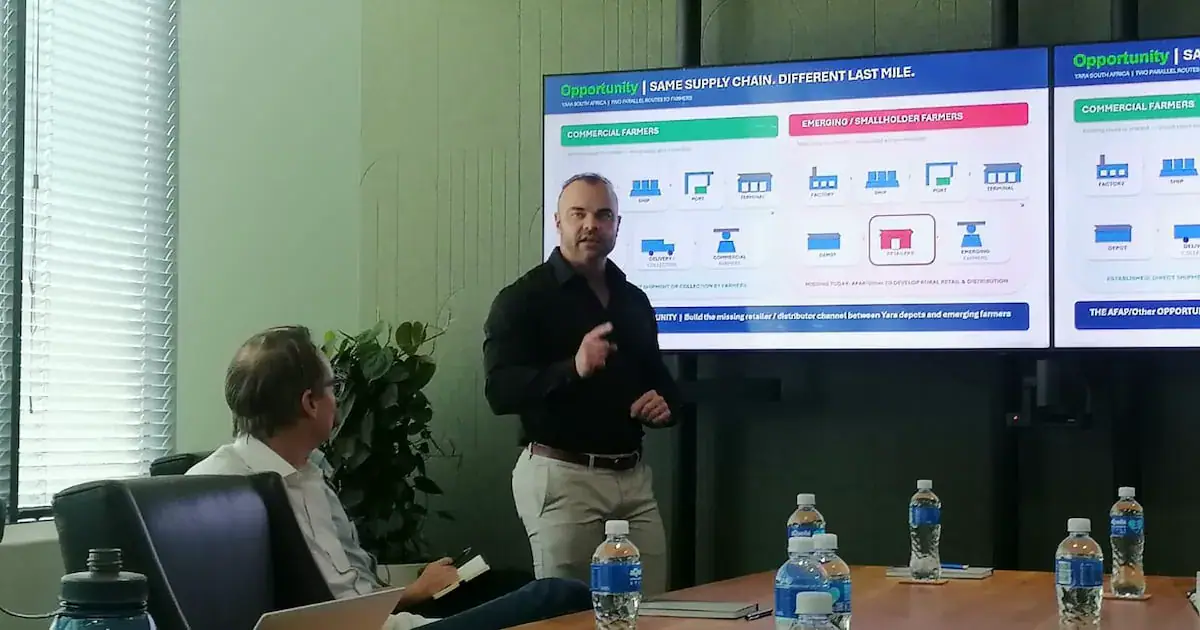
Yara's growth strategy in South Africa is focused on delivering balanced crop nutrition solutions, optimising operations, and building strategic partnerships to expand access to inputs, agritech, and markets. The company already has a 33% market share in the Western Cape region and is looking to penetrate the emerging farmer segment. Grové emphasised the importance of proximity to farmers, storage, and liquid facilities in achieving this goal.
However, Yara faces challenges in the South African value chain for fertilisers, including a lack of access to retail and distribution for smallholder and emerging farmers. Grové noted that smallholder farmers in Africa have access to Yara's solutions, but what they are missing is the logistics and supply chain infrastructure that South Africa has. The company is working to address these challenges through partnerships and investments in infrastructure.
The global fertiliser market is also facing challenges due to the US-Iran war, which has put upward price pressure on Brent crude oil and fertiliser. The Strait of Hormuz, a critical maritime corridor for fertiliser trade, has been closed, leading to a sustained and major disruption in fertiliser supplies. This disruption threatens global agricultural production and food security, with up to 30% of global fertiliser trade passing through the Strait of Hormuz.
According to Maarten Ackerman, chief economist at CAM Asset Management, South Africa is facing challenging economic conditions, including weaker global growth, elevated inflation, and fading tailwinds. The country's agriculture sector has also lost momentum due to higher input, fuel, fertiliser, and logistics costs. Ackerman noted that weakness in mining, manufacturing, and trade, alongside pressure on household consumption and government spending, continues to limit growth.
Charlotte Hebebrand, director of communications and public affairs at the International Food Policy Research Institute, warned that fertiliser supplies could face a sustained disruption that would threaten global agricultural production and food security. She noted that 20% of liquefied natural gas, a key fertiliser feedstock, and 27% of globally traded oil also pass through the Strait of Hormuz.
Despite these challenges, Yara remains committed to its growth plans in South Africa. The company's global strategy is focused on building on its existing strengths and expanding its presence in key markets. With its sights set on increasing production to 500,000 tonnes by 2030, Yara is poised to play a significant role in supporting South Africa's agricultural sector and addressing the country's food security needs.
Key points
- Yara aims to increase fertiliser production to 500,000 tonnes in South Africa by 2030.
- The company faces challenges in the South African value chain, including a lack of access to retail and distribution for smallholder and emerging farmers.
- The global fertiliser market is under pressure due to the US-Iran war and the closure of the Strait of Hormuz.
Reporting sources
- # 2 Yara sees growth prospects in fertiliser supply for small farmers · The Sunday Times