A civil society coalition, the Siyafana Sonke Action Campaign, has compiled a database of 235 testimonies from immigrants who claim to have been targeted by supporters of March and March in Durban. The testimonies describe a pattern of violence and intimidation that began in the months leading up to the movement's 30 June deadline for undocumented foreign nationals to leave the country. Many interviewees reported being assaulted, ordered to leave, and having their businesses and homes looted.
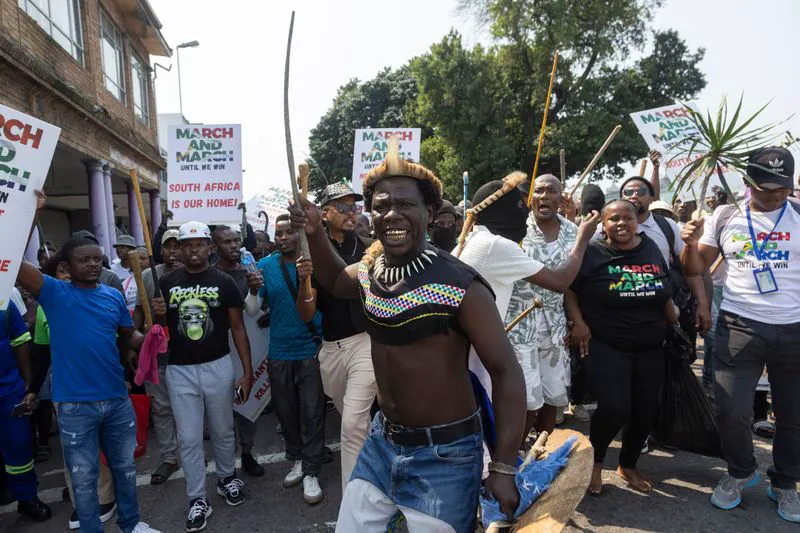
According to the testimonies, small groups of March and March supporters armed with machetes, spears, and knobkerries marched on the homes, businesses, and places of employment of scores of immigrants in and around the city centre. Many immigrants reported that the police refused to assist or open cases, sometimes telling complainants to "go back" to their countries. The database also reveals that a Department of Home Affairs verification process in June found that all but three out of 457 displaced people at Durban's Che Guevara Road were documented and legally resident in South Africa.
The testimonies describe numerous incidents of physical assault, with nearly a third of the 235 testimonies containing descriptions of physical attacks by supporters of March and March. A 54-year-old Burundian man reported spending a week in King Edward Hospital after being assaulted by a group of about 20 people on 14 July 2026. A 58-year-old Congolese woman described being attacked and hit on the head by a group of March and March supporters.
The database also reveals that many immigrants lost their livelihoods and businesses as a result of the violence and intimidation. About a fifth of the people interviewed reported losing their livelihoods, mostly due to businesses being attacked, looted, and destroyed, or employers turning people away. A 51-year-old Congolese woman reported being chased from a market where she traded in 2024, and having her business permit stolen.
In addition to physical assault and loss of livelihoods, the testimonies also describe numerous incidents of theft, looting, and destruction of property. A 38-year-old Congolese man reported being badly beaten and having his mechanic yard taken over by perpetrators, who seized control of his equipment valued at R42,000. A 40-year-old Congolese man described being robbed at knifepoint and having his equipment and inverters taken.
Many immigrants reported that the police refused to open cases when they tried to report incidents of violence and intimidation. About a fifth of respondents reported that police refused to open cases, with Umbilo police station being the most frequently accused of this. A 38-year-old Congolese nail technician reported being told to "go back" to her country by an officer at Umbilo police station.
The KwaZulu-Natal police have stated that they are unaware of xenophobic attacks, despite the numerous testimonies of violence and intimidation. The database of testimonies highlights the need for greater accountability and action to address the issue of xenophobia and violence against immigrants in South Africa.
Key points
- A database of 235 testimonies from immigrants in Durban details months of violence and intimidation by supporters of March and March.
- The testimonies describe a pattern of violence and intimidation that began in the months leading up to the movement's 30 June deadline for undocumented foreign nationals to leave the country.
- Many immigrants reported that the police refused to assist or open cases, sometimes telling complainants to "go back" to their countries.