German supercar maker Porsche has announced plans to sell fewer vehicles at higher prices in a bid to regain profitability, amid intense competition from Chinese rivals. The company's new strategy, presented at its development centre in Weissach, southwestern Germany, aims to lower its break-even production point to fewer than 200,000 vehicles per year. This move comes as Porsche's parent company, Volkswagen, also struggles to maintain profitability.
Porsche's profitability slumped to 1.1 percent last year, an unprecedented low for the manufacturer. In response, the company aims to increase the average selling price of its high-end models by around 20 percent in the medium term. This will be achieved by cutting costs and moving upmarket. The company delivered 280,000 vehicles in 2025, which was 10 percent fewer than in 2024.
As part of its restructuring efforts, Porsche plans to slash its workforce by a quarter by 2030, having already announced 9,000 job cuts. The company also intends to cut 40 percent of its management posts, with CEO Michael Leiters aiming to create "a smaller but stronger and more resilient business". Leiters confirmed that Porsche would continue to invest in internal combustion engines and plug-in hybrids.
Chinese sales, which once accounted for more than a third of Porsche's sales, are down almost a third this year. This decline, combined with weaker-than-expected demand for its battery-powered cars, has forced Porsche to reassess its strategy. Despite this, the company remains committed to electric vehicles, with three battery-electric models currently on the market.
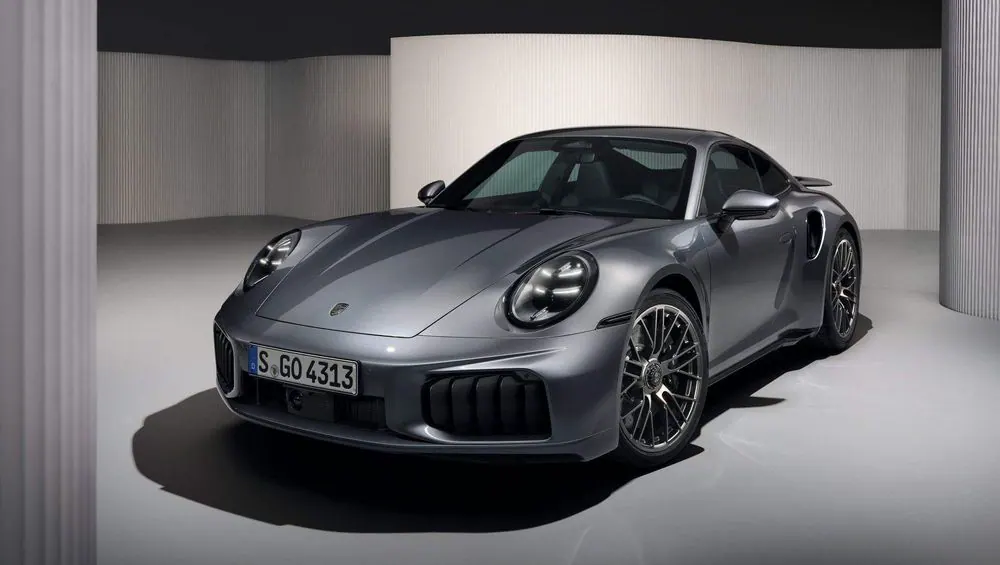
In a reassuring development for traditional Porsche customers, Leiters confirmed that the iconic 911 sports car would "never be electric". The 911, along with other models such as the Panamera, Macan, and Cayenne, will continue to offer internal combustion power, albeit with various levels of hybrid assistance available.
Porsche's shares rose by over four percent following the business update, but slipped by 0.7% just before midday. The company's decision to focus on higher-margin models and cut costs appears to have been well-received by investors. Porsche currently sells three battery-electric models - the Taycan, Macan Electric, and Cayenne Electric.
The company's new strategy is a response to the rapidly changing global automotive landscape, with increasing competition from Chinese rivals and a shift towards electric vehicles. Porsche's commitment to its heritage and traditional customer base, combined with its focus on innovation and profitability, will be crucial in determining its future success.
Key points
- Porsche plans to sell fewer vehicles at higher prices to regain profitability.
- The company's iconic 911 sports car will "never be electric", according to CEO Michael Leiters.
- Porsche aims to lower its break-even production point to fewer than 200,000 vehicles per year.