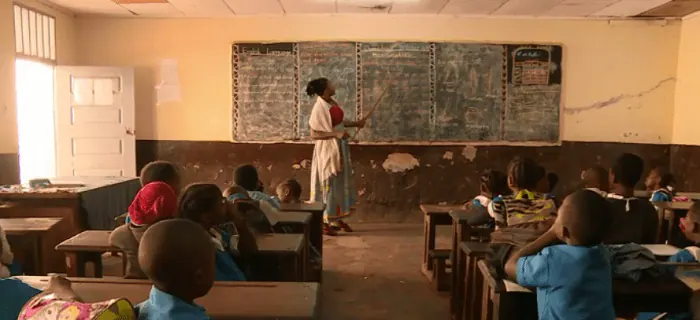
The 2026 World Teachers' Day celebration in Nigeria has brought attention to the challenges faced by the country's educators. This year's theme focuses on protecting and advancing the status of teachers, recognising their contribution to education and national development. The Federal Ministry of Education has identified innovation, mobility, Artificial Intelligence, inclusion, and professional excellence as key pillars for the 2026 celebration. These pillars aim to strengthen the profession and prepare teachers for emerging challenges.
The Minister of State for Education, Prof. Suwaiba Ahmad, has stated that the pillars are designed to promote creative teaching methods, digital tools, and locally relevant solutions. Innovation will encourage teacher exchange programmes, cross-border collaboration, and flexible career pathways. Ahmad also highlighted the potential of Artificial Intelligence in supporting personalised learning, data-driven decision-making, and reducing teachers' administrative burdens. The selection process for the 2026 World Teachers' Day awards has been digitalised to promote transparency and accountability.
The digital process for selecting 14 awardees was introduced to ensure safety and proper documentation. The three best teachers will receive cars, while the best Federal Unity College will receive a bus, and laptops will be presented to awardees. This initiative aims to recognise excellence, motivate teachers, attract talented Nigerians, and retain professionals in the teaching workforce. The government has also continued efforts to strengthen professional competence through the Accelerated Teacher Professional Development Programme.
The programme, implemented through the National Teachers' Institute and Teachers Registration Council of Nigeria, targets 250,000 unqualified teachers. It provides pathways for professional qualifications through postgraduate diploma and professional diploma programmes, aiming to improve classroom practice. The government has also emphasised teacher licensing and professional standards to promote accountability, continuous learning, and greater credibility for the profession.
However, stakeholders contend that attracting young, talented Nigerians into teaching requires more than professional standards or occasional awards. Competitive remuneration, better working environments, opportunities for advancement, continuous training, and a stronger public perception of teaching as a respected profession are necessary. Teachers must be involved in decisions affecting their work, as education policies ultimately depend on educators translating them into classroom realities.
The National President of the Nigeria Union of Teachers, Mr Audu Amba, emphasised that technology must enhance, rather than undermine, the teacher's professional role. Amba stressed the need for adequate investment in teacher training, welfare, and professional development to enable educators to adapt to changing demands. The future of education must be one where teachers are empowered to adapt, innovate, and continue to exercise their professional judgment.
Teachers provide mentorship, emotional support, professional judgement, and human interaction, which are responsibilities that remain difficult to replicate through digital tools. Professional dignity cannot be sustained by technology alone when teachers continue to confront concerns over remuneration, workload, facilities, and career progression. Stakeholders, including Mr Sam Ngadi and Mrs Naomi Tile, have called for improved welfare and recognition to boost morale and reinforce professional responsibility.
Key points
- The Federal Ministry of Education has identified innovation, mobility, Artificial Intelligence, inclusion, and professional excellence as key pillars for the 2026 World Teachers' Day celebration.
- The government has continued efforts to strengthen professional competence through the Accelerated Teacher Professional Development Programme, targeting 250,000 unqualified teachers.
- Stakeholders contend that attracting young, talented Nigerians into teaching requires competitive remuneration, better working environments, opportunities for advancement, and continuous training.