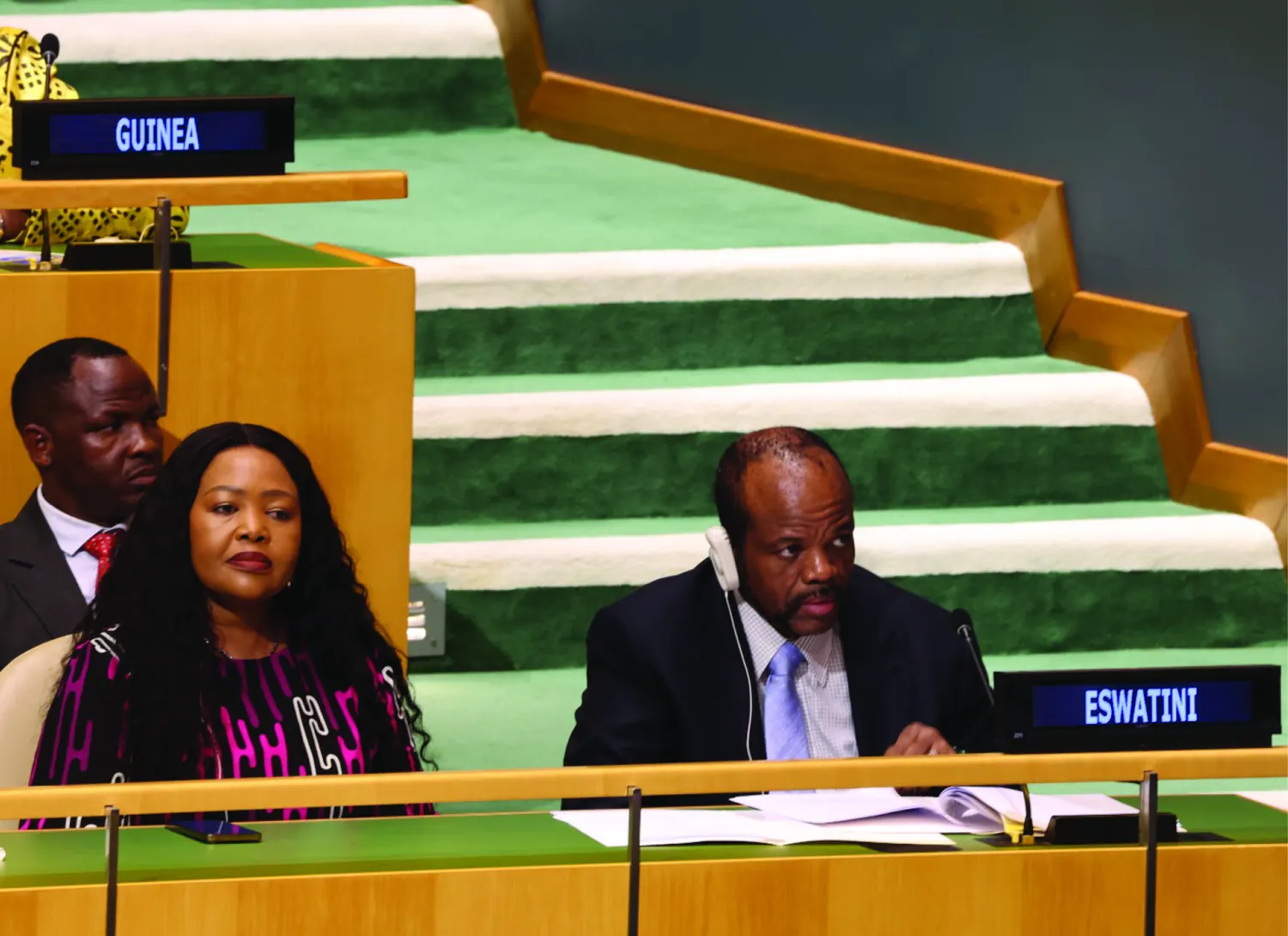
The 81st Session of the United Nations General Assembly convened with world leaders emphasizing the need to restore trust and manage transformation. The assembly's theme, "A United Nations that delivers for all," guided discussions on pressing global issues. King Mswati III of Eswatini was among the leaders in attendance, set to address the session. Outgoing UN Secretary General António Guterres delivered a comprehensive speech highlighting the world's most critical challenges.
Guterres framed the world's pressing crises as interconnected problems stemming from the same underlying struggle over power and its exercise. He emphasized that the greatest power is not domination but building a future that works for everyone. The Secretary General described the past decade as a period of eroding international norms, citing civilians targeted in war, humanitarian workers killed, and international law being cast aside.
Guterres outlined three fundamental reshaping forces: the emergence of new state powers, significant authority transfer from governments to private corporations and individuals, and the growing role of AI and autonomous weapons. He warned of widening fault lines and the risk of sliding into rival blocs with separate economic and security systems, a scenario he termed the Great Fracture.
The Emir of Qatar, Tamim bin Hamad Al Thani, addressed the current crisis in the Gulf, attributing it to years of postponing crisis management through temporary solutions and unrealistic policies. He emphasized the need for a regional collective security system that respects sovereignty, security, and territorial integrity of states, promoting peaceful dispute settlement and non-interference in internal affairs.
US President Donald Trump stated that America will not allow Iran to own nuclear weapons, describing Iran as the bully of Gulf states. He mentioned previous opportunities given to Tehran to drop its nuclear program and stop supporting militant groups, which Iran refused. Trump concluded by emphasizing the importance of defending freedom and great principles.
Kyrgyzstan's President Zhaparov welcomed the US decision to halt funding for NGOs globally, arguing that it reduced external interference in developing states' internal affairs. He stated that this move created conditions for stronger national sovereignty, allowing countries to choose their own development paths. This comes amid steep declines in American assistance, with US foreign aid disbursements falling from $73.5 billion in 2024 to $47.3 billion in 2025.
The impact of US aid cuts was noted in Eswatini, which received approximately $76.6 million in assistance in 2024, primarily directed toward HIV/AIDS programs under PEPFAR. US support to Eswatini since 2007 reached an estimated $800 million to nearly $1 billion, transforming the country's response to HIV/AIDS. However, funding fell to roughly $20-21 million in 2025, a cut of over 70%.
Key points
- World leaders at the 81st UN General Assembly emphasized the need to restore trust and manage transformation.
- The assembly's theme guided discussions on pressing global issues, including the emergence of new state powers and the growing role of AI and autonomous weapons.
- US President Donald Trump and Kyrgyzstan's President Zhaparov presented differing views on US foreign aid and its impact on global issues.