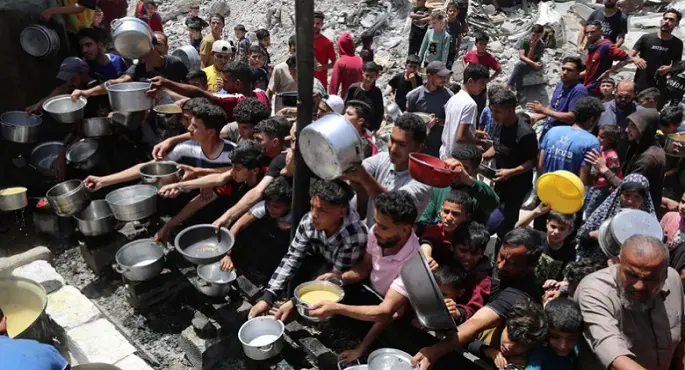
The World Food Programme (WFP) has announced that it will have to reduce its food aid in Gaza significantly from October 1 due to a funding shortage. The programme currently provides support to around 1.5 million people per month, but this number will be cut to approximately 1.1 million people. The reduction will primarily affect direct food assistance, with the number of beneficiaries decreasing from 1.1 million to 600,000.
The WFP provides aid in Gaza through various activities, including food parcel distribution, wheat flour and bread provision, hot meals, school snacks, nutritional support, and cash assistance. The programme's emergency coordinator in Gaza, Wilie Nyeko, stated that the funding crisis will not only reduce the number of people receiving assistance but also decrease the amount of food provided to families and the value of cash assistance.
According to the Integrated Food Security Phase Classification (IPC) analysis, over 1.4 million people, or approximately 67% of Gaza's population, are expected to face acute food insecurity at the crisis level or worse from July to December 2026. Around 212,000 people are expected to be in emergency situations. The analysis also notes that the improvement in food security and nutrition since the ceasefire in October 2025 is fragile and may deteriorate quickly if humanitarian assistance is reduced.
The WFP had already reduced cash assistance by 40% for 375,000 people in July due to funding shortages. As a result, some families will receive less food or lower cash assistance compared to before. The programme is working to reach as many people as possible with the available resources. The WFP's analysis suggests that if current levels of food assistance are not maintained, up to 90% of Gaza's population may face acute food insecurity by the end of the year.
The funding shortage is affecting the WFP's operations in Gaza, with empty storage spaces and limited aid supplies visible in some warehouses. In September, the WFP requested $386 million in urgent funding to support around 2 million people facing food insecurity in Gaza and the West Bank. The programme emphasizes that sustained humanitarian assistance and predictable funding are crucial to maintaining improvements in food security.
The reduction in aid from October 1 does not reflect a decrease in humanitarian needs but rather the limited availability of resources. Around two-thirds of Gaza's population remains at risk of acute food insecurity until the end of 2026. The WFP is working to provide assistance to those in need, but the funding shortage is severely constraining its operations.
The situation in Gaza remains critical, with the WFP and other humanitarian organizations calling for increased funding to address the food security crisis. The programme is exploring ways to optimize its resources and reach as many people as possible, but the outlook for food security in Gaza remains concerning.
Key points
- The World Food Programme will reduce its food aid in Gaza from October 1 due to a funding shortage, affecting around 400,000 people.
- The reduction in aid will primarily affect direct food assistance, with the number of beneficiaries decreasing from 1.1 million to 600,000.
- The funding shortage has severe implications for food security in Gaza, with up to 90% of the population at risk of acute food insecurity by the end of the year.