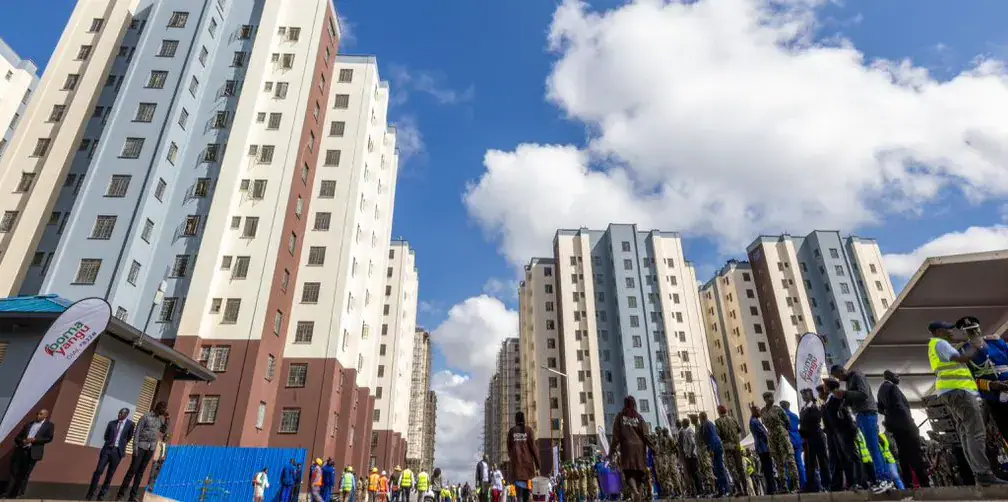
World Cities Day, observed from October 31 to November 2 in Fuzhou, China, is drawing global attention to Kenya's struggle to provide adequate and affordable housing for its rapidly growing urban population. The 2026 theme, "Regenerating the City: Adequate Housing for All," emphasizes the need for upgrading ageing infrastructure, improving informal settlements, and expanding affordable housing while building climate resilience. This year's focus highlights the challenges faced by Kenya and other urban centers worldwide.
Kenya's urbanization has put immense pressure on housing, sanitation, water, transport, and other essential services, particularly in informal settlements. Overcrowding, insecure tenure, and inadequate infrastructure are common issues in these areas. According to a Habitat for Humanity report, the annual housing demand in Kenya stands at 250,000 units, but only about 50,000 new units are delivered each year, resulting in a significant deficit. This shortage has severe implications for the country's urban development.
The Habitat for Humanity report also notes that approximately 6.4 million urban Kenyans live in informal settlements, and 68 percent of the population lacks land documentation or secure tenure. The Kenyan government has made adequate and affordable housing a top priority, but the implementation of these plans rests with county authorities, which often face resource constraints. This has hindered the government's efforts to address the housing crisis effectively.
Efforts to upgrade informal settlements have sometimes led to rising property values, raising concerns that low-income residents could be priced out of neighborhoods earmarked for regeneration. To avoid this, UN-Habitat and its partners stress the importance of community-led planning, ensuring that existing residents participate in decision-making processes to preserve their livelihoods and prevent displacement.
UN Secretary-General Antonio Guterres has urged cities worldwide to invest in adequate housing, describing it as foundational to tackling inequality and achieving sustainable development. He emphasized that access to affordable and secure housing is a fundamental human right and a critical component of urban development. The Secretary-General's statement underscores the need for collective action to address the global housing crisis.
The Kenyan government has acknowledged the need for inclusive regeneration and has initiated programs aimed at improving the living conditions in informal settlements. However, the effectiveness of these initiatives depends on the availability of resources and the level of community engagement. To address the housing deficit, the government must work closely with stakeholders, including county authorities, development partners, and local communities.
As World Cities Day comes to a close, the spotlight on Kenya's urban housing challenges serves as a reminder of the need for sustained efforts to address these issues. The country's experience highlights the importance of adopting a holistic approach to urban development, one that balances economic growth with social equity and environmental sustainability. By prioritizing adequate and affordable housing, Kenya can make progress toward achieving sustainable development and reducing inequality.
Key points
- Kenya's urban housing deficit is estimated to be 200,000 units annually.
- 6.4 million urban Kenyans live in informal settlements.
- The Kenyan government aims to provide adequate and affordable housing, but faces resource constraints.