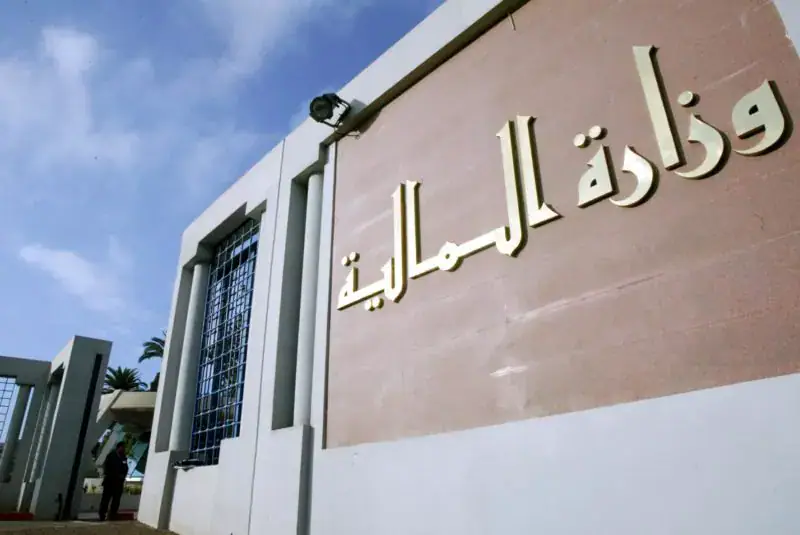
The World Bank has recommended that Algeria revisit the functioning of its Revenue Regulation Fund (FRR) to strengthen its role in stabilizing public finances. In its economic situation report for November 2026, the institution noted that the fund, created in 2000, was initially intended to reserve excess oil revenues but has been used to finance budget deficits. The bank emphasized the importance of a mechanism to mitigate the effects of international price fluctuations on the state budget.
Algeria's economy is heavily dependent on hydrocarbons, with oil and gas revenues accounting for 93% of exports and 47% of public revenues between 2014 and 2024. The country's oil production averages 1.3 million barrels per day, with proven reserves estimated at 12.2 billion barrels. The World Bank noted that this dependence exposes public finances to market fluctuations, with international oil and gas price changes directly impacting public finances.
The FRR was established to create a financial reserve during periods of high hydrocarbon prices and mobilize these resources when prices decrease to smooth out budget revenues. The fund's legal framework was defined by Law No. 2000-02 of June 27, 2000. Initially, the fund received exceptional revenues from petroleum taxation when oil prices exceeded the reference level set in finance laws.
Over the years, several texts have modified the fund's operating rules. In 2002, Executive Decree No. 02-67 and Ministerial Order No. 122 specified the modalities for feeding the fund and using its resources to reduce public debt and support budget stabilization. The 2004 finance law integrated advances granted by the Bank of Algeria into the FRR's resources.
The decline in oil prices from mid-2014 marked a turning point in the use of the FRR. The fund was almost entirely depleted. In 2017, the removal of the minimum threshold allowed the Treasury to have greater flexibility to mobilize the remaining resources. This evolution weakened the fund's stabilization function, which gradually transformed into an instrument for financing deficits.
The improvement in oil and gas markets from 2022 allowed for a new accumulation of resources. The FRR had 682 billion dinars at the beginning of 2023 and ended the year with 1,966 billion dinars. In 2023, additional revenues reached 1,721 billion dinars, and withdrawals amounted to 1,027 billion dinars, bringing the fund's balance to around 2,660 billion dinars.
However, this reconstitution did not last. In 2024, withdrawals largely exceeded the revenues recorded by the fund, leading to its total depletion. The World Bank believes that the current functioning of the FRR does not allow it to fully fulfill its stabilization mission. The institution recommends refocusing the fund on its initial mission to ensure better budgetary stability.
Key points
- World Bank recommends refocusing Algeria's Revenue Regulation Fund on its initial stabilization mission.
- Algeria's economy is heavily dependent on hydrocarbons, exposing public finances to market fluctuations.
- The Revenue Regulation Fund was created to mitigate the impact of hydrocarbon price volatility on public finances.