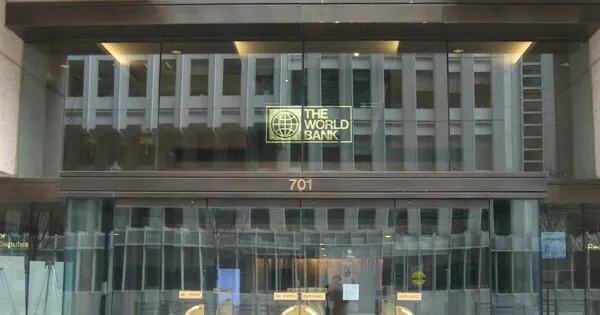
The World Bank has attracted a record $112 billion in private capital for projects it facilitated in the fiscal year ended June. This represents a significant increase from $69 billion in the previous year and more than three times the amount in fiscal 2022. The private capital, combined with $123 billion from the bank's own resources, brought the total to $235 billion.
World Bank President Ajay Banga stated that the institution is working to standardize and package loans to attract institutional investors, including pension funds, insurance companies, and asset managers. The goal is to more than double private capital commitments to over $200 billion within two to three years. Banga emphasized that the large pools of money are held by institutional investors, and they do not invest in individual projects.
Banga has made attracting private investment a priority as developing countries face significant financing needs for energy transition, education, healthcare, and agriculture, while official development assistance declines. He noted that there are not trillions of dollars available from governments, the World Bank, or philanthropy, so it is essential to find a way to attract private capital, which is plentiful and seeking good investment opportunities and returns.
The market for managed institutional capital exceeds $280 trillion, but historically, only 5-8% has gone to developing economies. Private companies have been reluctant to make large investments in developing countries due to regulatory uncertainty, political risk, and challenges related to local currencies.
The increase in private capital resulted from several initiatives, including streamlining the World Bank's operations and assigning a single manager as the country's liaison. The bank has also strengthened ties with development institutions and reduced average project approval times from a year or more to nine months.
Borrowing countries are increasingly seeking private investment rather than relying on external aid. About 40% of World Bank lending last fiscal year went to infrastructure, while 26% went to projects focused on regulatory reform.
Private capital flows increased sharply to lower-middle-income and upper-middle-income countries and across Africa, while remaining steady for low-income countries. Notable projects supported by the bank include Rio Tinto's greenfield lithium project in Argentina and a bond issued by Guatemala's largest lender, Banco Industrial, which was 3.6 times oversubscribed.
Key points
- The World Bank attracted a record $112 billion in private capital for projects in the fiscal year ended June.
- The institution aims to more than double private capital commitments to over $200 billion within two to three years.
- The market for managed institutional capital exceeds $280 trillion, but historically, only 5-8% has gone to developing economies.