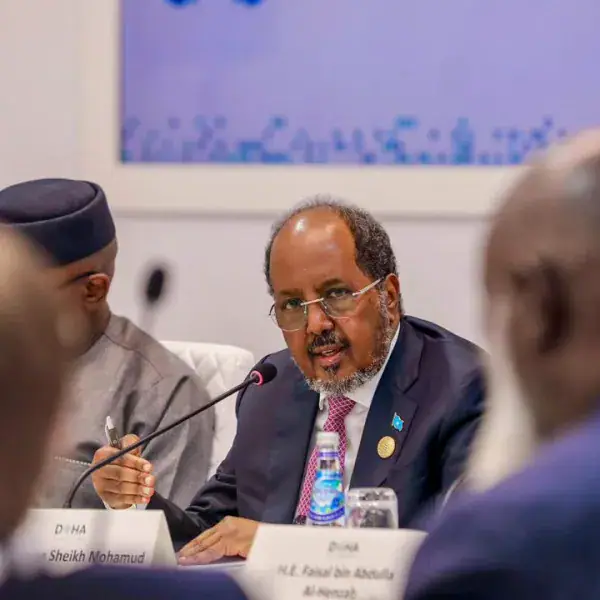
Somalia's ongoing political and constitutional crisis has raised concerns about the country's financial stability, with the World Bank considering a suspension of financial support to the federal budget. The crisis began when the Supreme Court ruled that a one-year extension of President Hassan Sheikh Mohamud's term was unlawful. The court's decision stated that the president's term expired on May 15, 2026, and that the current administration is a caretaker government.
The Supreme Court's ruling also gave political leaders 30 days to reach an agreement on an electoral framework and ordered that elections be held within 90 days. However, tensions have intensified following the presidency's attempt to remove Supreme Court Chief Justice Baashe Yusuf Ahmed. The deployment of police and military personnel around the court's headquarters has raised concerns about judicial independence and the separation of powers.
The World Bank and other international partners place importance on political stability, transparent governance, and independent institutions when assessing financial assistance to Somalia. The ongoing dispute could therefore affect the federal government's relationship with international financial institutions and development partners. Somalia's national budget remains heavily dependent on foreign assistance, with more than $828 million in planned financing linked to international grants.
Any suspension or delay in World Bank funding could put additional pressure on government finances, potentially affecting salary payments to civil servants and security personnel, as well as funding for essential public services. The 2026 budget framework projects $828.1 million in donor grants, including budget and project support, highlighting the government's continued reliance on external financing.
The latest developments have revived memories of the political crisis at the end of former President Mohamed Abdullahi Farmaajo's term. His attempt to extend his mandate through a parliamentary decision triggered domestic and international pressure and created uncertainty over financial assistance to Somalia. The reported possibility of a World Bank funding suspension adds another dimension to the current crisis.
The World Bank's reported deliberations over suspending support have not been independently confirmed by a public announcement from the institution. However, the potential move comes amid growing international concern over the dispute between the presidency, the judiciary, and opposition groups, raising questions about Somalia's political stability and the confidence of international donors.
The crisis has significant implications for Somalia's economic and financial affairs, with the country's national budget heavily reliant on foreign assistance. The government's ability to provide essential public services and pay salaries to civil servants and security personnel could be severely impacted if the World Bank funding is suspended or delayed.
Key points
- The World Bank is considering suspending financial support to Somalia's federal budget due to the country's ongoing political and constitutional crisis.
- The crisis has significant implications for Somalia's economic and financial affairs, with the country's national budget heavily reliant on foreign assistance.
- The Supreme Court's ruling that a one-year extension of President Hassan Sheikh Mohamud's term was unlawful has raised concerns about the country's political stability.