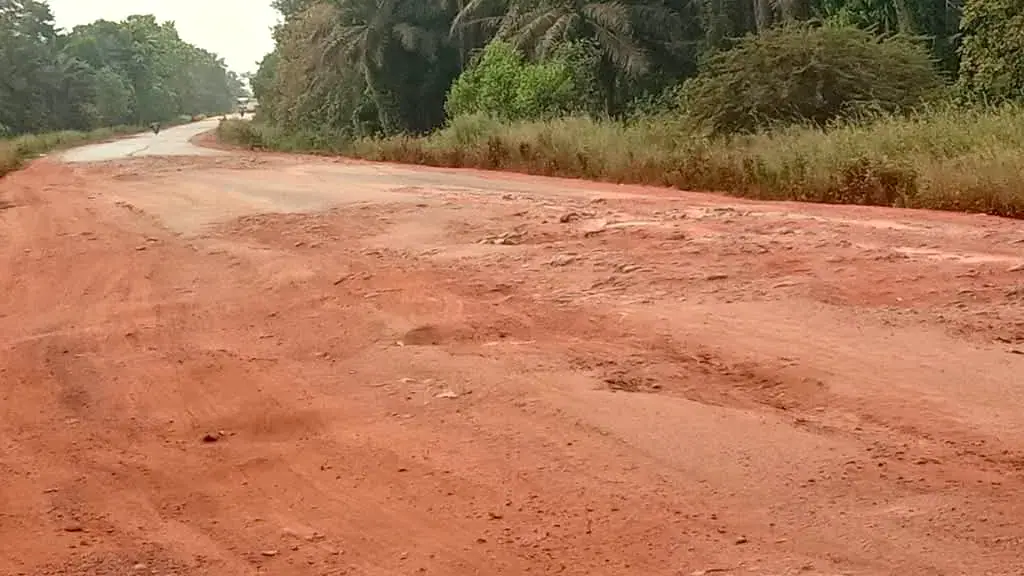
Guinea's National Route 3, which connects Dubréka to Boffa and Boké, was once considered the country's best road. However, it has fallen into a state of disrepair, making it a challenging journey for users. The road, built during the regime of General Lansané Conté, has degraded significantly in many areas, causing discomfort and difficulties for travelers. The road's condition begins to deteriorate just at Khorira, shortly after the rural commune's headquarters.
The road's condition worsens with the presence of potholes, dust, and shocks, making it difficult for vehicles to navigate. The holes, sometimes filled with gravel, do not last long due to the continuous passage of heavy vehicles, including sand trucks and large equipment used for bauxite extraction in the Boké region. The region has been declared a special economic zone by former President Alpha Condé, with a dozen Guinean and foreign companies operating there.
The road's condition is critical, with multiple points of deterioration, and dust covers everything, including vehicles, residents, plants, and plantations. According to a driver, during the last rainy season, a 4x4 vehicle could take four hours to cover less than 20 kilometers between Khorirah and Tanéné, considered the worst section of the RN 3. Drivers complain about the road's condition, stating that if the potholes are not filled with gravel, it becomes a nightmare.
The road's condition varies along its length, with some sections being less degraded than others. The section from Tanéné to Boffa is in relatively better condition than the Ténéné-Dubréka section. However, between Boffa and Boké, the road still deteriorates, and from Kolaboui to Boké-ville, there are issues with soil expansion and contraction. The opposite direction, however, is spared from this problem.
Drivers attribute the road's deterioration to the heavy load of vehicles carrying goods to the mines. They claim that vehicles traveling from Kamsar to Boké, carrying heavy loads, cause more damage to the road, while those returning are often empty or lightly loaded. In contrast, the section between Boké and Sangarédi is in good condition, with proper vertical and horizontal signage.
The road's poor condition has significant impacts on the local population, affecting transportation, trade, and economic activities. Residents and drivers are calling for urgent repairs and maintenance to alleviate their suffering. The road's condition has become a major concern, with many questioning the authorities' inaction in addressing the issue.
The Guinean government and relevant authorities face the challenge of addressing the road's deterioration and finding a lasting solution to prevent further degradation. With the presence of mining activities in the region, it is essential to find a balance between economic development and infrastructure maintenance to ensure the well-being of local communities and the country's economic growth.
Key points
- The road's condition has significant impacts on the local population, affecting transportation, trade, and economic activities.