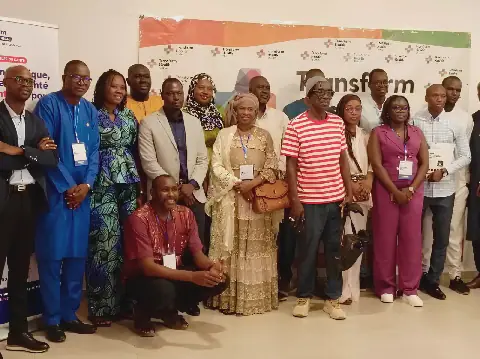
The government of Ghana has pledged to preserve the country's audiovisual heritage by supporting initiatives that promote the growth and sustainability of the industry. Madam Dzifa Ablah Gomashie, Minister of Tourism, Culture and Creative Arts, made this commitment at the commemoration of this year's World Day for Audiovisual Heritage in Accra. She emphasized the need to preserve the works of pioneering filmmakers and support the next generation of practitioners.
The 2026 World Day for Audiovisual Heritage was commemorated on the theme, "Your Window to the World", to raise awareness about the need to protect films, videos, recorded sounds and digital media. The event was organised by the Faculty of Digital Media and Design of the University of Media, Arts and Communication-Institute of Film and Television (UniMAC-IFT), in partnership with the United Nations Educational, Scientific and Cultural Organisation (UNESCO). The event also honoured the works of Reverend Dr Chris Hesse, a veteran filmmaker and former presidential cinematographer to Dr Kwame Nkrumah.
Madam Gomashie paid tribute to pioneers of the audiovisual industry, emphasising the need to preserve their works for future generations. She said the Ministry would encourage investment in the industry, support skills development and promote partnerships to enable practitioners to compete effectively in the global digital content space. The Ministry would also strengthen the audiovisual industry's value chain, from content creation to distribution, exhibition, marketing and preservation.
Dr Jim Fara Awindor, President of the Ghana Academy of Film and Television Arts (GAFTA), noted that Ghana's audiovisual heritage faced threats from inadequate resources and obsolete technology. He called on partners and stakeholders to support efforts to preserve historical materials, stressing the need for trained personnel, sustainable digital storage systems and technical expertise to transfer, catalogue, restore and maintain video recordings.
Dr Awindor also called for appropriate frameworks to regulate copyright, ownership, access and the responsible use of audiovisual materials to protect the rights of creators and custodians. He emphasized that the past does not speak for itself, but through the records that are preserved, the stories that are recovered and the care that is taken to make them available to future generations.
Mr Edmond Moukala, Head of the UNESCO Office in Accra, commended Reverend Dr Chris Hesse for his contribution to preserving Ghana's audiovisual heritage. He said UNESCO was implementing a project to strengthen the capacity of institutions and raise awareness of the importance of documentary heritage. Dr Rebecca Ohene-Asah, Dean of the Faculty of Digital Media and Design at UniMAC-IFT, said the University would continue to train students in emerging archival methods and programmes that met the demands of audiovisual preservation.
The government, through the 24-Hour Economy Authority's "Show24" sub-programme, had secured funding to digitise Ghana's audiovisual materials stored in obsolete formats, including celluloid. Dr Ohene-Asah urged students to continue creating exciting content while prioritising digital preservation for future generations. She emphasized that the audiovisual heritage that is protected today becomes the foundation on which tomorrow's generations understand their past and imagine their future.
Key points
- The government of Ghana has reaffirmed its commitment to supporting initiatives that promote the growth and sustainability of the country's audiovisual and creative industries.
- The 2026 World Day for Audiovisual Heritage was commemorated on the theme, "Your Window to the World", to raise awareness about the need to protect films, videos, recorded sounds and digital media.
- The government has secured funding to digitise Ghana's audiovisual materials stored in obsolete formats, including celluloid, through the 24-Hour Economy Authority's "Show24" sub-programme.