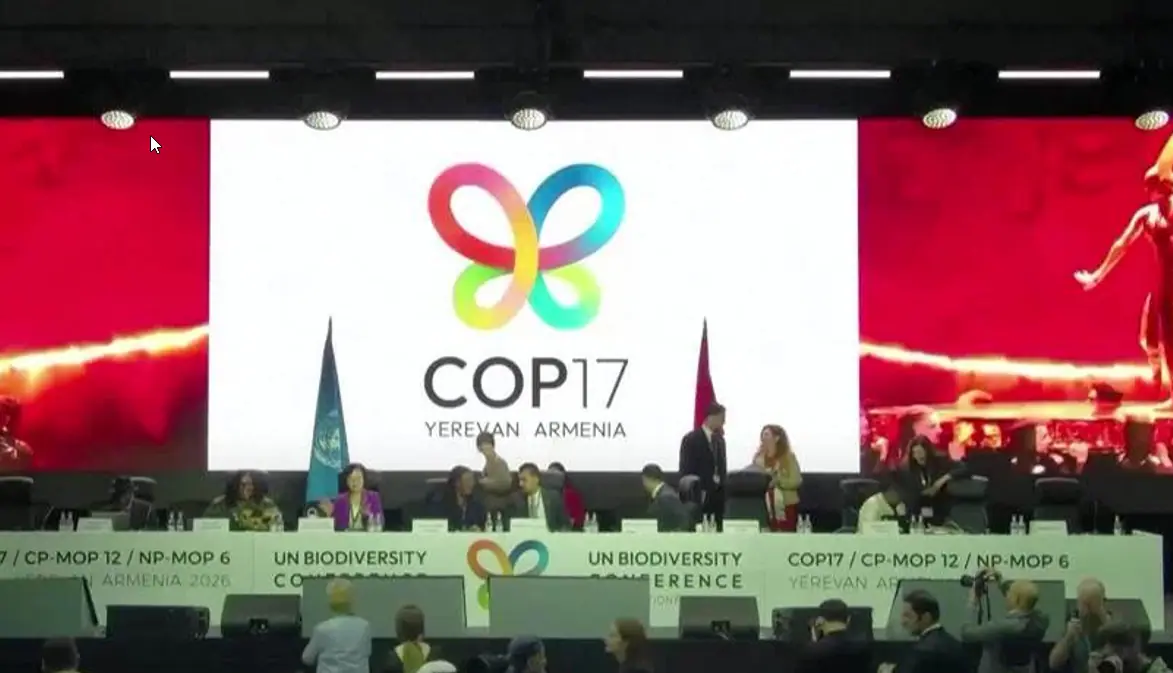
The world has agreed to renew efforts to protect nature, as nearly 200 countries adopted key texts at the COP17 biodiversity conference in Armenia. The agreements were reached after two weeks of intense negotiations, which highlighted persistent differences on several contentious issues. The texts aim to revive efforts to protect the environment, with the adoption of a global review of the Kunming-Montreal biodiversity agreement.
The Kunming-Montreal agreement, considered equivalent to the Paris climate accord, sets 23 objectives to be met by 2030, including protecting 30% of land and oceans, reducing pollution, and restoring degraded ecosystems. However, almost all objectives are currently off track. The COP17 agreement aims to get countries back on track, with a focus on accelerating efforts and strengthening measures to address the root causes of biodiversity loss.
One of the key issues discussed during the negotiations was the question of subsidies and incentives for activities that harm the environment, such as oil exploitation. While the final decision was worded weakly, there was a strong sense of political momentum on the issue of perverse financial incentives, including subsidies. An Lambrechts of Greenpeace International noted that this was a significant development.
The second text adopted at COP17 concerns funding, with countries debating who should pay to achieve the financial objectives set for 2030. The European Union attempted to persuade major emerging countries, including China, to join the official list of donors, which has not been updated since 2006. A proposal was made for countries to voluntarily identify themselves as donors.
Despite the agreements, some countries and NGOs expressed disappointment with the outcome of COP17. French Minister for Ecological Transition Monique Barbut stated that the conference's results were "not commensurate with the challenges." She lamented the missed opportunities to accelerate the response to biodiversity loss.
The conference also saw tensions over the scientific basis for global nature protection policy, with several countries accused of trying to undermine it. Swiss representative Gabriela Blatter expressed regret over the increasing questioning of scientific data and its consideration during political negotiations.
The COP17 conference concluded with a decision that Ecuador will host the next biodiversity conference in 2028. Despite the challenges, UN biodiversity chief Astrid Schomaker highlighted the remarkable achievements of the negotiators, who managed to reach agreements at a time when multilateralism is often criticized for not working.
Key points
- Countries agree to accelerate efforts to protect 30% of land and oceans by 2030.
- Negotiations highlight persistent differences on issues like subsidies for environmentally harmful activities.
- Ecuador to host next biodiversity conference in 2028.