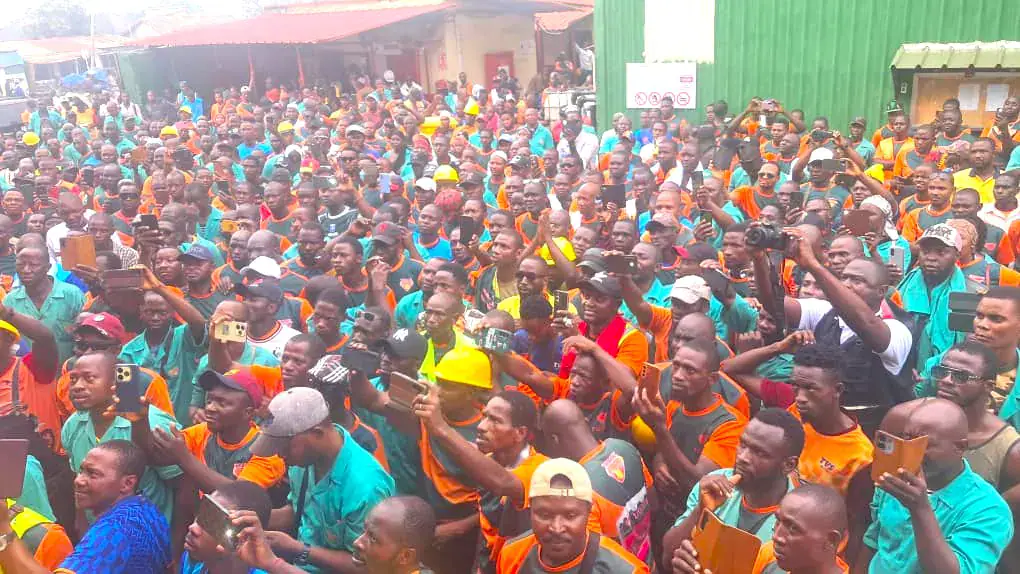
On Friday, November 6, workers from Topaz plastic factory gathered in front of their workplace in Manéah, a suburb of Coyah, Guinea. They carried placards reading "Libérez Topaz" (Free Topaz) and appealed to the authorities to allow the factory to resume operations. The factory, which employs around 3,000 people directly and indirectly, has been idle since August when the government banned the production of single-use plastics.
The workers' protest came after a recent government communiqué granting a six-month moratorium to industrial units, allowing them to manufacture certain plastic products, including water sachets. However, according to Kabiné Kouyaté, secretary-general of the Topaz workers' union, this concession would only enable about 100 workers to return to work, leaving the rest facing unemployment. The union representative emphasized that the protest was not a manifestation or a claim but a respectful appeal to the competent authorities.
Kouyaté argued that Topaz has implemented measures to ensure better waste management, including collection and recycling systems. He noted that the products manufactured by Topaz since 2015 are biodegradable. The union leader also denounced the presence of imported plastics, mainly from Sierra Leone, in the Guinean market while local production remains paralyzed. He questioned whether this was the way to protect national production.
Topaz has been in operation for over 20 years, contributing significantly to Guinea's economy through job creation and product distribution across the country. Kouyaté urged President Doumbouya to intervene and facilitate the resumption of operations at the factory. He stressed that the workers' approach was peaceful, with no disruption to traffic or damage caused.
The workers' union fears that if the factory remains closed, many employees will be exposed to unemployment, which could have negative social and economic consequences. Kouyaté called on the government to consider the impact of its decisions on the workforce and the local economy. The union representative reiterated that the workers' sole slogan was "Libérez Topaz" and that they sought to be heard without causing disorder or damage.
The situation at Topaz highlights the challenges faced by industries in Guinea, particularly those related to environmental regulations and economic development. The government's ban on single-use plastics aimed to reduce waste and promote sustainable practices, but it has also had unintended consequences, such as job losses and economic hardship for workers and their families.
As the Guinean government continues to navigate the complexities of economic development and environmental protection, the case of Topaz plastic factory serves as a reminder of the need for balanced policies that take into account the interests of all stakeholders, including workers, businesses, and the environment. The workers of Topaz remain hopeful that their appeal will be heard, and the factory will resume operations soon.
Key points
- Topaz plastic factory has been idle since August when the government banned the production of single-use plastics.