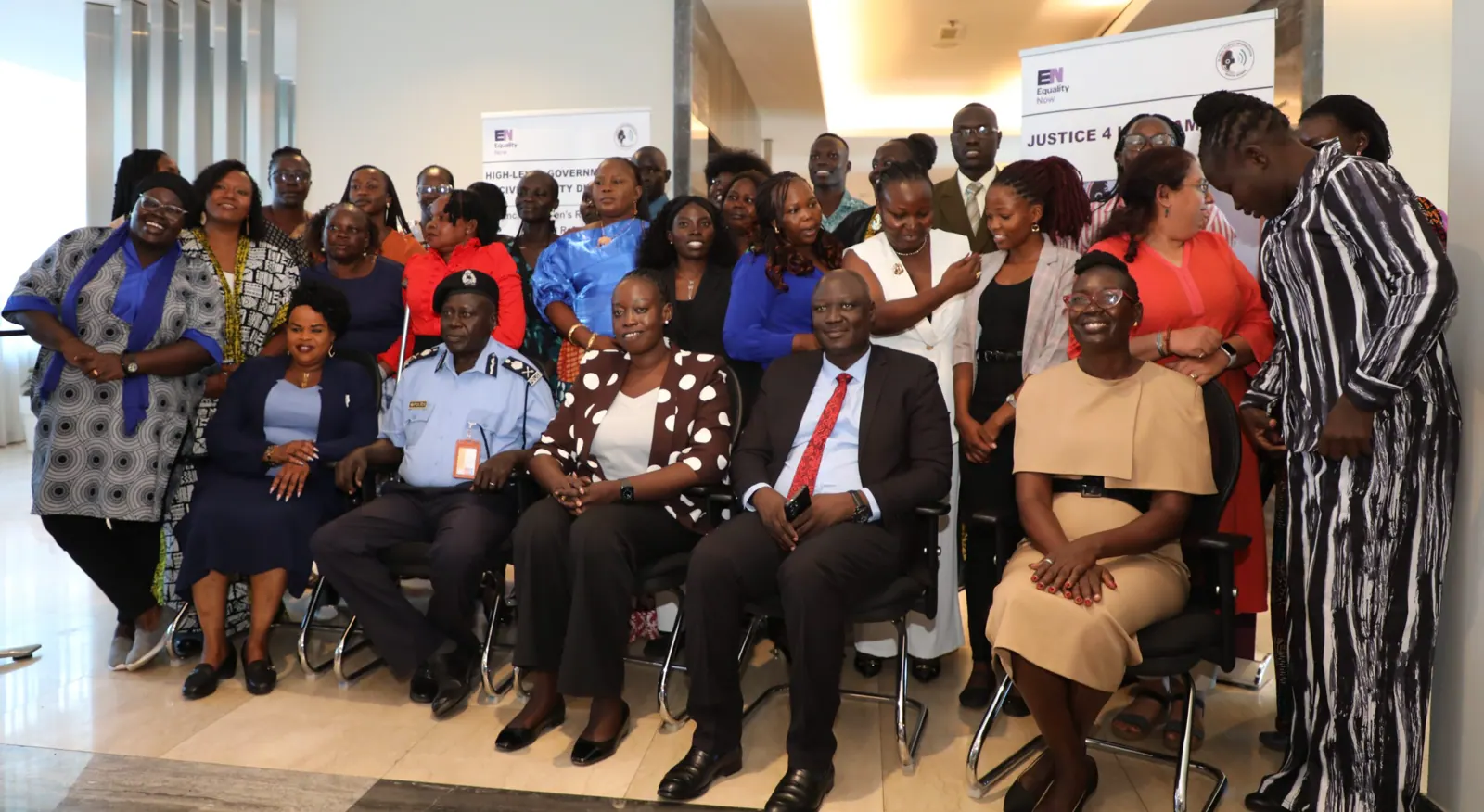
Financial constraints and limited civic space are major obstacles to women's participation in public life in South Sudan. A high-level government and civil society dialogue in Juba, organized by Global Voices Organization (GVO) and Equality Now Regional Office, brought together stakeholders to discuss advancing women's rights through legal reform. The dialogue highlighted the financial cost of seeking political office as a significant challenge. Women seeking nominations in the ongoing SPLM Primary election are struggling to raise the required three million South Sudanese pounds in nomination fees.
The Undersecretary in the Ministry of Gender, Child and Social Welfare, Adeng Andrew Aleek, emphasized the need for collective efforts to support women's participation. He warned that financial barriers could undermine the implementation of the country's 35 percent affirmative-action commitment. Aleek called on women to take ownership of their issues, stating, "Our own issues cannot be talked about by other people. It's us women to talk about." The dialogue also examined the status of key legal reforms, including the Anti-Gender-Based Violence Bill and the Family Law Bill.
The Anti-Gender-Based Violence Bill has undergone consultations in eight states and two administrative areas, according to Gisma N. Loro, Second Legal Counsel at the Ministry of Justice and Constitutional Affairs. The proposed legislation aims to strengthen protection against sexual, physical, and economic violence. The dialogue identified gaps, bottlenecks, and opportunities to advance the reforms. A reform pathway involving consensus-building, Cabinet consideration, parliamentary enactment, presidential assent, and eventual implementation was outlined.
Stakeholders emphasized the need for practical improvements in women's lives. Oyet Patrick Charles, Chair of the Civic Education Committee at the National Constitutional Review Commission, stressed that legal commitments must translate into tangible changes. "It should not just talk in papers or in books, but it should come to practicality," he said. The Executive Director of Global Voices Organization, Josephine Chandiru Drama, highlighted the challenges faced by women's rights groups and civil society organizations, including limited platforms and shrinking funding.
The Special Protection Unit's Director, Gen. James Dak, called for stronger action to protect women's rights, citing frameworks such as the Maputo Protocol and UN Security Council Resolution 1325. The dialogue concluded with stakeholders developing a Joint Advocacy Roadmap, identifying priority actions, responsible actors, timelines, advocacy entry points, and the support needed to advance the reforms. The roadmap aims to promote stronger government-civil society collaboration and coordinated advocacy.
The Joint Advocacy Roadmap underscores the importance of making legal rights accessible, enforceable, and reflected in women's everyday lives. Stakeholders emphasized the need for collective action to address the financial barriers and stalled legal reforms hindering women's participation in public life. The dialogue demonstrated a commitment to advancing women's rights through legal reform and practical implementation.
The high-level dialogue in Juba marked a significant step towards promoting women's participation in South Sudan's public life. The stakeholders' commitment to advancing women's rights through collective action and coordinated advocacy is crucial for achieving tangible changes. The outcome of the dialogue will be closely monitored to ensure that the agreed-upon actions are implemented, and women's rights are protected and promoted.
Key points
- Financial barriers and stalled legal reforms are significant obstacles to women's participation in public life in South Sudan.
- The Anti-Gender-Based Violence Bill and the Family Law Bill are key legal reforms that require attention and implementation.
- A Joint Advocacy Roadmap has been developed to promote stronger government-civil society collaboration and coordinated advocacy to advance women's rights.