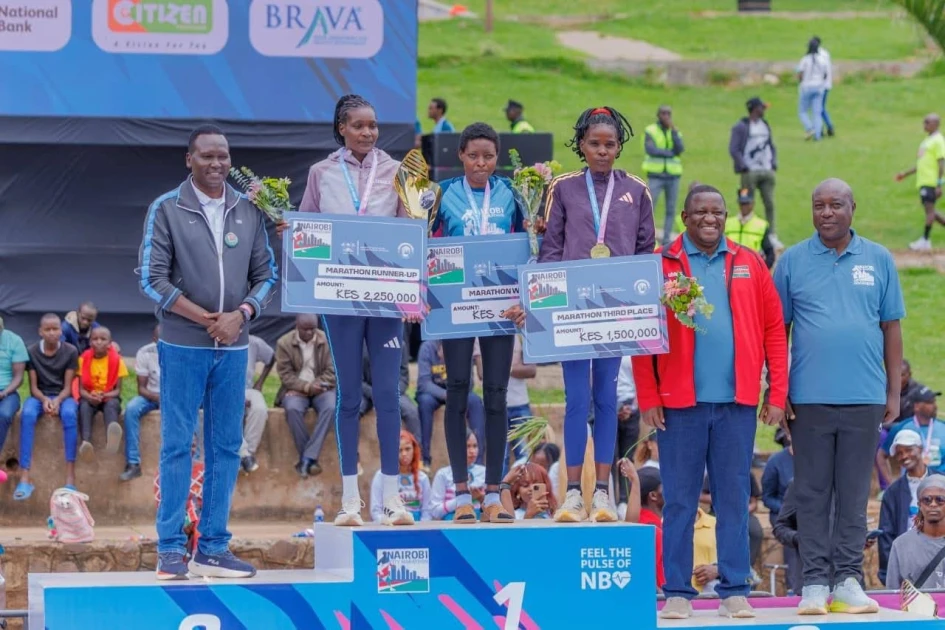
The annual Standard Chartered Nairobi Marathon has seen a significant increase in women's participation, with women accounting for 49 per cent of the field in 2025, outnumbering men in certain categories. The event, which has attracted over 330,000 participants since 2003, has become a platform for women to participate in public life as athletes, colleagues, mothers, friends, and community leaders. This growing trend is a reflection of the changing dynamics in sports and society.
Globally, marathon running is still male-dominated, with women accounting for 31.92 per cent of marathon participants in 2018. However, a study by RunRepeat found that women's participation grew faster than men's over the preceding decade. In Kenya, a 2021 peer-reviewed Rutgers-led study found that women in rural areas who participated in recreational soccer programs had 67 per cent greater odds of reporting good or excellent health than non-participants.
The Nairobi Marathon has become a route through which women participate in public life, and for brands, this is where sponsorship must mature. The most valuable sponsorships help institutions earn relevance in people's lives, building trust by playing a role in moments that matter. Women's participation gives the marathon that relevance, connecting elite sport to everyday health, family life, workplace culture, safety, confidence, and opportunity.
However, inclusion is not achieved by counting entries alone. Public sporting spaces must be designed for women's realities, not just open to women in theory. This includes providing mothers' rooms, nursing stations, accessible facilities, safer logistics, medical support, and family-friendly race categories. The economic case for women's participation in marathons is also strengthening, with major marathons becoming engines of tourism, media value, health promotion, and charitable giving.
The Nairobi Marathon has raised over Ksh.520 million through participant registrations, supporting over 55,000 young people, reaching over 12,000 youth through employability pathways, securing 372 jobs, and creating over 1,387 microbusiness jobs, with women accounting for 88 per cent of beneficiaries. This is where the women's running story becomes bigger than wellness, as proceeds support skills and enterprise pathways, making the race a bridge between movement and mobility.
To make women's participation more intentional, there is a need for better data on who enters, finishes, and returns, as well as safer routes into running clubs, school sport, and community fitness. More women are needed as organisers, coaches, suppliers, storytellers, and decision-makers. The marathon is a useful metaphor for progress, which is paced, and participation grows through habit, confidence, and repeated invitation.
As Kenya's marathon story evolves, it should focus on scale, access, and shared benefit, rather than just speed. When women run, they do not only cross finish lines; they move families, workplaces, communities, and futures forward. The opportunity now is to make women's participation more intentional and to create a culture that encourages and supports women in sports.
Key points
- Women's participation in marathons in Kenya is on the rise, reflecting social progress and a shift towards greater inclusivity in sports.
- The Nairobi Marathon has seen significant growth in women's participation, with women accounting for 49 per cent of the field in 2025.
- Women's participation in marathons has the potential to drive social and economic change, particularly in areas such as health, education, and economic empowerment.