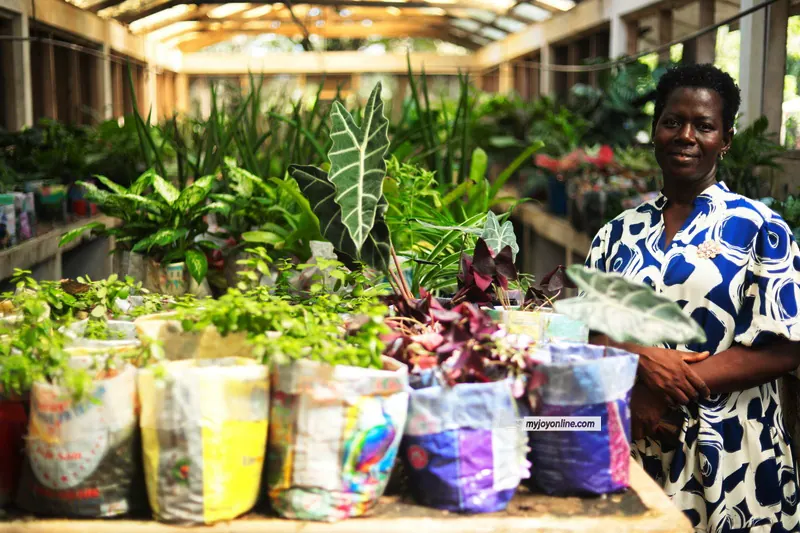
Ghana is neglecting the therapeutic and commercial potential of flowers, despite an annual import bill of $1.49 million for floricultural products. Administrator of the Department of Parks and Gardens, Antoinette Enyonam Amegbletor, believes that investing in floriculture and educating the public about the benefits of flowers could improve mental well-being, create economic opportunities, and promote environmental sustainability. She notes that flowers are often appreciated for their beauty, but their potential to support human well-being remains largely underutilized.
Madam Amegbletor highlights the range of flowers and ornamental plants cultivated at the Department's gardens, many of which are displayed with their botanical names. The Department has various divisions responsible for nurturing, propagating, and distributing plants, offering services to individuals, corporate organizations, and non-governmental organizations. She also mentions that the agency is taking flower education to schools, churches, and communities to raise awareness of the benefits of plants and encourage their wider use.
Integrating flowers and greenery into homes, workplaces, and healthcare facilities can create peaceful environments that promote relaxation and emotional well-being, according to Madam Amegbletor. She believes that hospitals, in particular, should pay greater attention to landscaping and the use of flowers, given their potential to create more calming surroundings for patients and healthcare workers. She recalls a previous workplace where efforts to improve the compound through landscaping and planting greenery appeared to have positively influenced the atmosphere among staff.
Madam Amegbletor stresses that successful floriculture depends on understanding the environmental conditions required by different plant species. She explains that Ghana's tropical climate supports certain varieties of flowers, while other plants are adapted to temperate conditions and may struggle to survive outside their preferred environments. She notes that factors such as soil conditions, sunlight, shade, and the surrounding environment influence how plants grow and develop.
Despite the potential for local cultivation, Ghana continues to import significant quantities of floricultural products to meet domestic demand. According to figures from the United Nations COMTRADE database, Ghana spends approximately $1.49 million annually on imports under the broader category of floricultural products, which includes live trees, plants, bulbs, roots, and cut flowers. Fresh cut flower imports alone account for an estimated $400,000 to $700,000 annually.
Kenya is the leading source of Ghana's fresh flower imports, followed by the Netherlands and South Africa. Commercial flower consignments reportedly arrive in Ghana by air about three times a week to meet demand for weddings, funerals, and corporate events. Roses 'N' More, Bloomville Ghana Limited, and Adenta Fresh Flowers Ltd are among the businesses operating in the flower import market. Although floriculture remains a relatively small segment of Ghana's overall agricultural import bill, greater local production could create opportunities for businesses, employment, and import substitution.
The Ghana Export Promotion Authority (GEPA) and other stakeholders have been promoting local production as part of efforts to reduce import dependence, conserve foreign exchange, and create jobs. Madam Amegbletor encourages institutions to incorporate greenery into their surroundings, citing embassies and Jubilee House as examples of places where landscaping can enhance the environment. She also suggests that selecting suitable plant varieties is important for landscaping purposes, and that evergreen shrubs are often preferred for hedges.
Key points
- Ghana spends $1.49m annually on imported flowers, overlooking their therapeutic potential.
- Investing in floriculture and educating the public about the benefits of flowers could improve mental well-being, create economic opportunities, and promote environmental sustainability.
- Successful floriculture depends on understanding the environmental conditions required by different plant species.