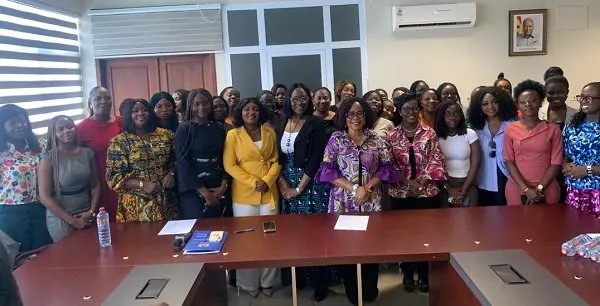
Two years after Ghana passed a law aimed at increasing women's representation in leadership, the numbers have barely changed. Women's representation in leadership positions, particularly at the local government level, remains around 14 percent. This is according to Dr Agnes Naa Momo Lartey, the Minister of Gender, Children and Social Protection. She made the remarks at a capacity-building programme for women journalists on the implementation of Act 1121.
Dr Lartey emphasized that Ghana has secured an important legislative win by passing Act 1121, but the country's attention must now turn to whether that law is producing visible change in communities, workplaces, and political institutions. She argued that Ghana cannot achieve sustainable development while women remain largely shut out of leadership and decision-making roles. The Minister described affirmative action as a central pillar of her Ministry's work, demanding deliberate implementation, ongoing monitoring, and sustained public engagement.
Act 1121 sets progressive targets for women's representation in decision-making positions, starting at 30 percent and climbing to 50 percent by 2034. With current representation estimated at only 14 percent, particularly in elected local government roles, Dr Lartey stressed that urgent efforts are needed to close that gap. She emphasized that opportunities in elected positions cannot simply be pushed to a later date, as this represents the practical difference between a law that promises fair access and a reality where leadership tables remain overwhelmingly male.
The Ministry has set up a Gender Equity Committee and Secretariat to oversee compliance, while the regulations accompanying the Act, known as L.I. 2522, came into force in June 2026. Dr Lartey said thousands of stakeholders have already been sensitised on their obligations under the law, and that 47 institutions had submitted compliance reports as of September 2026. This builds on the Ministry's earlier acknowledgment that Act 1121 lacks a dedicated enforcement body and that the government is instead leaning on journalists to help monitor and publicise compliance.
The Ministry's Chief Director, Dr Marian Kpakpa, urged the journalists at the workshop to use their platforms to educate the public and hold institutions accountable. She called on them to investigate which organisations are complying with the law and which are failing to create equal opportunities for women. Dr Charity Binka, Chairperson of the African Women Leaders Network, added that the media should give qualified women greater visibility in national discussions, including on economic and public finance matters often framed as male-dominated.
Dr Binka stressed that affirmative action is not about replacing merit with gender quotas, but about dismantling structural barriers that have historically kept qualified women out of leadership. She emphasized that the media plays a crucial role in promoting women's leadership and that their involvement is essential in ensuring the success of Act 1121. The Ministry says it will continue sensitisation, media outreach, and monitoring, with institutions expected to keep submitting compliance reports as the Gender Equity Committee tracks progress.
President John Dramani Mahama's role as an African Union Champion of Gender and Development should translate into concrete gains in women's participation across both Ghana and the wider continent. The sources give no fixed date for when the 30 percent threshold under Act 1121 must be met, though the law's overall targets run through to 2034. Understanding Act 1121 and its regulations will be crucial in ensuring its effective implementation and achieving its goals.
Key points
- Women's representation in leadership positions in Ghana remains at 14%, despite the passage of the Affirmative Action (Gender Equity) Act, 2024 (Act 1121).
- Act 1121 sets progressive targets for women's representation in decision-making positions, starting at 30 percent and climbing to 50 percent by 2034.
- The Ministry of Gender, Children and Social Protection will continue sensitisation, media outreach, and monitoring to ensure the effective implementation of Act 1121.