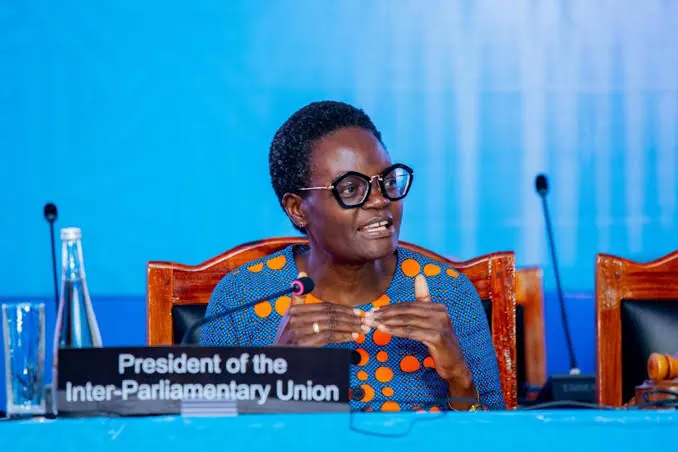
The discussion on women's roles in politics is evolving, focusing on the influence of women in Parliament rather than just their numbers. This was a key message from the Forum of Women Parliamentarians at the 153rd Inter-Parliamentary Union (IPU) Assembly in Arusha. Lawmakers from various countries addressed women's leadership, gender parity, and barriers limiting women's participation in decision-making.
IPU President, Dr. Tulia Ackson, emphasized that achieving gender equality requires more than increasing the number of women in parliamentary seats. She advocated for political systems that give women equal access to power and allow them to participate without fear, harassment, or intimidation. Dr. Ackson urged parliamentarians to implement commitments made at international forums into practical actions in their national legislatures.
In Tanzania, women currently account for 39.5 percent of Parliament, according to Speaker Mussa Azzan Zungu. While he described this representation as progress, he noted that it should be accompanied by greater participation, leadership, and influence in parliamentary and political processes. Zungu stressed that representation alone is not enough and that barriers affecting women's participation must be addressed.
The forum also highlighted the issue of technology and violence against women in politics. IPU Secretary General, Ms. Anda Filip, warned that advances in technology, including artificial intelligence, are creating new forms of abuse against women in public life. She raised concerns about sexualized deepfakes and called for measures to prevent such abuse and hold perpetrators accountable.
For women seeking leadership positions, the challenge is not only gaining entry into political institutions but also creating conditions in which they can remain, lead, and influence decisions. Dr. Tulia Ackson called for greater inclusion of young women, women from marginalized communities, and women with disabilities. She also emphasized that men must be part of efforts to achieve gender equality.
The discussions in Arusha point to a broader reality: representation is an important beginning, but meaningful participation requires access to leadership, protection from abuse, and the freedom to influence decisions. As women continue to take their place in parliaments around the world, the question is increasingly becoming not simply who is in the room, but whose voice has the power to shape what happens there.
The forum's outcomes and discussions reflect a growing understanding that women's participation in politics is crucial for achieving gender equality and good governance. The challenge now is to translate these discussions into concrete actions that can be implemented in various national contexts.
Key points
- Women in politics seek more than just parliamentary seats; they also want influence and leadership.
- The conversation on women in politics is shifting from numbers to influence and participation.
- Technology is creating new forms of abuse against women in politics, including sexualized deepfakes.