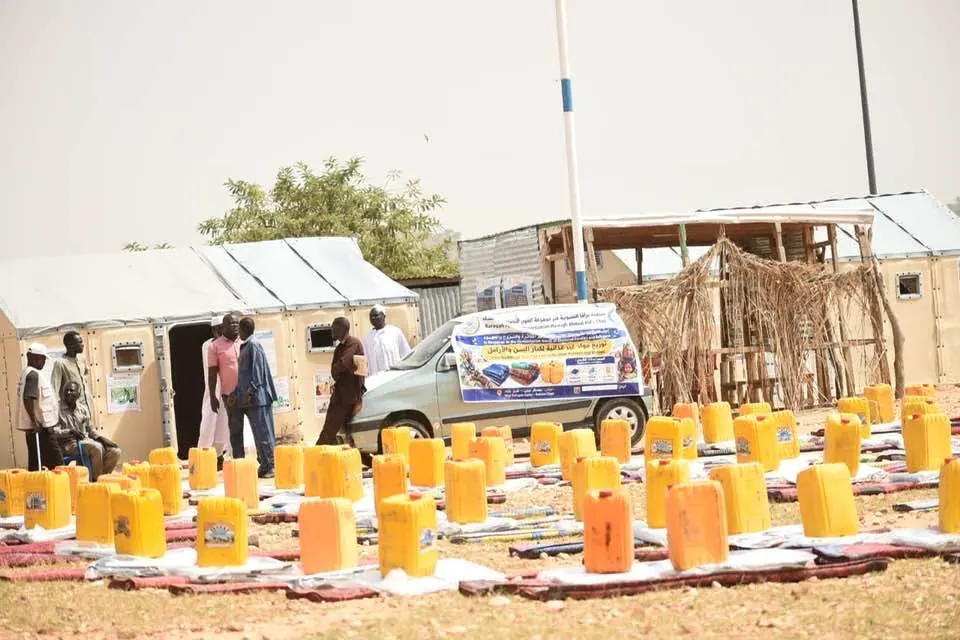
Hundreds of Sudanese refugees have left the Majee camp in eastern Chad, protesting the reduction of humanitarian aid. On Wednesday, they departed on foot and by donkey towards the Chadian border town of Adre with Sudan. The refugees expressed frustration with the recent assessment conducted earlier this year, which led to their exclusion from aid lists. This decision was announced by the UN High Commissioner for Refugees and the Chadian National Commission for the Reception and Reintegration of Refugees and Returnees.
Many of the departing refugees arrived at the Abteneqi camp on Thursday, exhausted and struggling. The majority were women and children who had spent the night at a local school before continuing their journey. The refugees cited the lack of aid as the primary reason for their departure. The situation highlights the challenges faced by refugees in eastern Chad, where aid distribution has been inconsistent. The refugees' decision to leave the camp underscores the need for a sustainable solution to their plight.
Refugees in another camp, Dqi, are also facing severe shortages of food aid. They report that food distribution stopped about three months ago, leaving them struggling to access basic necessities. The last distribution included limited quantities of corn, oil, and lentils per person. The absence of aid has forced some families to go without meals for extended periods. The refugees are increasingly desperate, with some families leaving the camp on foot in search of better living conditions in nearby cities.
The Dqi camp is home to over 25,000 refugees, and there are concerns that more people will leave in search of better living conditions. The situation is dire, with many refugees lacking access to basic necessities like food and shelter. The camp's conditions have led some to consider moving to larger Chadian cities or even Libya. The refugees' situation is a pressing concern for humanitarian organizations and the Chadian government.
The UN High Commissioner for Refugees and the Chadian National Commission for the Reception and Reintegration of Refugees and Returnees conducted the assessment that led to the aid cuts. The evaluation aimed to ensure that aid reaches those most in need. However, the refugees argue that the assessment was flawed and left many without assistance. The controversy surrounding the assessment has led to increased tensions between the refugees and humanitarian organizations.
The refugees' departure from the Majee camp has put pressure on neighboring camps, such as Abteneqi. The influx of new arrivals has strained the camp's resources, which are already limited. Humanitarian organizations are working to respond to the needs of the refugees, but the situation remains challenging. The refugees' plight highlights the need for a coordinated response to the crisis.
The situation in eastern Chad remains volatile, with refugees facing significant challenges in accessing aid and basic necessities. The departure of hundreds of refugees from the Majee camp underscores the need for a sustainable solution to the crisis. Humanitarian organizations and the Chadian government must work together to address the refugees' needs and ensure their well-being.
Key points
- Hundreds of Sudanese refugees left the Majee camp in eastern Chad due to aid cuts.
- Refugees in eastern Chad face severe shortages of food aid, leading to increased desperation.
- The situation in eastern Chad highlights the need for a coordinated response to the refugee crisis.