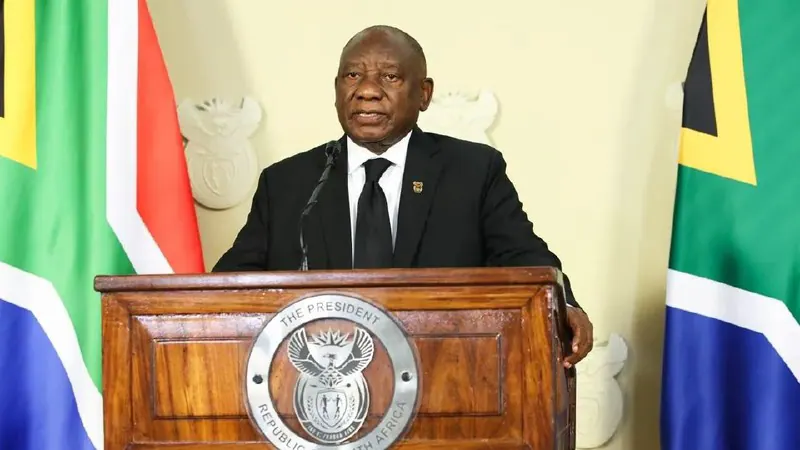
The operations manager of Women For Change, Merlize Jogiat, has expressed frustration and exhaustion over the government's repeated promises to address gender-based violence and femicide (GBVF) in South Africa. Following President Cyril Ramaphosa's latest address to the nation on GBVF, Jogiat said that the government's failure to take meaningful action has created a sense of exhaustion among activists. She believes that the government's tactics are designed to wear down activists and weaken public resistance to the crisis.
Jogiat's comments come as South Africa confronts renewed public anger over the killings of women in Ekurhuleni and demands for government to move beyond declarations of concern towards action that can be measured, monitored, and felt in the lives of those who fear becoming the next victims. The President's address was seen as a reminder of how long women's rights activists have been demanding meaningful intervention, and how emotionally draining it has become to keep returning to the same conversation while the violence continues.
According to Jogiat, the government's repeated promises, speeches, and failure to answer specific questions have created a sense of exhaustion that risks weakening public resistance to GBVF. She compared the pattern to abusive tactics in which exhaustion is used to wear down a person until they no longer have the energy to resist. Jogiat argued that repeated speeches, promises that activists believe will not materialize, and unanswered questions risk creating precisely that outcome: a public so exhausted by disappointment that it struggles to keep demanding change.
The human cost of prolonged inaction is a deeper concern for Jogiat. For women living with the threat of violence, and for families mourning loved ones, the consequences of delayed justice are not abstract political failures. They are lived realities. Every unresolved murder leaves families waiting for answers. Every stalled investigation can prolong their grief. And every promise that fails to translate into visible change risks deepening the mistrust between affected communities and the institutions expected to protect them.
Jogiat's appeal was not simply for people to criticize the President's latest address, but to recognize what she sees as a pattern that can undermine collective resistance. She urged South Africans to educate themselves about abusive tactics and examine how power operates within the systems that govern their lives. By doing so, she hopes that citizens can develop a deeper understanding of the dynamics at play and find ways to hold the government accountable for its actions.
The government's response to GBVF has been criticized for its lack of concrete action. Despite numerous promises and announcements, many activists believe that the government has not done enough to address the root causes of the crisis. Jogiat's comments reflect a growing frustration among activists who feel that the government's rhetoric has not been matched by meaningful action. As a result, many are calling for the government to move beyond declarations of concern and take concrete steps to address the crisis.
The issue of GBVF remains a pressing concern in South Africa, with many women and families affected by the crisis. According to Jogiat, it is essential that the government takes concrete action to address the crisis, rather than simply making promises. The government must work to rebuild trust with affected communities and demonstrate a commitment to meaningful action. By doing so, it can help to alleviate the exhaustion and frustration felt by many activists and ordinary South Africans.
Key points
- Women's rights group says government's repeated promises to address GBVF are wearing down activists and risk weakening public resistance.
- Government's failure to take meaningful action has created a sense of exhaustion among activists.
- Activists are calling for the government to move beyond declarations of concern and take concrete steps to address the crisis.