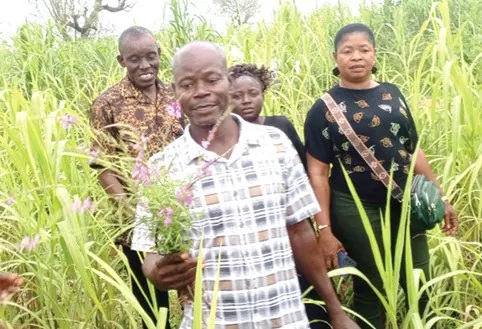
A parasitic weed known as Striga, or witchweed, is wreaking havoc on farms in Ghana's Upper East Region, threatening the livelihoods of cereal farmers. The weed attaches itself to the roots of crops like maize, sorghum, and millet, drawing water and nutrients, often stunting growth or killing the crop before it can produce grain. This has resulted in significant losses for farmers in the region, with one farmer, Bright Abentara, reporting that the weed wiped out his crops before they reached maturity.
The infestation has spread across farms in the region, with many farmers reporting losses of over half their expected harvest. According to Graphic Online, the situation is dire, with farmers in the north already contending with erratic rainfall and flooding. The Upper East Region, like much of northern Ghana, depends heavily on staple cereal farming for both household food supply and income. A loss of more than half of an expected harvest represents a significant hit to a farming household's food stocks and finances for the coming year.
Striga is a destructive plant that can lie dormant for years before germinating when a suitable host crop is planted nearby. The damage often happens underground and in the early growing stages, making it difficult for farmers to notice the extent of the infestation until the weed's distinctive pink or purple flowers emerge above the soil. By this point, the harvest has often already been compromised, leaving farmers with reduced meals, lost income, and greater vulnerability heading into the dry season.
Agricultural extension experts recommend a combination of crop rotation, the planting of Striga-resistant maize varieties, and improved soil fertility management as ways to control the weed's spread. However, uptake of these practices in affected districts reportedly remains low, meaning many farmers continue to plant in soil already infested with Striga seeds. This perpetuates the cycle of infestation, making it challenging for farmers to manage the weed.
The Striga outbreak compounds pressures already facing the region, where erratic rainfall patterns and flooding have affected farming communities across northern Ghana in recent times. For families relying on maize, sorghum, or millet as both food and cash crop, a failed or diminished harvest can have severe consequences. The situation highlights the need for urgent intervention to support affected farmers and mitigate the impact of the infestation.
As of the Graphic Online report, no response has yet been recorded from the Ministry of Food and Agriculture or any government agency regarding this specific outbreak in the Upper East Region. No timeline has been given for any intervention, leaving affected farmers like Abentara to contend with the losses on their own for now. The lack of response has raised concerns about the government's preparedness to address the issue.
The situation in the Upper East Region underscores the need for a comprehensive approach to address the Striga infestation and its impact on food security in the north. With the region heavily reliant on cereal farming, it is essential that farmers are equipped with the necessary tools and support to manage the weed and restore their crops. Chale News will continue to follow this story as more information becomes available.
Key points
- The Striga infestation has resulted in losses of over half of expected harvests for many farmers in the Upper East Region.
- Agricultural extension experts recommend crop rotation, Striga-resistant maize varieties, and improved soil fertility management to control the weed's spread.
- The government has not yet responded to the outbreak, leaving affected farmers to contend with the losses on their own.