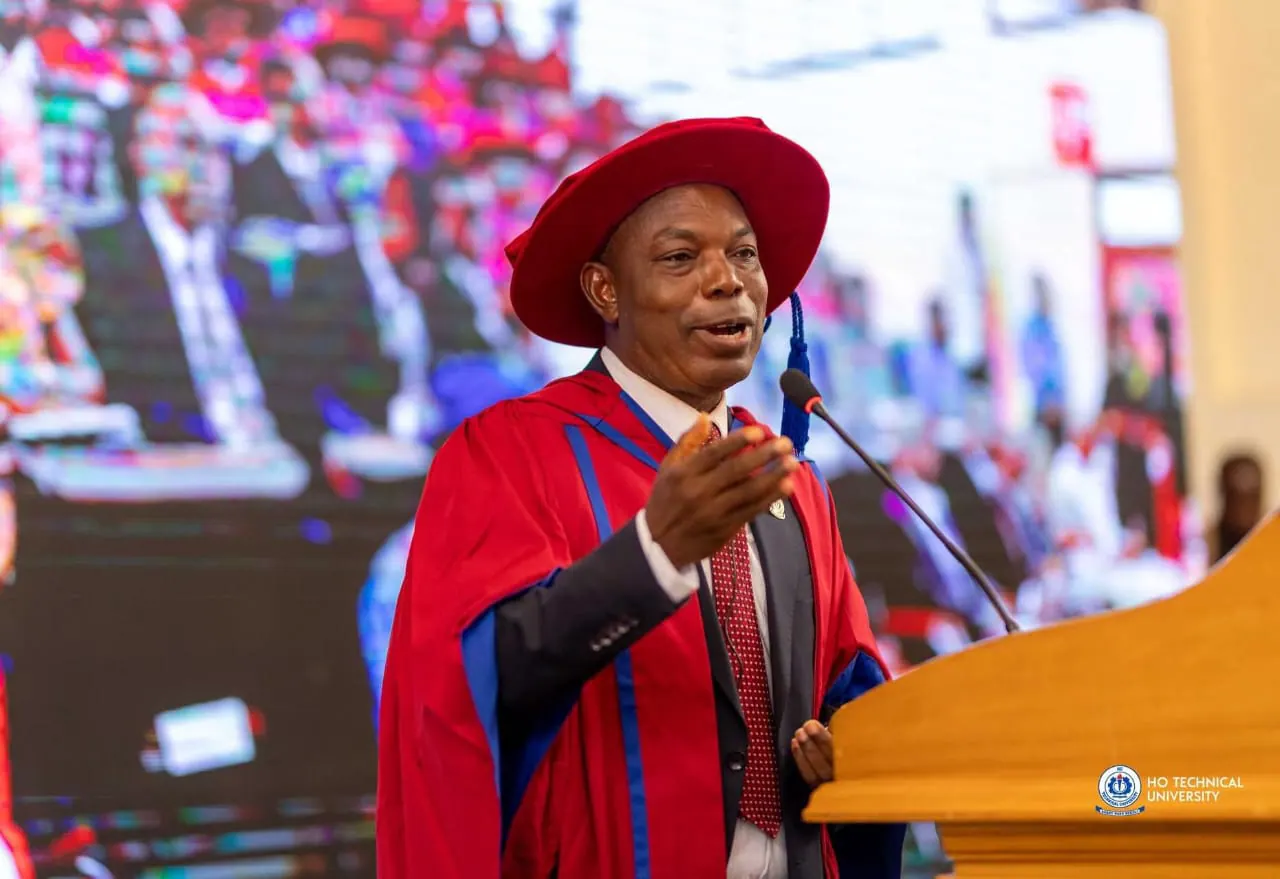
Professor Ben Q. Honyenuga, Vice-Chancellor of the Technical University (HTU), has called on women engineers to focus on innovation, integrity, and practical solutions to advance Ghana's sustainable development. He made this call as Guest Speaker at the fifth edition of WinEAffair, organised by Women in Engineering Ghana (WinE Ghana) at the G.M. Afeti Auditorium of HTU. The event was held on the theme: "Engineering a Sustainable Future: Women Leading the Way."
Prof. Honyenuga emphasized that women in engineering have the capacity, creativity, and determination to address national challenges and contribute meaningfully to the country's development. He challenged the participants not to remain idle or focus solely on professional titles but to identify opportunities to make meaningful contributions to society. According to him, Ghana needs engineers, particularly women, who can translate their knowledge and skills into solutions that respond to the country's development needs.
The Vice-Chancellor described women engineers as vital contributors to national development through their knowledge, creativity, collaboration, and understanding of social impact. He noted that sustainable engineering goes beyond designing products, buildings, machines, and technologies to include developing affordable, appropriate, and community-centered solutions. Prof. Honyenuga also highlighted that engineering decisions have social consequences and that technically successful projects can still harm communities when they ignore consultation, accessibility, inequality, or local realities.
Prof. Honyenuga encouraged young women pursuing engineering to continue learning, asking questions, building confidence, and supporting one another. He acknowledged the barriers they might encounter, including stereotypes, unequal opportunities, limited resources, and pressure to prove themselves. He urged them not to allow such experiences to define their abilities or limit their ambitions.
The Vice-Chancellor also emphasized the importance of leadership, stating that it should begin with integrity, courage, and a willingness to take responsibility rather than professional titles. He called on women to participate actively in designing, constructing, programming, managing, researching, teaching, regulating, investing, and innovating, saying their ideas, work, and leadership are needed for Ghana's future.
Prof. Honyenuga noted that HTU was pleased to host the programme because it aligned with the university's vision of encouraging more girls to pursue engineering education and careers. He said sustainable engineering must be ethical, inclusive, and people-centered, creating jobs, protecting the environment, strengthening local capacity, and expanding opportunities.
The event, organised by WinE Ghana, aims to promote the participation of women in engineering and encourage them to take leadership roles in Ghana's development. The Vice-Chancellor's call to action is expected to inspire women engineers to make a positive impact in their communities and contribute to Ghana's sustainable development.
Key points
- Women engineers are vital contributors to national development through their knowledge, creativity, collaboration, and understanding of social impact.
- Sustainable engineering must be ethical, inclusive, and people-centered, creating jobs, protecting the environment, and expanding opportunities.
- Leadership should begin with integrity, courage, and a willingness to take responsibility rather than professional titles.