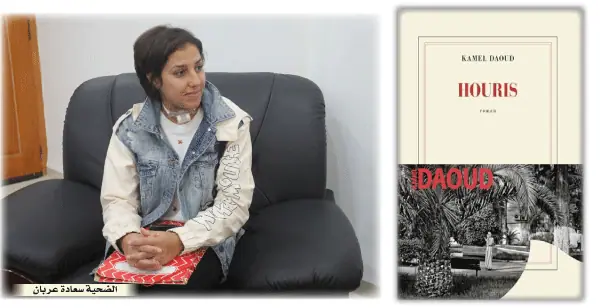
The controversy surrounding Algerian author Kamel Daoud's novel "Houariates" has taken a new turn with the wife of the author, Aicha Dhadouh, a psychiatrist, denying any involvement in breaching medical confidentiality. In a statement released on October 25, 2026, Dhadouh said she was "innocent" and had not stolen any medical files or breached medical confidentiality. Her statement comes amid a lawsuit filed against her and her husband in Algeria, accusing them of breaching medical confidentiality and exploiting the story of a patient, Saadia Arban.
The lawsuit was filed by Arban, a 32-year-old woman who was a victim of terrorism and lost her voice after her throat was cut during the Algerian civil war. Arban accused Daoud of violating her private life in his novel "Houariates", which won the prestigious Goncourt literary prize in 2024. Arban claimed that Daoud had used details from her life, which she had shared with his wife during therapy sessions, without her consent. Dhadouh's statement attempts to distance herself from the controversy, emphasizing that she had always respected medical confidentiality.
Dhadouh's statement also revealed that she had wanted to testify before the Algerian justice system but was prevented from doing so due to her family situation and her husband's positions. She emphasized that her husband's voice should not overshadow hers and that she disagreed with him on several key issues, including Algeria, Islam, and Palestine. The statement has sparked a new wave of interest in the case, which has raised questions about the limits of literary creativity, medical confidentiality, and the rights of patients.
The controversy surrounding "Houariates" began in November 2024, when Arban appeared on a TV show, accusing Daoud of exploiting her story without her consent. Arban claimed that she had met Daoud and his wife in 2015, when she was receiving therapy from Dhadouh, and that they had proposed adapting her story into a TV series or film. Arban said she had refused their proposal, but was shocked to discover that details from her life had been used in Daoud's novel.
Arban's lawyer, Fatima Zahra Ben Brahame, filed a lawsuit against Daoud and his wife in November 2024, accusing them of breaching medical confidentiality and exploiting Arban's story. Ben Brahame said that Arban's story had been used without her consent, and that the novel had caused her further trauma. The lawsuit has sparked a heated debate about the ethics of literary creativity and the rights of patients.
Daoud has defended his novel, arguing that it is a work of fiction and that Arban's story was not the sole inspiration for the book. The publisher of the novel, Gallimard, has also defended the book, saying that while it was inspired by the Algerian civil war, the characters and plot were fictional. However, Arban's lawyers argue that the similarities between her story and the novel are too great to be coincidental.
The case has raised important questions about the limits of literary creativity, medical confidentiality, and the rights of patients. It has also highlighted the complexities of the relationship between writers, therapists, and their patients. As the case continues to unfold, it remains to be seen how the Algerian justice system will rule on the matter.
Key points
- Aicha Dhadouh denies breaching medical confidentiality in her husband's novel "Houariates".
- The controversy surrounding "Houariates" has raised questions about the limits of literary creativity and medical confidentiality.
- The case has sparked a heated debate about the ethics of literary creativity and the rights of patients.