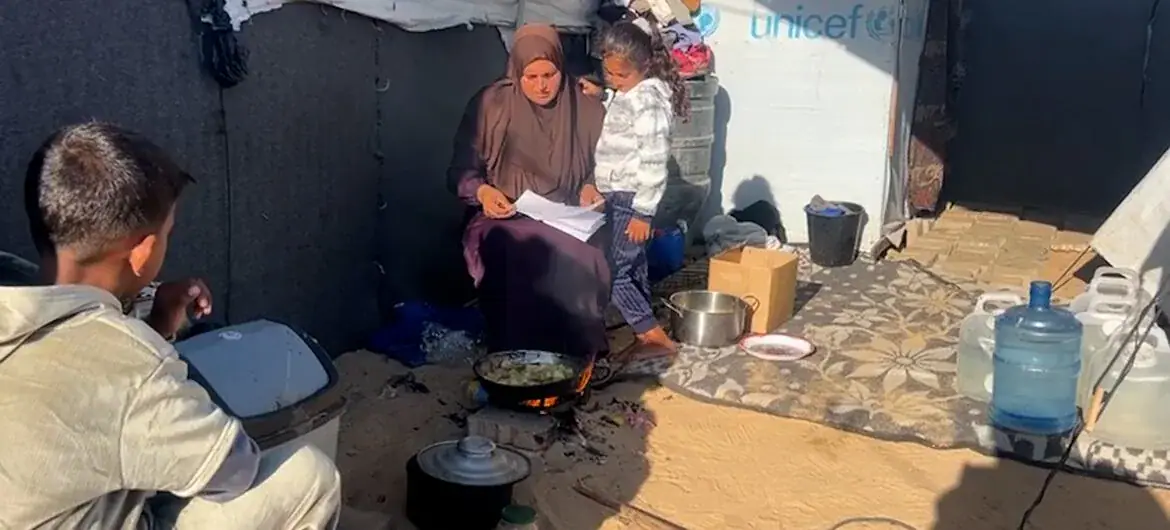
In western Gaza City, the Flowers of Palestine camp has been set up to provide shelter and support for widows and their families. The camp, organized by Nidaa Matar, has secured enough support to shelter 82 widowed families. Women living in the camp, such as Kholoud Farajallah and Umm Mohammed Abu Rayala, face daily struggles to access basic necessities like water, shelter, and income.
The daily routine for women in the camp begins with a trip to water tankers, where they fill buckets and plastic containers before returning to their makeshift canvas dwellings. Kholoud Farajallah, a mother of three who lost her husband early in the war, now performs both her own duties and those her husband once handled. She questions where her rights lie and has had to abandon her master's degree in mathematics and teaching methods to care for her children.
Farajallah has turned to baking pastries and later opened a small timber-and-plastic shop to cover her children's basic needs. However, many women in the camp are not as fortunate. UN Women reports that more than 86,000 households in Gaza are now headed by women – about one in four, up from one in nine before the conflict. This significant shift has put a strain on the already limited resources available to these families.
Umm Mohammed Abu Rayala, another resident of the camp, cares for seven children alone, handling feeding, schooling, and household chores after losing her husband. She notes that women never carried this burden before the war. According to UN Women, 68 percent of women-headed households lack adequate shelter and 67 percent urgently need cash assistance.
The situation is expected to worsen with the approaching winter rains and floods, which will further exacerbate the conditions in displacement camps, especially for women-headed households whose shelters are fragile and who face repeated displacement. Since the war began, nearly 50,000 women and girls in Gaza have been killed or seriously injured, including more than 38,000 deaths and around 11,700 permanent disabilities.
The Flowers of Palestine initiative aims to provide support to widows and orphans, but the need for assistance far exceeds the available resources. Farajallah reiterates that she has received none of her rights, having given up her education and personal aspirations to raise her children. She wonders how much longer she can sustain this effort, highlighting the urgent need for sustained support and aid.
The conflict has had a disproportionate impact on women and girls in Gaza, with many facing significant challenges in accessing basic necessities like water, shelter, and income. The international community must take note of the situation and provide adequate support to address the needs of these vulnerable populations.
Key points
- 86,000 households in Gaza are now headed by women
- 68 percent of women-headed households lack adequate shelter
- 67 percent of women-headed households urgently need cash assistance