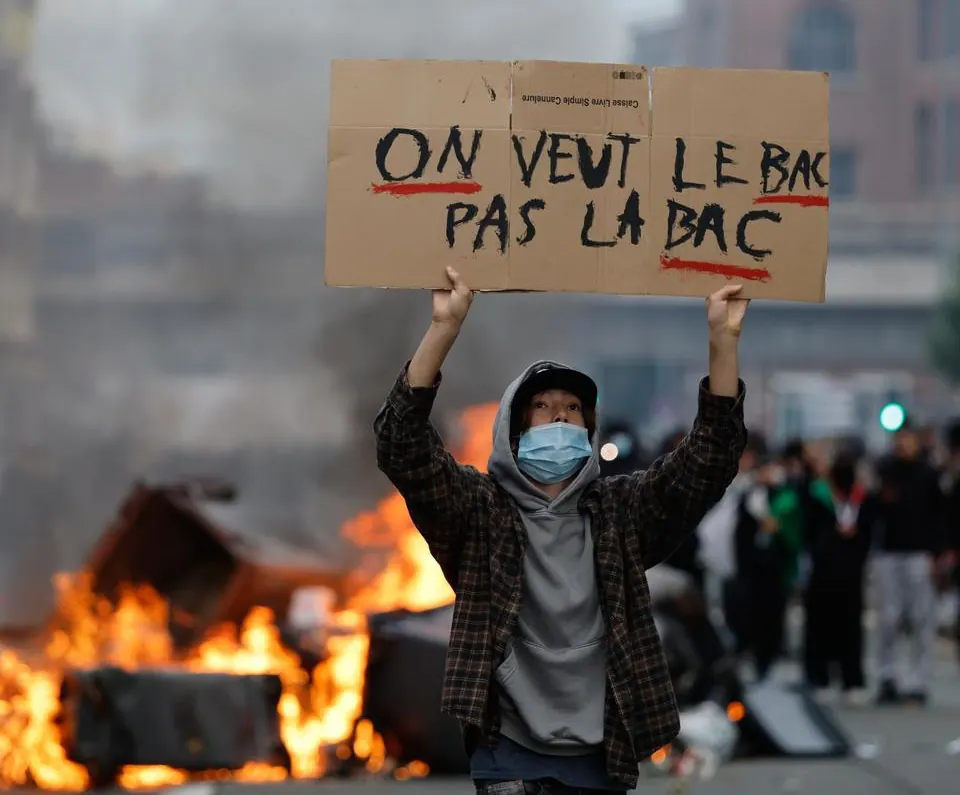
Large-scale protests have been sweeping across France as students and pupils demand better education conditions. The demonstrations began in several high schools near Paris before spreading to other parts of the country. According to the French Ministry of Interior, 356 educational institutions were partially or completely shut down on Wednesday, up from 338 on Tuesday. The protests are primarily driven by concerns over inadequate resources, teacher shortages, and poor learning conditions.
The unrest has not been limited to high schools, with 30 university campuses in cities such as Paris, Lyon, Marseille, and Strasbourg joining the protests. In some areas, clashes between protesters and police have been reported, with several educational institutions sustaining damage. Nine institutions were vandalized, and 18 people were arrested, according to the authorities. The situation escalated at night, with police deploying tear gas and recording instances of vandalism and arson targeting school buses.
A key factor fueling the protests is the government's proposed reforms to the higher education system. The government plans to introduce annual registration fees for students who do not receive scholarships, sparking concerns among students. This move has contributed to the widespread discontent among students, who feel that their concerns are not being addressed. As a result, thousands of students and pupils have taken to the streets to express their dissatisfaction with the current state of education in France.
The protests have disrupted the academic calendar, with many educational institutions forced to close temporarily. The situation has caused concern among parents, teachers, and authorities, who are working to find a resolution to the crisis. The French government has been urged to engage in dialogue with student representatives to address their concerns and find a peaceful solution to the protests.
The protests in France have drawn attention to the challenges facing the country's education system. Issues such as inadequate funding, teacher shortages, and poor infrastructure have long been a concern for students and educators. The government's proposed reforms have added to the discontent, with many students feeling that their future prospects are being threatened.
As the protests continue, there are concerns about the potential impact on the academic year. With many educational institutions forced to close, students are facing uncertainty about their studies. The situation has also raised questions about the government's handling of the education sector and its ability to address the concerns of students and educators.
The student protests in France have highlighted the need for a comprehensive overhaul of the education system. To address the concerns of students and educators, the government will need to engage in meaningful dialogue and consider the long-term implications of its policies. The protests have demonstrated the determination of French students to fight for their rights and demand better education conditions.
Key points
- Over 350 educational institutions have been affected by the protests in France.
- The protests are driven by concerns over education issues, including inadequate resources and teacher shortages.
- The government's proposed reforms to the higher education system have added to the discontent among students.