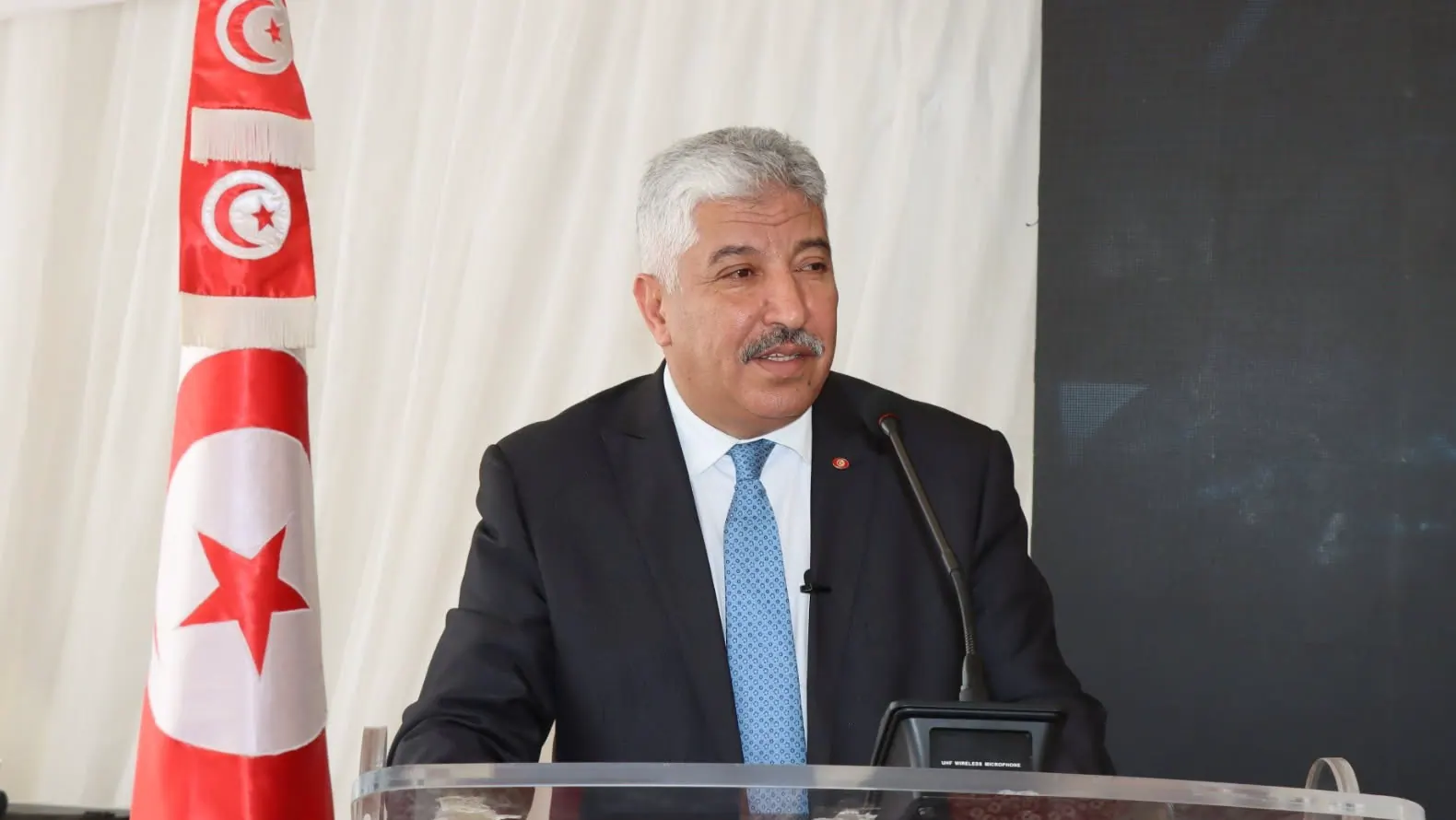
Tunisian Employment and Vocational Training Minister Riadh Chouwd has highlighted the importance of continuing to develop the vocational training sector. He emphasized the need for renewed approaches, programs, and methodologies that align with technological advancements. This development is crucial in addressing job market needs and supporting economic and social integration. Minister Chouwd made these remarks while overseeing the conclusion of a training cycle for trainers in pedagogical engineering.
The training cycle was organized as part of the "Partnership for Professional Mobility" (PAR MOB) project. This project aims to enhance the capabilities of vocational training trainers. According to the Tunisian Agency for Vocational Training, the minister acknowledged that despite achieving significant results, particularly in employment prospects, the vocational training sector still requires program and curriculum development. Moreover, it needs to adopt approaches that keep pace with technological transformations.
Minister Chouwd noted that the increasing demand for vocational training presents new challenges for the sector. These challenges include shifting from traditional center-based training to distance learning and integrating artificial intelligence technologies. Such a shift would enable the vocational training system to effectively address job market needs and the skills of job seekers. The minister's vision is to empower the vocational training system to play a pivotal role in bridging the gap between job market requirements and the skills of those seeking employment.
The minister praised the organization of training cycles for trainers in collaboration with experts from the French Agency for Adult Education. These cycles aim to enhance the pedagogical capacities and qualifications of trainers. The minister highlighted the crucial role trainers play in imparting experiences, skills, and shaping a new generation of vocational training graduates. These graduates should be capable of achieving economic and social integration in the job market.
Partners involved in the project expressed their appreciation for the level of cooperation with the Ministry of Employment and Vocational Training. The cooperation encompasses the implementation of various project components, including developing trainers' capacities and providing modern equipment to two training centers. The "Partnership for Professional Mobility" project will continue until 2028 under the supervision of the Ministry of Employment and Vocational Training.
The project is being implemented in collaboration with the French Agency for Adult Education and the French Agency for International Technical Expertise. It initially started at the Sectoral Training Center for General Mechanics in Qarmbalia, Nabeul Governorate, and the Equipment Center in Sousse. The project's primary objective is to support the capabilities of the vocational training system and enhance its readiness to adapt to job market developments.
The project's implementation aligns with Tunisia's efforts to improve its vocational training sector. By enhancing the skills of trainers and modernizing equipment, the project aims to increase the competitiveness of vocational training graduates in the job market. This initiative is expected to contribute to reducing unemployment and promoting economic growth in Tunisia.
Key points
- The Tunisian government is working to modernize its vocational training sector.
- The sector needs to adopt new approaches and technologies to meet job market demands.
- The "Partnership for Professional Mobility" project aims to support the development of vocational training in Tunisia.