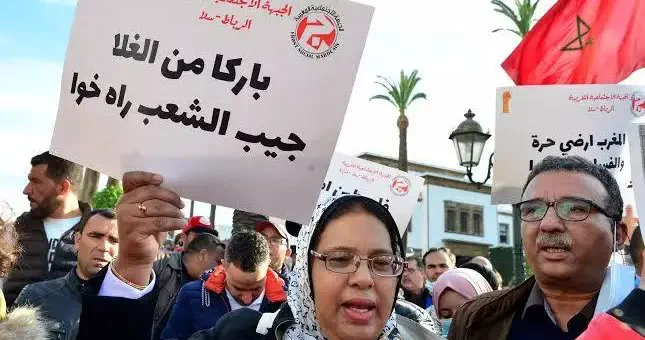
Several Moroccan cities witnessed massive protests as citizens took to the streets to express their demands for social, economic, and political reforms. The protests were a manifestation of the growing discontent among the population, who feel that the recent elections, which were widely boycotted, have not brought about any significant changes. The protesters, who were seen in cities such as Rabat, Casablanca, Fez, and Marrakech, carried slogans calling for the government to translate its election promises into concrete actions.
The protests reflected a deep-seated frustration among Moroccans, who feel that the political landscape has not changed despite the elections. The citizens are demanding reforms in areas such as living standards, reducing the prices of basic goods, job creation, and limiting unemployment. They are also calling for an overhaul of the education and healthcare systems, as well as accountability for officials involved in corruption. The protests have been backed by opposition parties, who have described the situation as a "popular disappointment" in the election results and the ability of the winning party to effect change.
The recent election, which saw the "Authenticity and Modernity" party emerge victorious, has been marred by controversy. The party has been accused of being embroiled in corruption scandals, including links to a notorious drug trafficker known as "Escobar of the Sahara." Two senior leaders of the party have been implicated in a network involved in money laundering and logistical support for smuggling operations. These allegations have led to widespread criticism, with many questioning the party's ability to lead meaningful reforms.
The opposition parties have been vocal in their criticism of the winning party, with some describing it as a "corrupt party" that is not capable of leading genuine reforms. The leader of the "Justice and Development" party has stated that the party's victory does not necessarily mark the beginning of a new era, but rather a continuation of the same policies that have failed to deliver tangible results in areas such as employment, education, and healthcare.
The international community has also taken note of the situation in Morocco, with some Spanish media outlets describing the election results as a reflection of a "trust crisis" in the country's politics. The continued presence of figures accused of corruption in positions of power has weakened the country's image, particularly among its European partners.
In a related development, a new wave of protests has erupted in Morocco, this time in response to reports of a planned normalization of relations with Israel. The protests, which were organized by various groups, including the "Moroccan Committee to Support the Issues of the Nation," saw thousands of citizens take to the streets, waving Palestinian flags and calling for an end to the Israeli aggression in Gaza and the cessation of cooperation with Israel.
The protests, which were held in several major cities, including Casablanca, Meknes, and Tangier, were marked by clashes between protesters and security forces. The authorities have taken measures to prevent the protests, including deploying large numbers of police and restricting access to public spaces. The situation remains tense, with many citizens continuing to demand change and accountability from the government.
Key points
- The protests in Morocco reflect a deep-seated frustration among citizens with the country's social and economic situation, as well as the perceived corruption and ineffectiveness of the government.