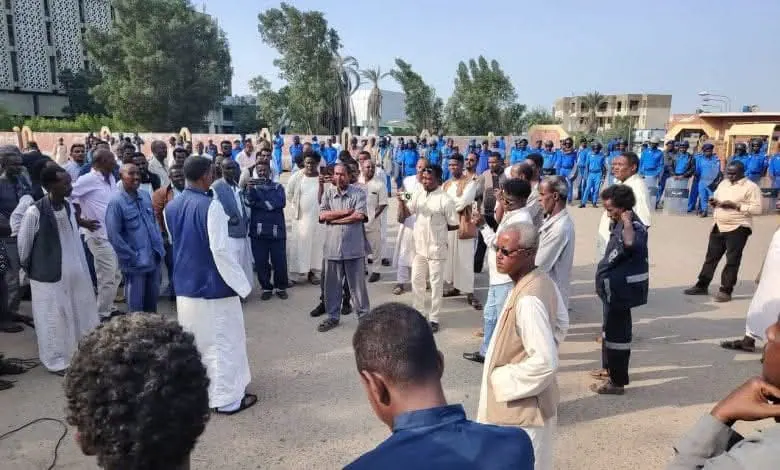
The Sudanese Ports Authority has been included in the government's unified revenue collection system, known as "Eisali", sparking widespread protests and concerns among workers and administrators. On Monday, dozens of employees and administrators staged a protest and awareness-raising event, warning of potential strikes and sit-ins if the decision is implemented. The "Eisali" system aims to enhance transparency and financial oversight by consolidating government revenue collection.
According to Hamida Mahjoub al-Haj, Deputy Director of Ports, implementing the "Eisali" system would hinder port operations, citing the unique nature of the Ports Authority's services, which differ from other government agencies that use the system. Al-Haj noted that technical issues with the system could lead to delays in client payments, resulting in additional fees and damage to the port's reputation. The Ports Authority has previously requested updates to its billing system, but these requests have been ignored.
Othman Tahir, a leading trade unionist, argued that the "Eisali" system, while beneficial in general, is not suitable for the Ports Authority, as it would hinder operations and harm the national economy. Tahir emphasized that the Ports Authority provides operational services, unlike tax or customs authorities, which primarily collect revenue. He warned that delayed payments due to the system's implementation could lead to vessel delays, fines, and damage to the port's reputation.
Tahir also highlighted the potential consequences of delayed payments, including the inability to pay employee incentives and benefits on time, as well as disruptions to import and export activities, which could lead to a comprehensive economic crisis. He suggested that the Finance Ministry could easily access the Ports Authority's financial flows without the need for the "Eisali" system, given that the authority's accounts are held in national banks.
Othman Sina, a labor leader, expressed concerns about the suitability of Sudan's infrastructure, particularly the communication and internet networks, for implementing the "Eisali" system. He cited previous instances where technical issues with the "Bankak" system led to widespread disruptions. Ali Sumara, another leader, warned that implementing the "Eisali" system would introduce bureaucratic financial procedures, leading to slower port operations, increased costs, and potential losses for the national economy.
Some workers and administrators have accused the Ports Authority management of misusing funds by allocating resources outside its mandate, such as supporting university colleges. They threatened potential strikes or sit-ins if their concerns are not addressed. However, other union leaders emphasized that the Ports Authority is committed to regularly remitting the required revenue.
The controversy surrounding the "Eisali" system's implementation at Sudanese ports has sparked concerns about potential economic repercussions and disruptions to port operations. Key stakeholders, including workers, administrators, and union leaders, are urging the government to reconsider the decision and grant the Ports Authority greater autonomy and flexibility in managing its operations and finances.
Key points
- The implementation of the "Eisali" system at Sudanese ports has sparked widespread protests and concerns among workers and administrators.
- The system's implementation could disrupt port operations, leading to delays, fines, and damage to the port's reputation.
- Workers and administrators are calling for greater autonomy and flexibility in managing port operations and finances.